


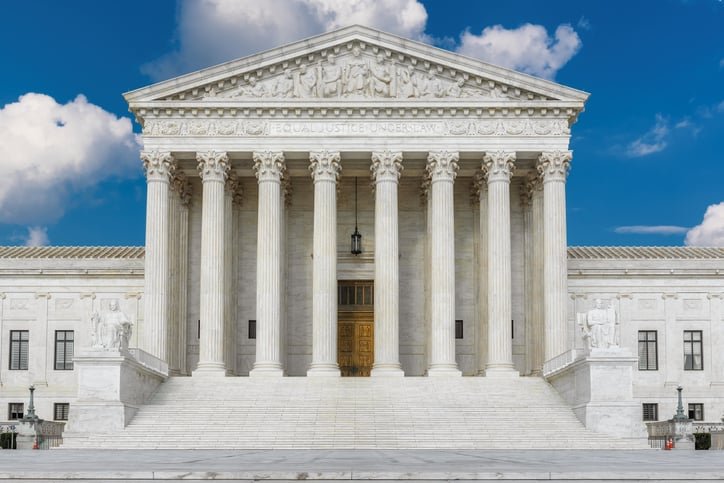
In an overwhelmingly unanimous vote, the U.S. Supreme Court sided with Hikma Pharmaceuticals, ruling that Amarin’s generic version of its fish oil-based cardiovascular drug Vascepa does not infringe the Irish company’s patents.
The ruling is a victory for the generic drug industry, particularly for the use of “skinny” labels that allow cheaper copies to be sold for certain indications, as long as they do not infringe on patents protecting other uses.
In a 9-0 vote, the Supreme Court overturned a lower court ruling that Hikma infringed on Amarin’s patents (PDF).
The ruling was over Amarin’s patent protection for Vascepa, which was approved by the FDA in 2012 to treat severe hypertriglyceridemia, a condition in which triglyceride (fat) levels in the blood are dangerously high and can lead to heart disease.
In 2019, the FDA signed a label extension for Vascepa, approving the drug to treat patients with less elevated triglyceride levels and reduce the risk of various heart diseases. This secondary expansion led to the use of Vacepa by millions of patients in the United States as an alternative to statins to lower cholesterol levels.
Amarin’s patent against severe hypertriglyceridemia expired in 2020, but protection against less severe hypertriglyceridemia remains. The company reported sales of the treatment were $214 million last year.
Also in 2020, Hikma received “skinny label” approval for a copycat version of Vascepa, and in the same year, Amarin sued the London-based generic drug specialist. Amarin claimed that the way Hikma marketed its product in a press release, calling it “generic Vascepa,” encouraged physicians to prescribe it for all approved indications.
Amarin’s lawsuit was initially dismissed by a Delaware court in 2022, but a U.S. Court of Appeals ruling reinstated the complaint two years later.
Amarin argued that Hikma’s marketing efforts were different from those of the seven other companies that have received approval for generic Vascepa drugs.
But on Thursday morning, Judge Ketanji Brown Jackson wrote that “Amarin’s allegations, viewed together or separately, do not prove that Hikma took active steps to encourage infringement.”
“The central question is whether Amarin plausibly alleged that Hikma actively encouraged the infringing use, and simply whether a physician could plausibly read the alleged statement as an instruction to infringe,” Jackson added.
In his ruling, Mr. Jackson reiterated similar issues raised by U.S. Attorney General John Sauer and other Department of Justice (DOJ) attorneys during a press conference supporting Mr. Hikma’s position earlier this year.
“A claim of active abetting patent infringement requires, at a minimum, a factual allegation that plausibly explains how the defendant’s words and actions actively encouraged and caused direct infringement by a third party beyond the naked sale of a product that could be used infringingly,” Sauer wrote. “Mr. Amarin’s complaint contains no such allegations.”
On Thursday, Patients for Affordable Drugs CEO Melis Basie applauded the decision, saying it “protects an important path to providing low-cost generic drugs to patients.”
“Had the court ruled differently, generic drug manufacturers may have faced greater legal risks in complying with rules set by Congress and the FDA, which would have led to fewer challenges to generic drugs, slower competition, and higher drug prices for patients and taxpayers,” Basie added.
