


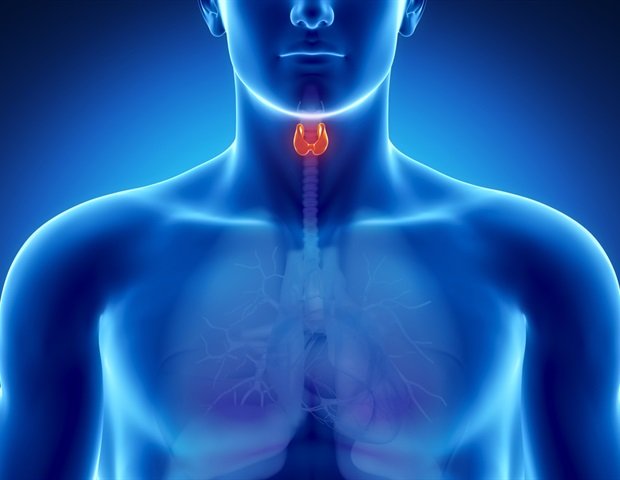
New research perspectives were published in Volume 13. oncology science June 3, 2026, titled “Dual Axis of Tumorogenesis: MAPK and PI3K/AKT Pathways in Papillary Thyroid Carcinoma.”
The research perspective was written by first and corresponding authors Gunvanti Rathod and Pragnesh Parmar from AIIMS Bibinagar, India. The authors examine how two interrelated signaling pathways drive the development and progression of papillary thyroid carcinoma (PTC), the most common type of thyroid cancer, and highlight how molecular diagnostics and targeted therapies are shaping more personalized treatment strategies.
Papillary thyroid carcinoma accounts for approximately 80-85% of thyroid cancers and generally has excellent long-term survival rates. However, some tumors behave more aggressively, invade surrounding tissues, recur after treatment, and lose sensitivity to radioactive iodine therapy, making treatment increasingly difficult. Understanding the molecular changes that distinguish these tumors has become a major focus of thyroid cancer research.
Two signaling networks are central to this process: the mitogen-activated protein kinase (MAPK) pathway and the PI3K/AKT pathway. Under normal conditions, these pathways control cell growth, differentiation, metabolism, survival, and programmed cell death. However, in papillary thyroid cancer, genetic alterations may persistently activate these signaling cascades, allowing cancer cells to continue proliferating, evading apoptosis, and promoting disease progression.
This review describes MAPK signaling as a major factor in early tumor development. Changes involving BRAF and RAS, together with RET/PTC rearrangement and NTRK fusion, activate this pathway and promote continued signaling through RAF, MEK, and ERK. The most common alteration, BRAF V600E, occurs in approximately 40–60% of papillary thyroid carcinomas and is associated with more aggressive disease and decreased responsiveness to radioiodine therapy. Sustained BRAF signaling also suppresses thyroid-specific genes involved in iodine uptake, contributing to tumor dedifferentiation and reduced responsiveness to radioactive iodine treatment.
MAPK activation is particularly important during tumor development, but as the disease progresses, the PI3K/AKT pathway becomes increasingly involved. Changes affecting PIK3CA, PTEN, and AKT enhance cell survival, angiogenesis, metabolic adaptation, invasion, and resistance to apoptosis. These abnormalities are rare in conventional early-stage papillary thyroid cancer, but occur more frequently in poorly differentiated and undifferentiated thyroid cancers, contributing to tumor progression and treatment resistance.
The MAPK and PI3K/AKT pathways do not act independently but interact through shared receptors, signaling molecules, and feedback mechanisms. Although receptor tyrosine kinases such as RET, EGFR, VEGFR, FGFR, PDGFR, and MET can activate both pathways, RAS proteins provide another important point of convergence. This extensive molecular crosstalk allows cancer cells to adapt even when one pathway is therapeutically blocked, and helps explain why tumors are often resistant to targeted therapies.
”The development of new molecular diagnostic tests and targeted therapies has helped enhance personalized treatment approaches for patients with papillary thyroid cancer. In the future, new approaches may become possible in the combination therapy of highly malignant and treatment-resistant papillary thyroid cancer.. ”
Molecular testing is changing the evaluation of thyroid nodules and cancer. Although fine-needle aspiration cytology remains the standard initial diagnostic approach, approximately 15-30% of thyroid nodules yield indeterminate results. Testing for BRAF V600E, RAS mutations, RET/PTC rearrangements, NTRK fusions, and other molecular alterations provides additional information regarding malignancy risk, tumor behavior, prognosis, and potential treatment options.
These molecular changes also identify viable therapeutic targets. BRAF and MEK inhibitors suppress MAPK signaling, while selective RET and TRK inhibitors target tumors with the corresponding gene fusion. Multikinase inhibitors such as lenvatinib and cabozantinib have been used to treat advanced radioiodine-resistant differentiated thyroid cancer, but therapies targeting PI3K, AKT, and mTOR are still under clinical investigation.
Blocking one pathway can activate the other through compensatory signaling, leading to increased interest in combination therapies targeting both molecular networks. These approaches aim to overcome treatment resistance and improve outcomes in patients with progressive disease by simultaneously suppressing MAPK and PI3K/AKT signaling. However, the authors note that many combination strategies are still in the investigational phase and require further clinical validation.
Overall, the research perspective highlights that papillary thyroid carcinoma is a disease caused by interacting molecular pathways rather than single genetic changes. A better understanding of how MAPK and PI3K/AKT signaling work together could improve molecular risk assessment, support more precise use of targeted therapies, and ultimately advance personalized care for patients with advanced or treatment-resistant thyroid cancer.
sauce:
Reference magazines:
Rathod, G., Parmar, P. (2026). Dual axis of tumorigenesis: MAPK and PI3K/AKT pathways in papillary thyroid carcinoma. oncology science. DOI: 10.18632/oncoscience.663. https://www.oncoscience.us/article/663/text/
