


Recent research published in Social psychology and personality science This suggests that people who are both politically active and also believe in conspiracy theories are most likely to justify political violence. The findings provide evidence that while conspiracy theories alone do not lead to violence, they can be dangerous when combined with active political engagement. This means that spreading unconfirmed narratives among already mobilized political groups tends to create a volatile environment.
Political participation is generally considered a healthy part of a democratic society. Standard political engagement, known as normative political behavior, involves behavior that follows social rules and laws. Examples include voting in elections, joining a political party, and participating in peaceful protests.
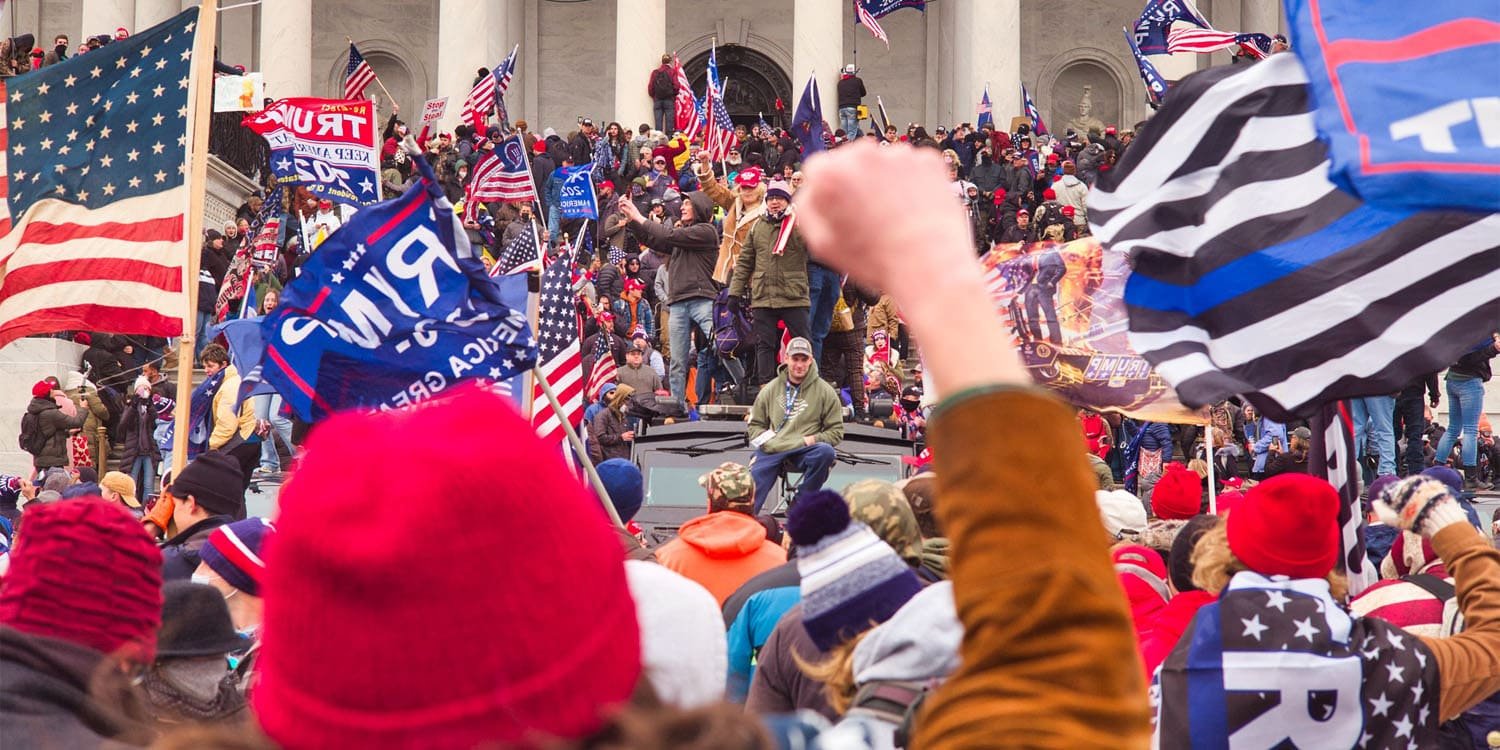
Peaceful political acts can escalate into illegal or violent acts, which scientists call non-normative political acts. Examples of this include sending death threats, destroying property, and physically confronting law enforcement. The Capitol Hill riots of January 6, 2021 provided a real-world context to explore this shift.
During this event, a mob stormed the U.S. Capitol to prevent the certification of the 2020 presidential election. Scientists wanted to understand the specific factors that might drive standard political engagement toward legitimizing such acts of violence. Researchers noted that many people involved in the riots were influenced by conspiracy theories.
“What originally motivated this study was an interest in disentangling the relationship between conspiracy theories and political violence.While these two phenomena are linked in certain cases and are often discussed together in media reports, it remains unclear when conspiracy theories actually translate into support for violence. “Rather than simply asking whether conspiracy theories are associated with political violence, we wanted to understand the conditions that strengthen this link,” said study author Jesse Koster, a doctoral candidate at Vrije Universiteit Amsterdam.
The researchers conducted two separate studies. In the first study, scientists surveyed 372 Americans who voted for Donald Trump in the 2020 election. They specifically selected this group to ensure that participants shared a similar political identity to individuals involved in the Capitol riot.
The study measured participants on several specific scales. It assessed their general conspiracy mentality, a widespread tendency to assume there is a hidden conspiracy behind major world events. It also measured their specific beliefs in conspiracy theories that the 2020 election was rigged in favor of Democrats.
The researchers also asked participants about their typical political participation over the past year. This includes behaviors such as how often you attend political rallies and how often you communicate with politicians. Finally, the researchers measured the extent to which participants justified the violence at the Capitol, such as agreeing that it was acceptable for rioters to be armed.
During the analysis, the scientists controlled for demographic factors such as age, gender, education level, and general political orientation. Results from the first study showed that both standard political participation and conspiracy theory beliefs independently predicted support for riots.
The interaction between these two elements provided the most detailed insight. Interaction effects occur when the influence of one variable depends on the level of another variable. In this case, participants who reported high levels of standard political activity and who also held strong conspiracy theories were most likely to justify violence. This pattern holds true for both general conspiracy theory thinking and specific beliefs about election fraud.
“In Study 1, we included a variety of exploratory individual difference and behavioral variables to examine what might shape this relationship,” Koster said. “After finding a significant interaction between political participation and conspiracy theories in predicting the justification of violence, we set out to test this interaction more directly in Study 2.”
Researchers recruited a new sample of 751 participants who voted for Trump in the 2020 election. They used an experimental design to examine how exposure to different information affected participants. Experimental designs help scientists look for cause-and-effect relationships by changing one particular detail while keeping everything else the same.
Participants first answered questions about basic political participation. They were then randomly assigned to read a short fabricated blog post about the 2020 election. Half of the group read articles that supported theories of widespread election fraud, and the other half read articles that refuted those claims.
After reading the text, participants completed a short check to ensure they understood the article. They then answered questions measuring their current beliefs in election fraud conspiracies and their views on the Capitol riot. The scientists again controlled for basic demographic information during the statistical analysis.
Scientists found that the reading exercise slightly changed participants’ beliefs about election conspiracies. However, simply reading a text supporting a conspiracy does not directly increase overall support for political violence across groups. The researchers noted that people generally have stable opinions and are not easily swayed by a single short article.
However, as in the first study, certain interactions emerged in the data. The link between active political participation and justifying violence was stronger among people exposed to texts promoting election fraud conspiracy theories. This suggests that exposure to unconfirmed conspiracies tends to lead already active individuals to view aggressive behavior as acceptable.
“The main conclusion is that conspiracy theories alone are not necessarily sufficient to predict support for political violence,” Koster told SciPost. “Our findings suggest that people who strongly support conspiracy theories and are highly active politically are the most likely to justify political violence.”
“Importantly, this pattern is particularly likely to occur when conspiracy theory narratives and violent events are ideologically aligned. This means that spreading conspiracy theories within politically mobilized groups can be particularly dangerous, especially when influential figures promote narratives that resonate with their audiences’ political identities.”
While these findings provide insight into how political instability works, the researchers noted several limitations. First, this study focused only on voters who identify with a particular political candidate. While this targeted approach helps explain the Capitol riot, it means the results may not fully translate to other political groups or different countries.
The average reader should not misinterpret this finding to mean that all political activists are prone to violence. The study particularly highlights the combination of high levels of political activity and deep beliefs in unidentified conspiracies as the main risk factors. Scientists also point out that a desire for political change alone does not predict violence, suggesting that active participation is an important factor.
Additionally, this study assessed the legitimacy of violence through surveys rather than observing actual acts of violence in the real world. Measuring real-world violence poses significant ethical and practical challenges for scientists.
Future research could investigate how these factors interact in different cultural contexts or during protests related to other ideological movements. Scientists may also investigate how highly active citizens contribute to the spread of conspiracy theories on social media platforms. Understanding these dynamics can help societies find ways to foster healthy political engagement while preventing the escalation of aggressive behavior.
The study, “The Role of Conspiracy Theories and Political Participation in Justifying Violence in the Capitol Riot,” was authored by Jesse Koster, Fengyu Do, Naomi Dorr, Yuan Ning, and Janwillem van Prooyen.
