


People who have experienced abuse in childhood may automatically pay more attention to expressions of anger, even when they are not trying to judge a person’s mood. Small-scale studies published in journals biological psychology reveal that this heightened sensitivity to threatening facial cues occurs primarily during automatic processing in the brain. These unique neural patterns may help explain why some survivors remain exceptionally alert in everyday social situations.
Lead author Tae Kyoung Lee and researcher Young Youn Kim, both based in the Department of Forensic Psychology at Gyeonggi University in South Korea, designed the study to better understand how early adversity changes the nervous system. The researchers focused specifically on how the human brain processes facial expressions in real time. Facial expressions serve as key social signals, and reading them accurately serves as an essential part of navigating relationships.
Child abuse includes physical violence, emotional manipulation, sexual assault, and neglect. Experiencing these stressful events during formative development often leads to chronic pain. In response to unpredictable or hostile environments, children’s developing brains often adapt by becoming highly sensitive to danger. This heightened sensitivity likely functions as a protective mechanism, allowing children to anticipate harm and try to avoid threatening situations.
Although heightened vigilance may serve a protective purpose in a hostile home, the same mental habits can cause problems later in life in a secure environment. People with a history of early abuse often focus on threat-related cues, such as expressions of anger, even after the immediate danger has passed. Over time, this focus can cause anxiety, increased stress, and difficulty interpreting daily social interactions.
Researchers distinguish between two ways the mind processes incoming emotional information. Explicit processing occurs when a person actively thinks about and evaluates a situation, such as consciously deciding whether a coworker is sad. Implicit processing occurs beneath the surface when the brain automatically records emotional cues while a person is focused on something else entirely.
Previous research has yielded mixed results on how abused people process emotions at a neural level. Some experiments have suggested that childhood trauma alters automatic emotional responses, while others have found no difference when participants are intentionally asked to rate their emotions. Lee and Kim noticed that most past experiments tested only one type of mental task at a time. The two designed their study to monitor both automatic and intentional emotional appraisals in exactly the same group of people.
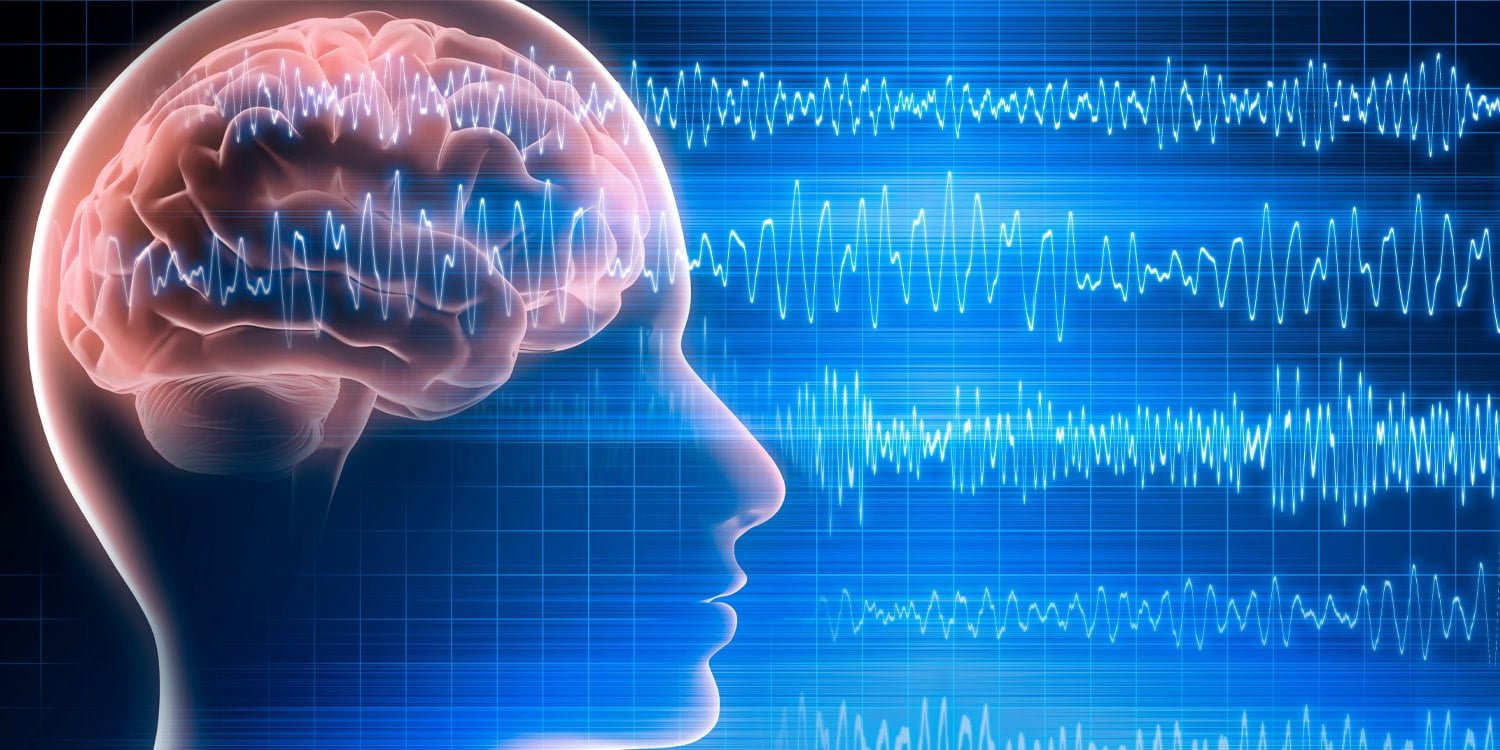
To measure brain activity, the research team used electroencephalography. An electroencephalograph is a tool that records electrical signals through small sensors placed on the scalp. Scientists focused on a particular pattern of brain activity known as late positive potentials. This electrical spike occurs about 300 milliseconds after a person views a highly stimulating image. Late positive potentials serve as an indicator of sustained attention, indicating how long and how intensively the brain continues to devote mental resources to information.
The researchers began by screening 470 college undergraduates using a standardized questionnaire about childhood trauma. From this large population, we selected 23 individuals who reported experiences of moderate to severe mental, physical, or sexual abuse. They then matched this group with 23 control participants who did not report a history of childhood abuse. There were a total of 46 participants, which constitutes a small study and is classified as an extreme group design to highlight potential physiological differences.
Participants sat in front of a computer screen while researchers recorded their brain waves. Students viewed a series of standardized facial photographs showing angry, happy, and neutral facial expressions. The experiment was split into two different tasks to test different ways the brain processes social data. Half of the experiments tested automatic mental processes, and the other half tested intentional emotional judgments.
In the first part, participants were only asked to identify the gender of the faces on the screen. They pressed one key into the man’s face and the other key into the woman’s face. In this scenario, the emotion shown on the face is irrelevant to the goal. This setup allowed the researchers to measure implicit emotional processing and capture how the brain responds to anger or happiness when attention is directed elsewhere.
The second task required participants to actively rate the emotions displayed on the screen. Instead of focusing on gender, students had to press a specific key to classify each face as emotional or neutral. This explicit processing task required participants to consciously analyze the representation. By comparing the brain waves from both tasks, the team was able to pinpoint when past trauma affects visual attention.
This experiment generated two different types of data for the team to analyze. Behavioral outcomes include participants’ button press accuracy and physical reaction speed. Neurological results were obtained from continuous electroencephalogram recordings collected throughout the study. The researchers looked for patterns that showed increased or decreased attention when viewing different emotions.
At the behavioral level, the two groups showed similar performance. Both maltreated participants and controls made few errors and responded at comparable speeds. Overall, participants took slightly longer to classify angry and neutral faces than happy faces during the explicit task. Behavioral behavior was nearly identical between each group, so electrical recordings were needed to reveal what was happening beneath the surface.
Significant differences emerged in the EEG data during the implicit task. When individuals in the child abuse group rated the gender of angry faces, their EEGs showed large spikes in late positive potentials. This electrical surge was significantly larger than the response recorded in the control group. Abused participants did not show this tendency when they saw happy or neutral faces.
This spike in local electrical activity suggests that the abused participants’ brains automatically locked on to expressions of anger. Even though their assigned goal was only to identify the gender of the photo, their attentional systems were still hijacked by threat-related cues. Control participants processed angry faces without directing special sustained attention to them. Researchers suggest that childhood abuse may train the brain to remain alert to aggressive emotions on an automatic level.
During the explicit task, the brain wave patterns changed completely. When participants actively judged the emotional state of faces, the strong gulf between the maltreated and control groups disappeared. During this intentional assessment, both groups showed similar late positive potential amplitudes. The results of this section of the experiment were not statistically significant with respect to group differences.
Unexpected details emerged during an explicit emotion recognition task. In fact, both groups showed the highest levels of sustained attention when looking at neutral faces rather than angry or happy faces. Researchers suggest that neutral expressions can be ambiguous. When forced to categorize ambiguous social cues, the human brain likely works harder and mobilizes more cognitive resources to understand what the expression actually means.
The contrast between the two challenges provides a new lens for understanding the social experiences of trauma survivors. The data suggest that a history of abuse does not necessarily change a person’s ability to consciously assess their emotions. Rather, the difference lies in the way their brains automatically filter their environments. Traces of past trauma appear to manifest as involuntary reflexes that rapidly prioritize signs of hostility.
The researchers noted several caveats regarding their methodology. The relatively small sample size limits the ability to generalize the conclusions to the broader population. Because the participants were exclusively university students, they may not be representative of the neural patterns of individuals suffering from severe clinical distress. Replicating the experiment with a larger, medically diverse group would help validate the patterns seen in this initial data.
Reliance on retrospective self-report of trauma history is also a common challenge in the field. Participants may underreport or misremember the severity of childhood abuse. Researchers grouped cases of emotional abuse, physical abuse, and sexual abuse. Future investigation of specific categories of trauma may reveal distinct neurological adaptations associated with different types of childhood adversity.
Despite these limitations, the findings provide a detailed picture of the brain’s protective adaptations. Automatic sensitivity to anger may have kept children safe in chaotic home environments. Understanding how these hidden habits of attention persist into adulthood will ultimately allow medical professionals to design better treatments that help people reset their nervous systems toward a safer reality.
The study, “Enhanced LPP responses to angry faces in individuals with a history of childhood abuse during an implicit emotion categorization task,” was authored by Tae Kyoung Lee and Young Youn Kim.
