


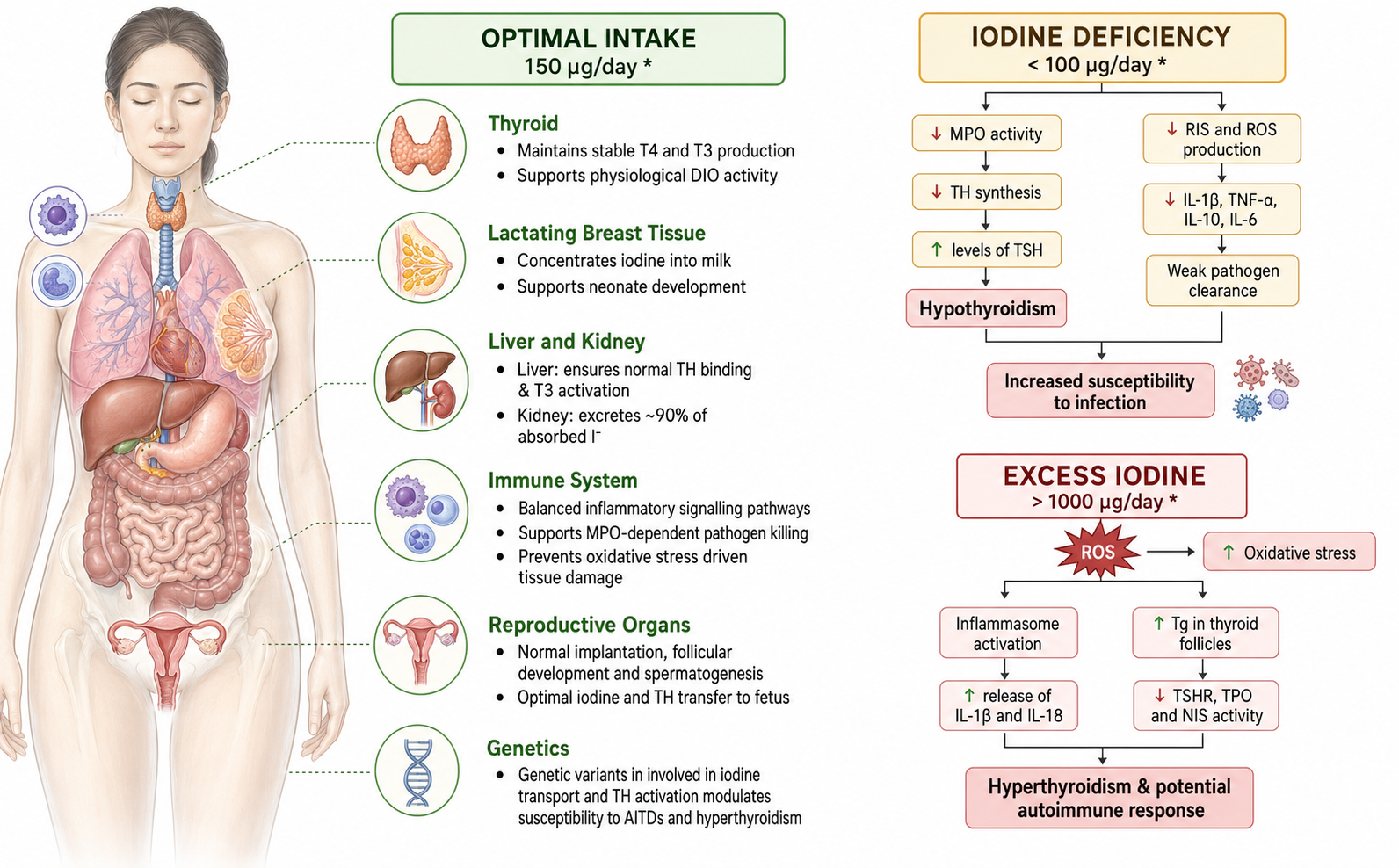
A cross-species review tracks how iodine affects immune defense and why the line between benefit and harm remains difficult to define.
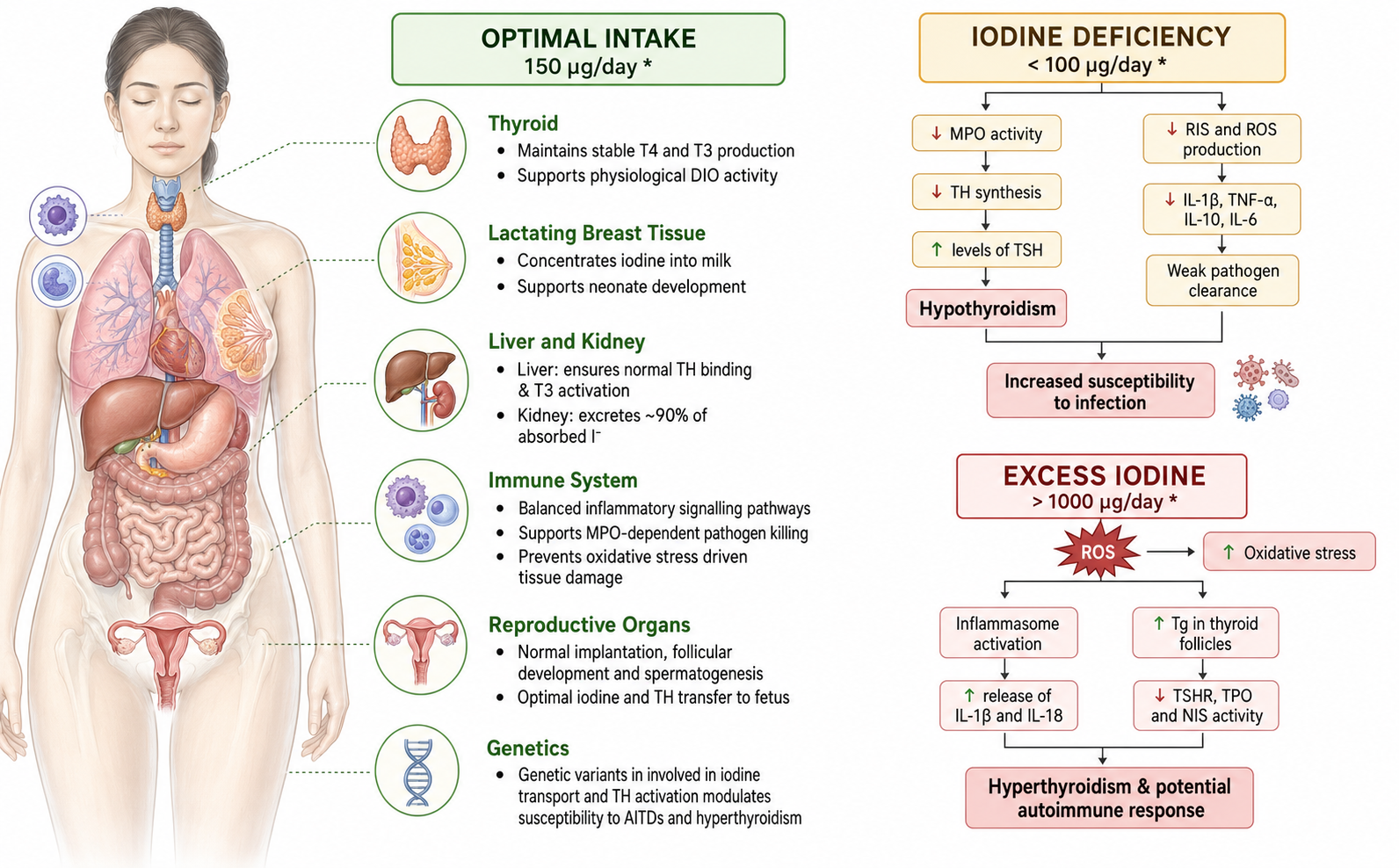
Article: Iodine and its effects on the immune system of humans and domestic mammals: A narrative review
In a recent narrative review published in the journal nutrientsResearchers from the University of Guelph and Canada’s Immunoseutica have mapped the direct and indirect immunomodulatory mechanisms of iodine in humans and domestic mammals. Although this review suggests that iodine status follows a narrow U-shaped relationship and that an appropriate intake range supports leukocyte metabolism, tissue antioxidant capacity, and thyroid hormone-mediated immune responses, the exact intake and tissue-level thresholds for immune function remain uncertain.
Importantly, both chronic iodine deficiency and persistent dietary excess can disrupt immune homeostasis. Deficiency can compromise host microbial clearance, while continued excess can promote oxidative stress, altered cytokine profiles, and autoimmune thyroiditis in genetically and epigenetically susceptible individuals.
background
Iodine is an essential micronutrient traditionally best known for its role in thyroid hormone (TH, thyroxine (T4) and triiodothyronine (T3)) biosynthesis. However, more recent evidence indicates that, beyond the thyroid, active iodide (I-) transport occurs in tissues that express transporters such as the sodium iodide symporter (NIS) and pendrin. Specifically within thyroid follicular cells, NIS is present in the basolateral membrane and pendrin in the apical membrane.
These sites include immune structures such as the salivary glands, lactating breast tissue, gastric mucosa, bone marrow, thymus, and spleen, and iodine also accumulates in circulating white blood cells.
Research has shown that national dietary guidelines, including those established by the Canadian Institutes of Medicine, and the World Health Organization (WHO), define recommended daily intakes to prevent classic goiter and neurodevelopmental disorders, but these frameworks rely primarily on thyroid-centric parameters.
Unfortunately, the effects of iodine intake on leukocyte signaling cascades, reactive iodine species (RIS) production, and multisystem immune competence across mammalian species remain poorly understood and not consistently incorporated into nutritional guidance.
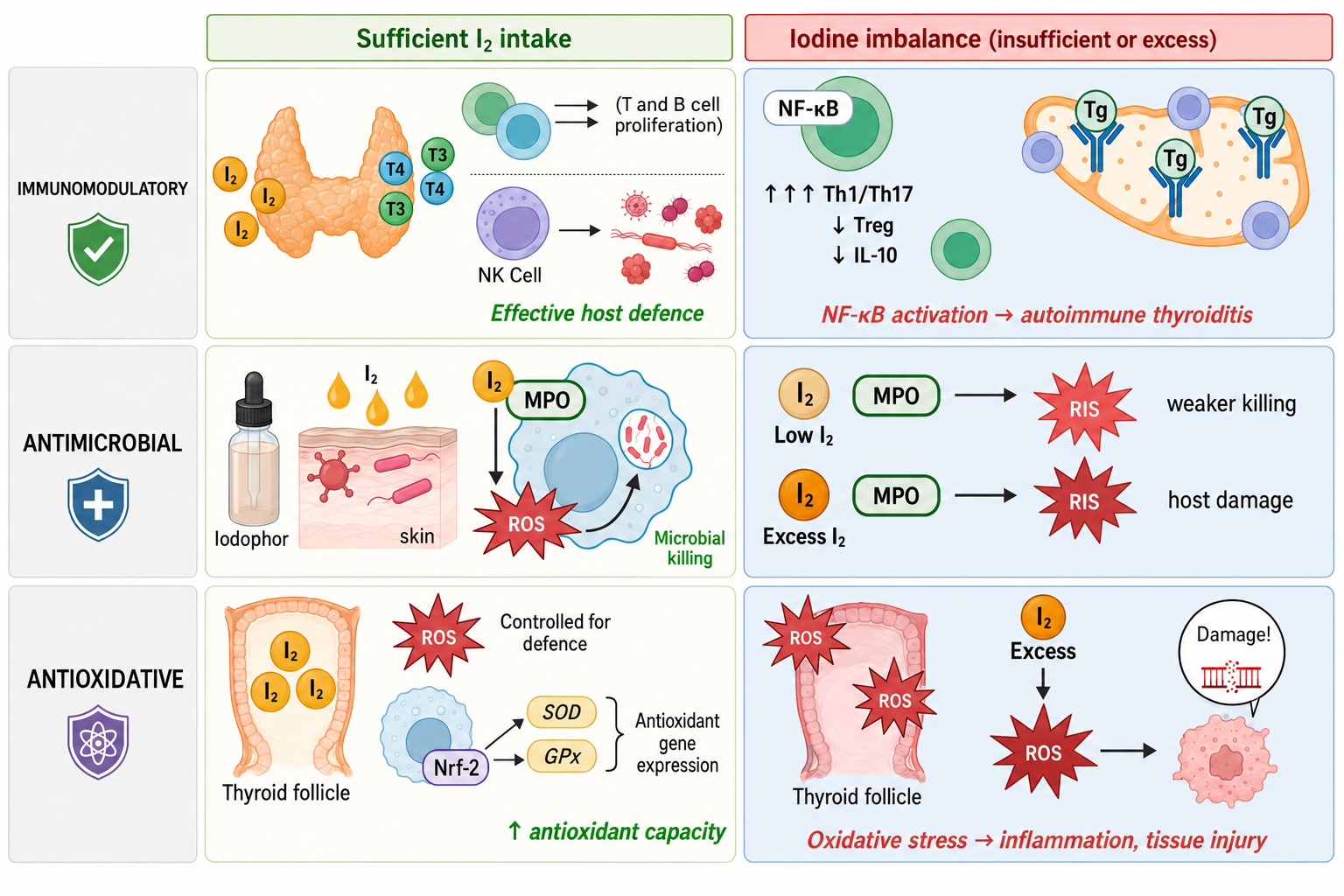
Iodine exerts immunomodulatory, antibacterial, and antioxidant effects depending on iodine intake and tissue conditions. Under sufficient iodine intake, thyroid hormone (TH) production supports balanced natural killer (NK) cell and T and B cell responses, the use of iodophores (povidone-iodine, PVP-I) promotes effective myeloperoxidase (MPO)-mediated microbial killing via regulated reactive iodine/oxygen species (RIS/ROS), and dietary iodide promotes nuclear factor erythrocyte 2-related factors. 2 (Nrf2)-dependent antioxidant enhancement. capacity in blood, mammary gland, and milk, including induction of superoxide dismutase (SOD) and glutathione peroxidase (GPx). In contrast, iodine imbalance (deficiency or excess) skews helper T cell (Th)1/Th17 and regulatory T cell (Treg) populations through activation of nuclear factor kappa light chain enhancer (NF-κB) in activated B cells, predisposing to autoimmune thyroiditis, impairing MPO-derived RIS/ROS-mediated host defenses under low iodine, and amplifying oxidative activity by ROS. Stress, inflammation, and tissue damage caused by excess iodine.
About research
The present review aimed to address this knowledge gap by evaluating the nutritional dynamics, direct leukocyte interactions, and thyroid-mediated immunomodulatory pathways of iodine across humans, livestock (cows, sheep, goats, pigs) and companion animals (dogs, cats). The authors used a targeted PubMed search and manual screening of reference lists, making this a narrative synthesis rather than a systematic review or meta-analysis.
In this narrative review, several mechanisms were considered, including NIS- and pendrin-mediated cellular uptake, conversion of T4 to bioactive T3 by iodothyronine deiodinase type 1 (DIO1), myeloperoxidase (MPO)-dependent antimicrobial halogenation, and nuclear factor erythroid 2-related factor 2 (Nrf2) antioxidant signaling.
Furthermore, this review analyzed the immunological consequences of the acute Wolff-Chaikoff effect and Jod-Graves phenomenon, along with the underlying genetic risk loci (HLA-DR, CTLA4, PTPN22) and epigenetic DNA methylation patterns (CCL5, CXCL8, CXCR5, YWHAG) associated with iodine-induced autoimmunity.
Research results
One of the cited human cell culture studies found that direct exposure of leukocytes to low to submillimolar concentrations of iodide (10–1000 μM in vitro) increased peripheral blood mononuclear cell (PBMC) secretion of interleukin (IL)-6, interferon gamma (IFN-γ), and IL-10. The authors cautioned that these concentrations likely exceed typical free iodide levels in lymphoid tissues and should not be interpreted as physiological exposure thresholds.
However, other in vitro studies have shown that in complex formulations and at high concentrations, the cytokine balance shifts toward proinflammatory chemokines such as IL-8 and monocyte chemoattractant protein 1 (MCP-1). Because these findings were obtained from controlled PBMC experiments, their relevance to whole organisms remains uncertain. Under iodine deficiency, experimental and clinical evidence suggests that reduced TH signaling impairs neutrophil and macrophage chemotaxis and reduces T cell proliferation and activation markers (CD25, CD69), while reduced iodine availability limits MPO-mediated production of reactive iodine species (RIS) and reactive oxygen species (ROS), potentially attenuating pathogen killing.
B cell-mediated adaptive immunity may also be impaired, with studies reporting decreased antibody titers, shrinking germinal centers, and delayed immunoglobulin class switch from IgM to IgG.
Conversely, experimental and animal studies suggest that chronic iodine excess may promote hyperiodination within the thyroid gland, thereby generating ROS that cause cell injury and death and the release of alarmins.
Alarm ligation of downstream pattern recognition receptors activates nuclear factor kappa B (NF-κB) and promotes local expression of IL-1β, IL-6, and TNF-α. In healthy individuals, we observed that acute high-dose iodide exposure induces a self-limiting Wolff-Chaikoff effect, typically temporarily blocking TH synthesis for 24–50 h until “escape” by downregulation of NIS restores homeostasis.
In contrast, susceptible individuals, such as those with previous iodine deficiency or structurally abnormal thyroid glands or autonomous nodules, may develop the Jod-Basedow phenomenon, in which the affected thyroid tissue is unable to inhibit iodide transport and can lead to persistent thyrotoxicosis. Evidence for this phenomenon comes primarily from case reports and small series of high-risk individuals, and precise dose thresholds and population-wide incidence have not been established.
In genetically susceptible hosts carrying HLA-DR susceptibility alleles, highly iodinated thyroglobulin and thyroid peroxidase (TPO) peptides may be efficiently presented by autoreactive CD4+ T cells. Variants affecting CTLA4 and PTPN22, two regulators of immune activation, may further reduce control of autoreactive T and B cell responses.
Epigenetic analyzes primarily from cross-sectional studies found that iodine exposure and autoimmune thyroiditis were associated with changes in methylation of genes involved in chemokine signaling (CCL5, CXCL8, CXCR5) and cellular stress responses (YWHAG and BRSK2). These patterns may regulate chemokine expression, lymphocyte recruitment, and stress signaling in thyrocytes, but their causal mechanisms and temporal stability remain unclear.
Finally, comparative veterinary data identified species-specific outcomes. In dairy cows, one study found that iodine supplementation improved udder health, reduced milk somatic cell counts, and enhanced Fc-γ receptor-mediated phagocytosis. In pregnant ewes, intake of iodine several times above the required amount reduced lamb plasma IgG after colostrum ingestion, suggesting that despite sufficient colostrum IgG, passive transfer is impaired and neonatal intestinal absorption is less efficient.
Similarly, in companion animals, iodine excess causes thyroid changes, consistent with goiter and possible primary hypothyroidism in dog puppies, while feline hyperthyroidism is multifactorial, although long-term excess has been identified as a potential contributor to nodular thyroid hyperplasia and hyperthyroidism in older cats.
conclusion
This commentary review highlights that, although the precise immunospecific boundaries are not defined, iodine acts within a narrow physiological range that is essential for balancing endocrine secretion, cellular redox status, and immune capacity.
The authors caution that existing dietary guidelines primarily focus on classic thyroid deficiency outcomes and rarely incorporate immune function endpoints, extrathyroidal iodine targets, or tissue-specific toxicity thresholds.
This review highlights that future research should prioritize longitudinal human cohort and intervention studies that integrate detailed immunological endpoints and precise exposure biomarkers to refine species- and life-stage-specific intake guidelines, along with animal-controlled studies.
Reference magazines:
- Simpson, R. A., Chandiriya, UK, Wagter-L’Esperance, L. C., Bridle, B. W., Mallard, B. A., & Carrow, N. A. (2026). Iodine and its effects on the immune system of humans and domestic mammals: A narrative review. Nutrients, 18(15), 2432. Doi: 10.3390/nu18152432. https://www.mdpi.com/2072-6643/18/15/2432
