

Close Menu

    Subscribe to Updates

    Get the latest creative news from FooBar about art, design and business.

    What's Hot

    CRISPR makes prostate cancer more amenable to immunotherapy

    July 26, 2026

    The best way to save giant sequoias may be more fire

    July 26, 2026

    Addressing Gaps in Evidence-Based Psychiatric Treatments: What You Need to Know Now

    July 26, 2026
    Facebook X (Twitter) Instagram
    Facebook X (Twitter) Instagram
    Health Magazine
    • Home
    • Environmental Health
    • Health Technology
    • Medical Research
    • Mental Health
    • Nutrition Science
    • Pharma
    • Public Health
    • Discover
      • Daily Health Tips
      • Financial Health & Stability
      • Holistic Health & Wellness
      • Mental Health
      • Nutrition & Dietary Trends
      • Professional & Personal Growth
    • Our Mission
    Health Magazine
    Home » News » The best way to save giant sequoias may be more fire
    Nutrition Science

    The best way to save giant sequoias may be more fire

    healthadminBy healthadminJuly 26, 2026No Comments4 Mins Read
    The best way to save giant sequoias may be more fire
    Share
    Facebook Twitter Reddit Telegram Pinterest Email


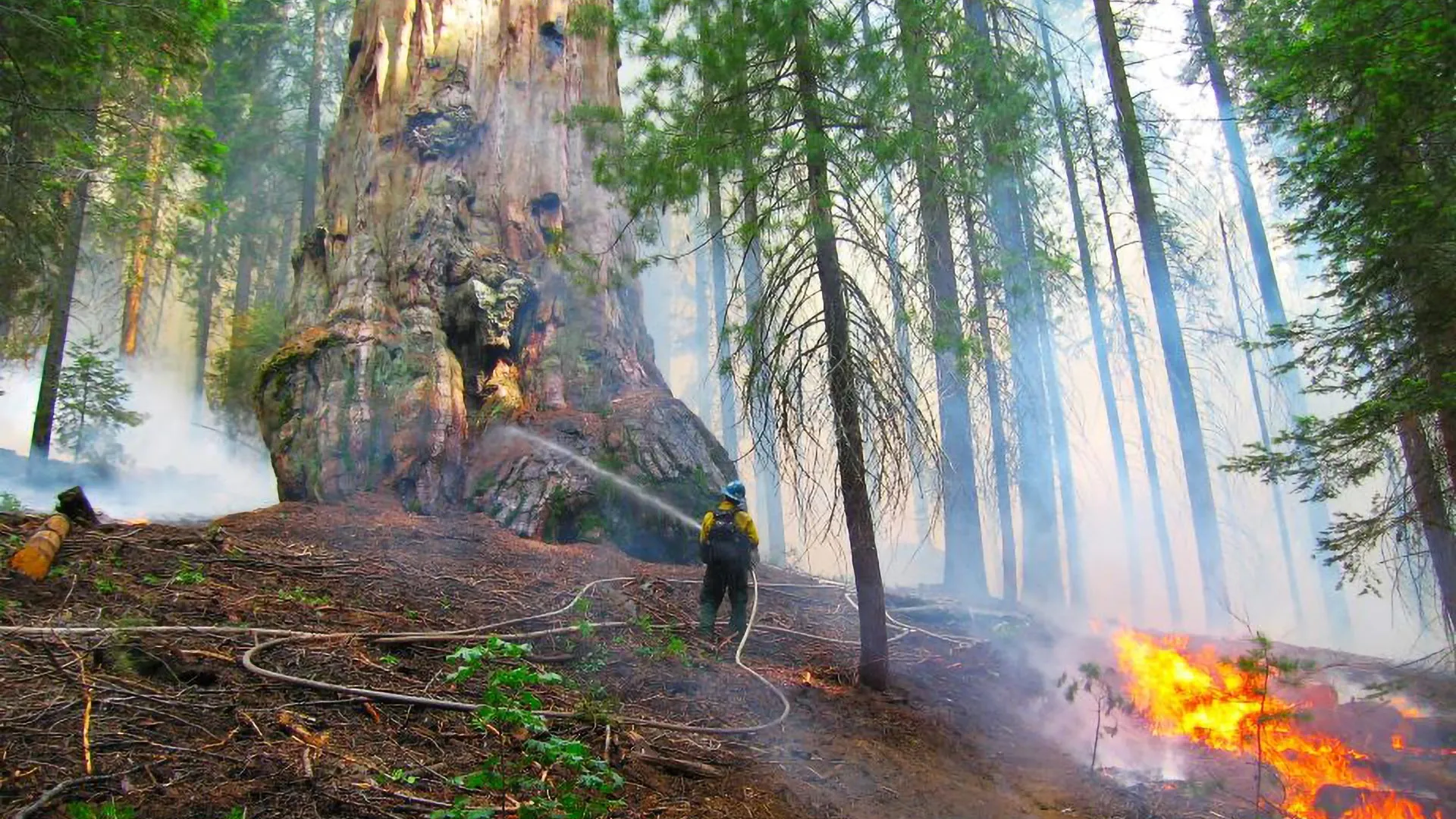
    Two devastating wildfires in California’s Sierra Nevada mountains in 2020 and 2021 killed thousands of giant sequoia trees. A new study from the University of California, Davis suggests that losses would have been even worse without prescribed burns.

    Published in nature communicationsa study found that giant sequoias exposed to prescribed fire in the past 10 years were nearly four times more likely to survive the 2020 Castle Fire and 2021 KNP Complex Fire than nearby untreated trees.

    “Prescribed burns are effective in reducing mortality in giant sequoias, even in today’s extreme wildfires,” said lead author Dan Dixon, who was a postdoctoral fellow at the University of California, Davis, and a research associate with professor Yufan Jin at the time the study was conducted. “If the goal is to protect giant sequoias, prescribed fire is an essential tool available to managers.”

    ancient giant made for fire

    Giant sequoias are one of the largest and longest-living creatures on Earth. A single tree can weigh as much as 15 blue whales and can survive for over 3,000 years. In the wild, it grows only on the western slopes of the Sierra Nevada Mountains in California.

    These giant trees evolved in landscapes formed by periodic low-intensity fires. Thick bark and a raised canopy provide protection, and small fires clear vegetation, recycle nutrients, and create conditions conducive to the growth of new sequoias.

    Therefore, many people once thought that mature sequoias were almost fireproof. That perception changed dramatically after the 2020 and 2021 fire seasons, when images showed entire groves filled with burnt remains of trees that had survived for centuries.

    “These trees are very long-lived, they’ve experienced climate changes, wildfire differences, droughts, they’ve been through it all,” Dixon said. “It was unprecedented for so many people to die in just two years.”

    Naturally tested by decades of prescribed combustion

    Sequoia National Park and Kings Canyon National Park have maintained some of the most extensive prescribed fire programs in the country since the 1960s, according to the study. Over time, this created a patchwork of groves with very different fire histories.

    Some sections were relatively recently treated with controlled burns. Other areas had not seen a fire in more than 100 years, so dead trees, shrubs, and other combustible materials had accumulated.

    This contrast gave researchers a unique opportunity to measure how previously prescribed burns affected giant sequoia survival during extreme wildfires.

    Scientists from the University of California, Davis, the U.S. Geological Survey, and Sequoia and Kings Canyon National Parks combined several types of remote sensing data. They used aerial lidar, which measures forest structure with laser pulses, and high-resolution PlanetScope satellite imagery.

    The research team examined pre-fire fuel conditions and estimated the impact on approximately 26,400 giant sequoia trees in 19 groves affected by the Castle and KNP complex wildfires.

    Prescribed fires reduce the risk of death

    The results showed surprising survival benefits. Prescribed burns performed within the past 10 years have reduced the chance of giant sequoia death by about 77%.

    Trees in treated areas were about four times more likely to survive than trees in untreated parts of the same grove.

    Computer simulations suggest that pre-prescribed burns could have prevented about 1,900 giant sequoia deaths. The researchers also estimated that if all the sequoias in the affected orchards had received similar treatment, an additional 3,900 trees might have survived.

    An important tool for sequoia conservation

    Climate change is increasing the frequency and severity of disturbances affecting native forests, such as drought and extreme wildfires. Giant sequoias are naturally resistant to common fires, but studies have shown that even this highly durable tree becomes vulnerable when the flames get intense enough.

    The findings provide strong evidence that prescribed burning reduces the amount of fuel available and helps protect redwood forests during large wildfires.

    “This is a timely study given the history of fire suppression in these forests and the increased pace and scale of state fuel thinning in recent years,” Jin said. “By combining scalable, high-resolution remote sensing with a rigorous statistical framework, we were able to uncover insights into the impacts of prescribed fire that go far beyond what can be gained through traditional anecdotes or field surveys.”

    Additional co-authors of the study are Xiaoli Dong and Andrew Latimer of the University of California, Davis, Adrian Das, David Soderbergh, and Nathan Stevenson of the USGS Western Ecology Research Center, and Anthony Caprio of the Sequoia and Kings Canyon National Parks Division of Resource Management Sciences.

    This research was funded by the NASA Land Cover and Land Use Change Program, the California Strategic Growth Council, and the USDA National Institute of Food and Agriculture.


    Source link

    Visited 3 times, 3 visit(s) today
    Share. Facebook Twitter Pinterest LinkedIn Telegram Reddit Email
    Previous ArticleAddressing Gaps in Evidence-Based Psychiatric Treatments: What You Need to Know Now
    Next Article CRISPR makes prostate cancer more amenable to immunotherapy
    healthadmin

    Related Posts

    CRISPR makes prostate cancer more amenable to immunotherapy

    July 26, 2026

    Hidden turning point in Alzheimer’s disease may determine who develops dementia

    July 26, 2026

    Inside the backroom: The spookiest place on the internet is becoming a tourist attraction

    July 26, 2026

    Hidden genetic diversity helped inbred horseshoe snakes conquer Guam

    July 26, 2026

    Scientists trace the shocking origins of the human eye to ancient ‘cyclops’

    July 26, 2026

    After 60 years, scientists uncover metformin’s hidden effects on the brain

    July 26, 2026
    Add A Comment
    Leave A Reply Cancel Reply

    Categories

    • Daily Health Tips
    • Discover
    • Environmental Health
    • Exercise & Fitness
    • Featured
    • Featured Videos
    • Financial Health & Stability
    • Fitness
    • Fitness Updates
    • Health
    • Health Technology
    • Healthy Aging
    • Healthy Living
    • Holistic Healing
    • Holistic Health & Wellness
    • Medical Research
    • Medical Research & Insights
    • Mental Health
    • Mental Wellness
    • Natural Remedies
    • New Workouts
    • Nutrition
    • Nutrition & Dietary Trends
    • Nutrition & Superfoods
    • Nutrition Science
    • Pharma
    • Preventive Healthcare
    • Professional & Personal Growth
    • Public Health
    • Public Health & Awareness
    • Selected
    • Sleep & Recovery
    • Top Programs
    • Weight Management
    • Workouts
    Popular Posts
    • 1773313737_bacteria_-_Sebastian_Kaulitzki_46826fb7971649bfaca04a9b4cef3309-620x480.jpgHow Sino Biological ProPure™ redefines ultra-low… March 12, 2026
    • pexels-david-bartus-442116The food industry needs to act now to cut greenhouse… January 2, 2022
    • 1773729862_TagImage-3347-458389964760995353448-620x480.jpgDespite safety concerns, parents underestimate the… March 17, 2026
    • 1773209206_futuristic_techno_design_on_background_of_supercomputer_data_center_-_Image_-_Timofeev_Vladimir_M1_4.jpegMulti-agent AI systems outperform single models… March 11, 2026
    • 1774403998_image_28620e4b6b0047f7ab9154b41d739db1-620x480.jpgGait pattern helps distinguish between Lewy body… March 24, 2026
    • Leukemia-620x480.jpgBiomimetic platform powers CAR T therapy for… March 9, 2026

    Demo
    Stay In Touch
    • Facebook
    • Twitter
    • Pinterest
    • Instagram
    • YouTube
    • Vimeo
    Don't Miss

    CRISPR makes prostate cancer more amenable to immunotherapy

    By healthadminJuly 26, 2026

    Prostate cancer is notoriously difficult to treat with immunotherapy, a type of cancer treatment that…

    The best way to save giant sequoias may be more fire

    July 26, 2026

    Addressing Gaps in Evidence-Based Psychiatric Treatments: What You Need to Know Now

    July 26, 2026

    Research reveals that newborn babies’ brains respond more strongly to crying than to talking

    July 26, 2026

    Subscribe to Updates

    Get the latest creative news from SmartMag about art & design.

    HealthxMagazine
    HealthxMagazine

    At HealthX Magazine, we are dedicated to empowering entrepreneurs, doctors, chiropractors, healthcare professionals, personal trainers, executives, thought leaders, and anyone striving for optimal health.

    Our Picks

    Research reveals that newborn babies’ brains respond more strongly to crying than to talking

    July 26, 2026

    Hidden turning point in Alzheimer’s disease may determine who develops dementia

    July 26, 2026

    Memory recall impairment associated with worsening symptoms in patients with obsessive-compulsive disorder

    July 26, 2026
    New Comments
      Facebook X (Twitter) Instagram Pinterest
      • Home
      • Privacy Policy
      • Our Mission
      © 2026 ThemeSphere. Designed by ThemeSphere.

      Type above and press Enter to search. Press Esc to cancel.