


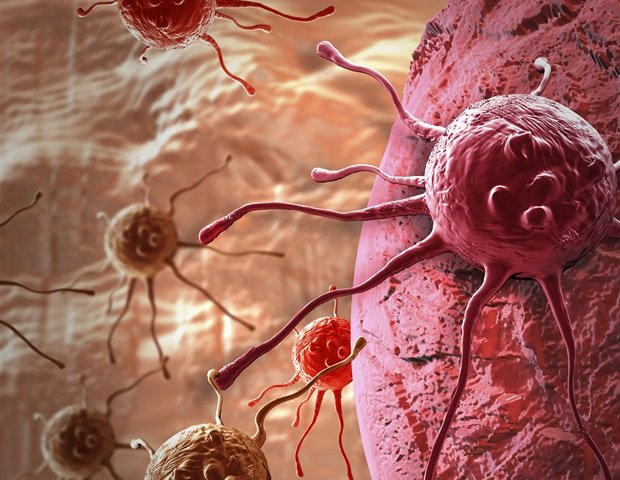
Sylvester Comprehensive Cancer Center, part of the University of Miami Miller School of Medicine, is currently accepting enrollment for a clinical trial for patients with high-grade neuroendocrine tumors.
High-grade neuroendocrine cancer is a complex and progressive disease, but little medical progress has been made, in part because its rarity has constrained research investment. Patients have few options other than conventional chemotherapy.
The new trial, led by Dr. Aman Chauhan, leader of Sylvester University’s neuroendocrine tumor program, offers a new approach. Patients are injected directly into their tumors with a combination of immunotherapy drugs and tumor-destroying “oncolytic” viruses.
Tumors of any organ at any age
Neuroendocrine tumors originate from cells found throughout the body and can affect most organ systems. It most often attacks the lungs, gastrointestinal tract, gynecological tract, and prostate.
Approximately one in six neuroendocrine tumors are classified as high-grade by pathologists. Survival rates for high-grade cancers vary depending on the location of the disease, but most patients die within one to two years, Dr. Chauhan said. Although the majority of cases are in people over the age of 60, these aggressive tumors can occur in people of any age.
Victims of the serious illness include Sean Stone, a rising Hollywood producer who died last March at just 26 years old, and Nicole Borchardt, a vibrant mother of two young children who died in September 2024 at age 39. Her family established the Nicole Borchardt Foundation to honor the legacy of “an extraordinary woman who fought so hard to live and get better.” And Stone’s family has established the Sean Stone Neuroendocrine Cancer Fundraiser to support research at Sylvester.
Checkpoint inhibitors and “hot” tumors
In the new trial, Professor Chouhan will combine an immunotherapy drug called a checkpoint inhibitor with SVV-001 (Seneca Valley virus-001), an oncolytic virus whose safety was tested in a previous trial.
Checkpoint inhibitors expand treatment options for a growing number of tumor types, from melanoma to lung cancer.
Very few high-grade neuroendocrine cancers respond to drugs. But when they do, the effects are often long-lasting.
The challenge is to increase the number of patients who fully respond to immunotherapy.
That’s where the Seneca Valley virus comes into play. SVV does not infect normal cells. It multiplies within tumor cells and destroys them. When tumor cells rupture, their contents are released and the immune system is activated. The virus then infects other tumors, continuing the chain reaction.
Checkpoint inhibitors enhance the immune response against tumor components. In this trial, patients will receive the checkpoint inhibitors nivolumab and ipilimumab.
Chauhan et al. previously tested this approach in preclinical cancer models. The tumor shrank and there was a durable response, he said.
In these studies, oncolytic viruses transformed immune “cold” tumors into “hot” tumors that responded to checkpoint inhibitors. The drug, in turn, acted like “fuel on the fire” and intensified the attack on the tumor, Chauhan said.
Biomarker boost
The new phase 1 trial will enroll about 36 people whose tumors were resistant to or did not respond to previous treatments.
The goal is to find a safe combination dose and begin to compare efficacy with historical data for standard treatments.
Patients’ tumors will also be tested for the presence of a new biomarker found on tumor cells called TEM8, which binds to oncolytic viruses. This phenomenon is unique to SVV and allows the virus to attach to and effectively infect cancer cells. TEM-8 turns SVV into a targeted immunotherapy drug.
Research and care partners
Over the past two years, more than 550 new patients from 30 different states and 10 countries have come to Sylvester seeking treatment and access to neuroendocrine cancer clinical trials.
Mr. Chauhan is leading several clinical trials targeting neuroendocrine tumors and cancer. This is the first investigator-initiated trial at Sylvester specializing in advanced neuroendocrine diseases.
sauce:
University of Miami Miller School of Medicine
