


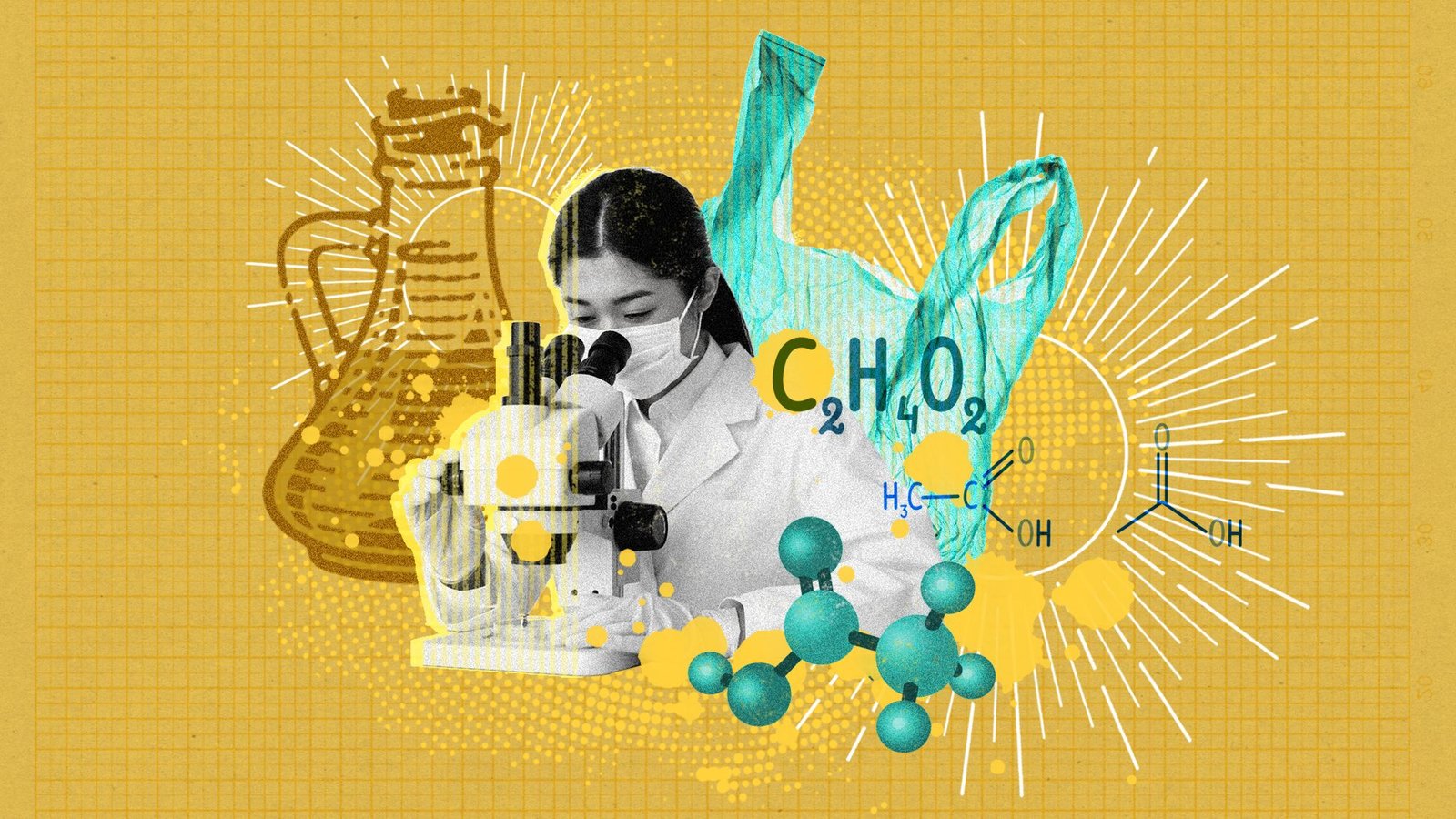
What if we could turn plastic waste into something useful? That dream could soon become a reality, as scientists have discovered a way to use sunlight to turn plastic into acetic acid. Plastics and microplastics are found everywhere, from waterways to remote ecosystems to the bodies of humans and animals. Global plastic usage has also continued to increase over the past 60 years. However, this new method could be a unique and environmentally friendly way to tackle plastic pollution.
sunny solution
“Our goal was to solve the plastic pollution challenge by harnessing sunlight to transform microplastic waste into high-value products,” said Dr. Yi-Ming Wu, professor of mechanical and mechatronics engineering at the University of Waterloo, who led the research, in a statement. When sunlight hits a photocatalyst, two chemical reactions occur in succession. The first “breaks down plastic into smaller molecules,” and the second “converts those molecules into acetic acid,” according to Earth.com. Because this reaction also occurs underwater, it is “particularly relevant for addressing plastic pollution in aquatic environments,” the release states.
you may like
this week
Escape from the echo chamber. Get the facts behind the news and analysis from multiple perspectives.
Subscribe and save
Sign up for this week’s free newsletter
From our morning news briefing to our weekly Good News newsletter, get the week’s best stories delivered straight to your inbox.
From our morning news briefing to our weekly Good News newsletter, get the week’s best stories delivered straight to your inbox.
Another advantage is that this system works with different types of plastics. Acetic acid can be produced from “common plastic waste, including PVC, PP, PE, and PET,” and was “effective across mixed plastic compositions,” the release states. This makes it a valuable tool for real-world waste streams where different plastics are all mixed together.
acidic answer
Global plastic use increased from 20 megatons (Mt) in 1966 to 460 million tons in 2019, according to the University of Michigan’s Center for Sustainable Systems. By 2060, that amount is expected to reach 1,231 tons. Unfortunately, there is no good way to deal with plastic waste. Most of it ends up in landfills, where it remains for thousands of years. They can also become trapped in ecosystems and waterways. Some can be incinerated, but chemicals and smoke are released into the atmosphere. Recycling is an option, but not all types of plastic can be recycled and many current processes require the use of fossil fuels.
This new-found alternative “allows abundant, free solar energy to break down plastic pollution without adding extra carbon dioxide to the atmosphere,” Wu said. Additionally, acetic acid is used to make vinegar, but it has several other uses, with “annual global demand of about 18 million tons,” the engineer said. The material is “widely used across the chemical field and also has some energy applications.” The study results also “point to new possibilities to directly address microplastics” because “the process breaks down plastics at a chemical level,” which “could help prevent the accumulation of microplastics in water systems,” the release states. This technology is still in the experimental stage.
See more details
climate change
Source link
