


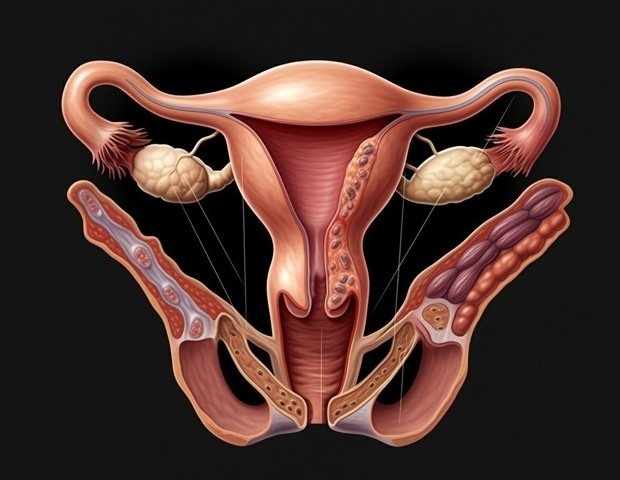
Repeated menstrual cycles don’t just cause endometriosis. They may rewire the brain.
This is an important finding from a new Washington State University study showing that repeated bouts of disease-related inflammation can sensitize the nervous system and cause persistent pain.
This study helps explain one of the most troubling aspects of endometriosis, in which tissue similar to the endometrium grows outside the uterus. It affects more than 10% of women of reproductive age, or approximately 190 million people worldwide, and often causes severe pelvic pain and infertility.
In a paper published in clinical research journalWSU scientist Kanako Hayashi and her colleagues found that repeated cycles of inflammation can cause permanent changes in the brain, amplifying and sustaining pain over time.
“We are showing that this is not just a localized gynecological disease,” said Hayashi, a professor in WSU’s Department of Molecular and Biosciences.
Once the system is sensitized, the brain continues to respond even after the original lesion is gone. ”
Kanako Hayashi, Washington State University
Endometriosis has puzzled researchers for years because pain does not reliably correspond to the severity of the disease. Some patients with extensive disease report little discomfort, whereas those with minimal tissue growth experience debilitating symptoms.
“This discrepancy suggests something more complex is going on,” Hayashi said. “It’s not just the lesion itself; it’s how the body and nervous system respond over time.”
To investigate, the research team designed a model that mimics repeated menstrual cycles. Most previous studies have shown only one episode of endometriosis-like symptoms. Professor Hayashi’s group instead introduced multiple cycles to simulate the repeated backflow of menstrual tissue, called retrograde menstruation, which is thought to contribute to the disease.
Mice exposed to repeated cycles showed increased sensitivity and persistent changes in the nervous system. Inflammation increased in the pelvic region, and signals traveled along nerve pathways to the spinal cord and brain, where the researchers observed clear signs of neuroinflammation.
“That repeated stimulation acts like increasing the volume over and over again,” Hayashi says. “Eventually, the system becomes overly sensitive. Even small signals can be very painful.”
To strengthen their findings, the team also analyzed tissue samples from rhesus macaques with naturally occurring endometriosis through a collaboration with the Oregon National Primate Research Center. No primate experiments were conducted at WSU.
This result helps explain why the pain persists even after the lesion is removed. Once the brain’s pain processing circuits are sensitized, they can continue to generate pain signals independently.
“It becomes a feedback loop,” Hayashi says. “The body sends signals to the brain, and the brain strengthens those signals and sends them back to the body.”
The study also points to new approaches for treatment. Treatments may target inflammation in the nervous system, rather than focusing solely on removing lesions or suppressing hormones. In this study, both commonly used hormonal agents and immunomodulatory compounds reduced pain sensitivity and brain inflammation in a mouse model, without shrinking the lesions.
“We now have a system in place that allows us to follow the entire process from the beginning,” Hayashi said. “This gives us a powerful way to develop better treatments and, hopefully, detect the disease earlier.”
sauce:
washington state university
Reference magazines:
harvey, me others. (2026). In endometriosis models, repeated retrograde menstruation enhances central sensitization caused by neuroinflammation. clinical research journal. DOI: 10.1172/jci194136.
