


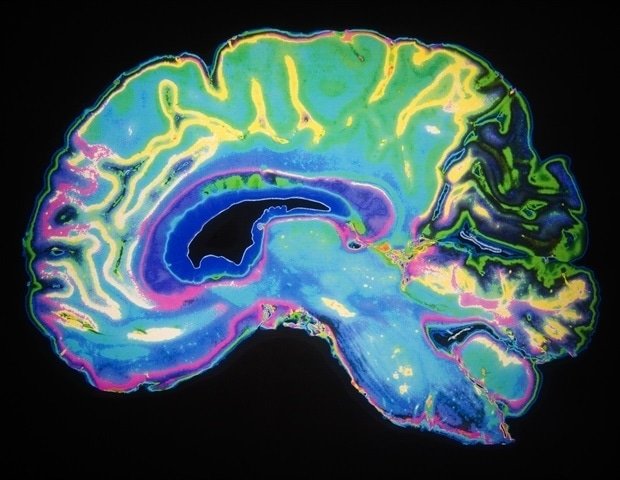
Scientists have long known that the human brain continues to develop well beyond the teenage years, with important changes involving decision-making and emotional regulation continuing into our mid-to-late 20s. Now, researchers at Albert Einstein College of Medicine have for the first time identified a biological process in mice that provides new insight into how memory circuits mature during this long period of brain development.
Published today is PLOS Biologyin this study, found that key memory areas in the mouse brain undergo an unexpected period of remodeling during late adolescence. As these changes become apparent, memories formed early in life become temporarily harder to retrieve and resurface later, often in less accurate detail. This finding is consistent with growing evidence that adolescence is a dynamic period of brain maturation and identifies biological mechanisms that may help explain how access to memory changes during this developmental stage.
Using a mouse model, the researchers focused on the retrosplenial cortex (RSP), a brain region that plays a key role in organizing and retrieving long-term memory. They found that protective mesh-like structures called perineural nets, which help stabilize memory circuits, unexpectedly decline in late adolescence before being rebuilt in adulthood. This change was limited to the RSP and was not observed in the nearby hippocampus, another brain region essential for memory.
“We have known for years that the brain continues to develop throughout adolescence and young adulthood,” said lead author Elena Radulovich, MD. Einstein’s Dominick P. Purpura Professor in the Department of Neuroscience and the Department of Psychiatry and Behavioral Sciences.
“Our findings begin to explain what the developmental process in one of the brain’s memory circuits is and how it may influence how we recall previous experiences.
Although we do not yet fully understand the effects of the observed perineural network fluctuations, we believe that perineural network reorganization in RSP helps prioritize access to memories formed in adulthood at the expense of memories formed in early adolescence. This may help them better adapt to the situations and challenges they encounter at different life stages.
“Whether recalling early adolescence experiences comes at the cost of adapting to new experiences is currently under investigation.”
Dr. Radulovic is also the director of the Montefiore Einstein Institute for Psychiatry (PRIME) and the Sylvia and Robert S. Olnick Professor in Neuroscience.
Teenage brains are not fully developed yet
Previous research suggested that the memory circuits examined in this study reach maturity in early adolescence. Instead, the researchers found that an important stabilizing system temporarily weakens in late adolescence and then recovers in adulthood.
This timing is noteworthy because it corresponds to a period currently recognized as one of continuous brain maturation in humans. Although adolescence was once defined as ending around age 19, neuroscientists are increasingly recognizing that important developmental changes continue into our 20s. According to the National Institutes of Health, the brain continues to develop and mature until your mid to late 20s.
Their behavior was consistent with their ecology. The retrosplenial cortex is responsible for older, more established memories. As stabilizing structures declined, access to memories formed early in life became less reliable. ”
Dr. Hui Zhang, First Author, Einstein Researcher
memory restoration
To see how these brain changes affected behavior, the researchers trained mice to associate a particular environment with an unpleasant experience: a mild foot shock. Shortly afterward, the mice remembered the experience and froze when they were returned to the same room. However, after a few weeks, many of the mice trained in early adolescence stopped exhibiting fear responses, whereas mice trained in adulthood retained stable memories over the same period of time.
When the adolescent mice were then exposed to another test in a different environment, they responded to the original settings again, indicating that the memory was not erased but temporarily inaccessible.
The researchers found that these changes were caused by a decrease in key structural proteins that help build and maintain perineural nets, as well as decreased activity of TGFβ2, a growth factor involved in maintaining their structure. By strengthening the protective network and restoring TGFβ2 activity, the mice regained the ability to retrieve memories formed during life.
By mid-adulthood, many of those memories came back spontaneously, but with less accuracy. Rather than reacting only to the original environment, the mice generalized their fear of the unfamiliar environment. Researchers note that this pattern resembles a “reminiscence bump.” This is a well-known phenomenon in which adults disproportionately recall memories from adolescence and early adulthood, but often recall the emotional significance of the experience rather than the specific details. It remains to be determined whether this is due to a random increase in perineural networks with age, in response to similar experiences, a reenactment of past experiences, or other factors.
This discovery may also have implications beyond memory. Schizophrenia and major depression often begin in late adolescence in humans, the same developmental period in which researchers observed massive remodeling of memory circuits in mice. The authors suggest that in genetically susceptible individuals, this developmental change may contribute to vulnerability to psychiatric disorders, but additional research is needed to determine whether similar mechanisms occur in humans.
Other Einstein authors include Dr. Zorika Petrovich, Dr. Elizabeth M. Wood, Dr. Ana Chikvarik, Dr. Maajan Crispil Aron, Dr. Kendra Parker, Dr. Thomas E. Bassett, Dr. Anna Carbosino, and Dr. J. Tiago Gonçalves. Other authors include Vladimir Jovacevich, Ph.D., Anita L. Gedea, M.A., and Pengfei Yi, Ph.D., of Northwestern University Feinberg School of Medicine, and Gal Richter-Levin, Ph.D., of the Sagol Department of Neurobiology at the University of Haifa.
sauce:
Albert Einstein College of Medicine
Reference magazines:
Chan, H. Others. (2026). Reorganization of the retrosplenial cortex during late adolescence destabilizes contextual memory circuits. PLOS Biology. DOI: 10.1371/journal.pbio.3003908. https://journals.plos.org/plosbiology/article?id=10.1371/journal.pbio.3003908
