


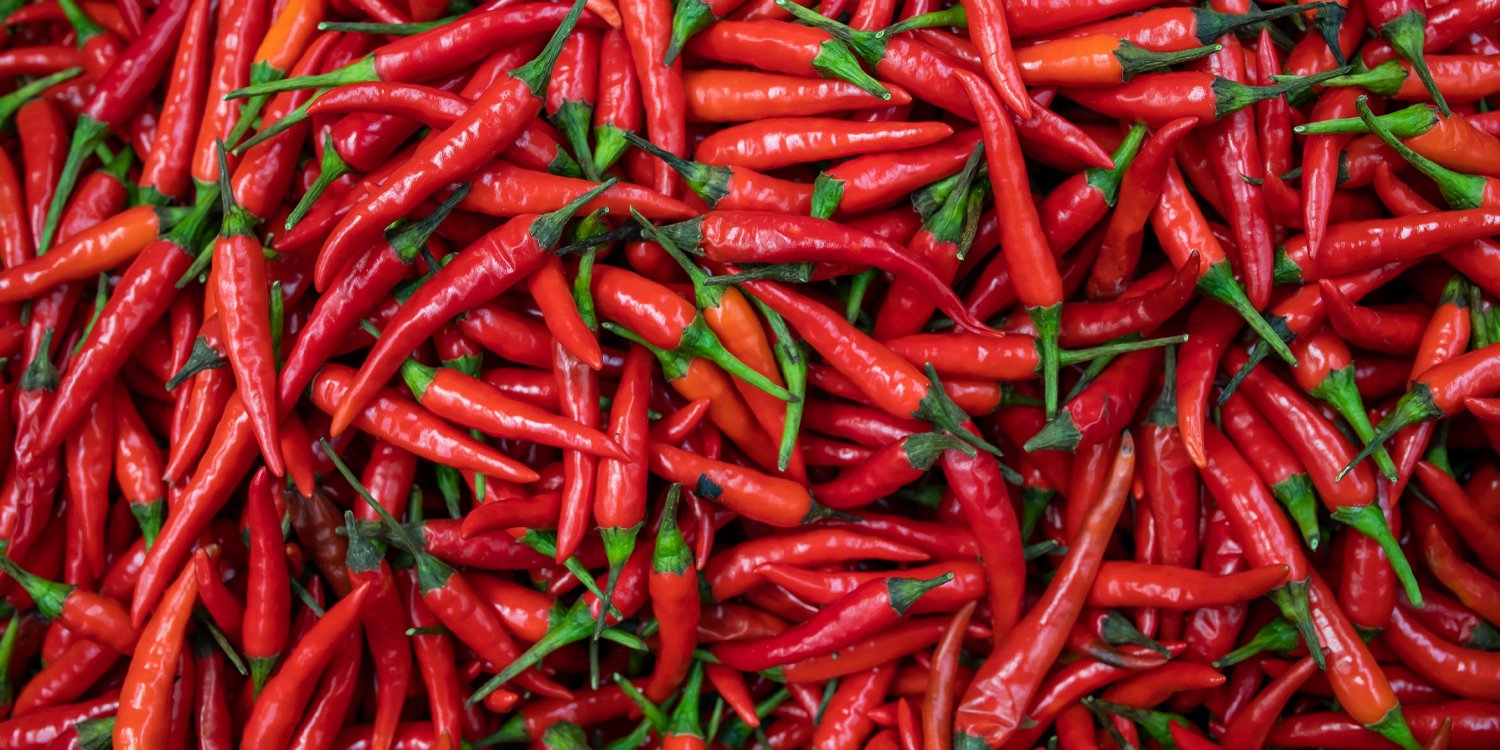
Eating spicy candy may dull the sensation of severe physical pain, according to a recent small study on human sensory perception. Researchers found that putting gelatin cubes infused with chili peppers in the mouth reduced people’s intense reactions to high-intensity laser heat applied to their hands, but it did not reduce the sensation of mild heat pain. The results of this study were published in the journal Physiology & Behavior.
Capsaicin is the active chemical component that gives chili peppers their famous kick. When ingested, it binds to a specific type of receptor in the body known as TRPV1. These receptors are distributed throughout the mouth, tongue, and skin, and their primary biological role is to detect dangerous environmental heat.
When capsaicin binds to these receptors, it essentially tricks the nervous system. The brain feels a severe burning sensation, even though no physical burning is occurring. This causes an intense physical reaction without leaving any lasting physical marks or tissue damage.
Medicine already uses this local chemical reaction to treat nerve damage, arthritis, and muscle pain. Topical creams and patches containing high concentrations of capsaicin are routinely used to manage chronic pain. By maintaining a constant, low-level burn, these creams overload nociceptors, the sensory neurons that respond to noxious stimuli.
Over time, this constant stimulation causes the sensory nerves to become exhausted and unable to send actual pain signals to the brain. Although long-term topical use of capsaicin is a common medical procedure, the short-term effects of eating a spicy meal on sudden acute pain are not well understood. Previous studies have yielded mixed results on this topic. Some experiments suggest that fiery meals lower a person’s physical pain threshold, while other trials have noted rapid pain relief effects.
Zhou Yizhou, a researcher at China’s Chongqing Normal University, and his team of colleagues wanted to test whether the direct sensation of a burning mouth could change the way the brain processes other painful events that occur in the body. They designed an experiment to see if short-term exposure to spicy edibles could act as a temporary pain reliever for heat pain. The research team also sought to understand whether a person’s daily eating habits were related to their overall baseline pain tolerance.
To investigate this dynamic, the research team recruited 48 healthy young adults from a university campus. The sample included fewer than 50 participants and is therefore considered a small study. To participate, volunteers had to not have chronic pain conditions, mental illness, or digestive problems such as stomach ulcers. The experiment required each volunteer to visit the lab on two separate occasions, approximately one week apart.
At each lab visit, participants filled out questionnaires to assess their mood and hunger levels. Because sudden changes in mood or appetite can change how physical discomfort is felt, the researchers needed to make sure the volunteers started from the exact same emotional baseline on both days.
The researchers then tailored a specialized laser machine to each participant. The device emitted precise bursts of infrared heat directly onto the back of my left hand. The researchers used a thermal laser because it activates the exact same neural pathways as capsaicin, making it an ideal tool for testing overlapping sensory responses.
Participants rated the laser pulses on a standard scale from zero, meaning no sensation at all, to 10, meaning the worst pain imaginable. The technician adjusted the laser energy up and down until it was fixed at each individual’s specific baseline. They separated mild stimuli, which were rated as 4, and harsh stimuli, which were rated as 7.
Once the customized baseline was set, the taste test began. During one visit, participants held a gelatin cube mixed with crushed chili powder in their mouths for 5 minutes without chewing or swallowing. Based on chemical analysis, the cubes contained a safe and moderate amount of capsaicin, designed to cause a noticeable burning sensation. On other visits, participants placed plain water-based gelatin cubes in their mouths as a control condition.
After 5 minutes, participants spit out the gelatin and rinsed their mouth thoroughly with purified water. They immediately received 40 small laser pulses in their left hand, split evenly between gentle and powerful settings. After each pulse, the volunteers had five seconds to rate the physical intensity of the pain and how emotionally unpleasant the experience was.
A baseline check of mood revealed that sipping spicy gelatin did not change participants’ overall emotional state. Participants didn’t just feel better or worse during the chili condition. As expected, they reported an intense burning sensation in their mouth that lasted throughout the laser portion of the test.
When examining low-intensity pain trials, researchers found no difference between the two tasting sessions. Participants rated the gentle heat pulses as equally painful regardless of whether they had just tasted spicy gelatin or plain water gelatin. The burning sensation in the oral cavity did not alleviate the mild physical discomfort.
With stronger laser pulses, a different pattern emerged. Participants rated the high-level heat burst as significantly less intense after sipping on chilli gelatin than after sipping on plain gelatin. They also rated the high-intensity pulses as less unpleasant. The spicy flavor stimulus acted as a temporary buffer for the intense pain.
At the end of the second visit, researchers asked volunteers to fill out a final questionnaire detailing their usual eating habits. Participants reported how often they ate foods that caused a tingling or burning sensation and how much heat they preferred on a daily basis. They also completed a standard psychological assessment designed to measure general fear of medical and accidental pain.
People who reported regularly liking spicy foods had lower scores on pain sensitivity surveys. They were less likely to fear imagined painful scenarios and generally showed a higher tolerance for physical pain. People who eat spicy food more often prefer a much higher level of spiciness when cooking at home.
The authors pointed to several possible biological explanations for the results. One leading theory concerns conditioned pain modulation, a phenomenon in which a locally unpleasant sensation signals the nervous system to suppress the perception of a second pain event elsewhere in the body. The intense spicy heat in your mouth triggers natural descending inhibitory pathways from your brain, which can soften the harsh sensation of the laser on your hands. Capsaicin is also known to promote the release of endorphins, which act as natural pain-relieving chemicals produced in the body.
Alternatively, oral burns may simply act as a powerful distraction. If the participants were hyper-focused on the burning sensation inside their mouth, their brains may have had less cognitive bandwidth to process the painful laser. Future experimental studies will need to incorporate methods to measure attention in order to fully separate mental distractions from physiological neural signals.
There are also limitations to the relationship found between dietary habits and pain tolerance. The research data only shows a mathematical correlation, meaning it cannot prove that eating fiery foods makes you more resistant to pain in general. Some people are born with a higher pain tolerance and as a result enjoy spicier foods. A person’s environment and cultural upbringing probably shape diet and pain tolerance simultaneously.
Furthermore, this small sample consisted entirely of young, healthy college students from China. Culturally, dietary habits regarding chili pepper consumption vary widely around the world. The findings may not apply to older adults, people who suffer from chronic pain disorders, or people who rarely see spicy seasonings in their daily diet. Based on this framework, future trials may test individuals across diverse cultural backgrounds and age groups.
The study, “Acute spicy stimulation reduces laser-induced thermal pain perception in healthy adults,” was authored by Yizhou Zhou, Tingran Chen, Yu Peng, Jiayu Zheng, and Zhou Yang.
