


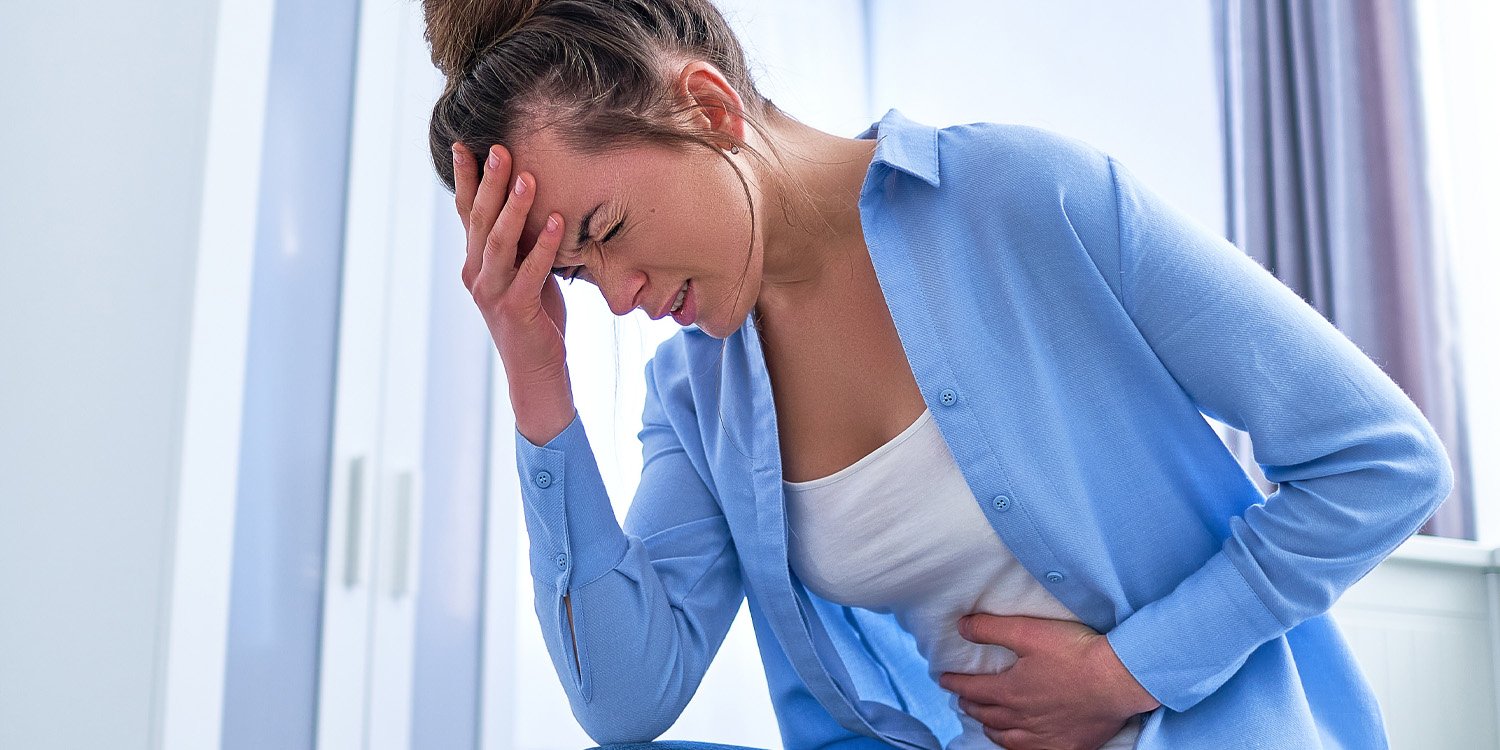
New research published in European Journal of Obstetrics and Gynecology and Reproductive Biology This suggests that severe menstrual pain affects more than just physical comfort. The findings provide evidence that women experiencing menstrual pain also face challenges with attention, speed of thought, self-esteem, and ability to perform daily tasks. This study shows that menstrual pain affects people’s ability to function in daily life, such as school and work.
Primary dysmenorrhea is a medical term for recurrent, severe menstrual pain that is not caused by an underlying medical condition or pelvic abnormality. This condition is very common among young women. Lower abdominal pain often radiates to the thighs and peaks during the first two days of menstruation.
Scientists believe that this intense discomfort is caused by overproduction of prostaglandins. These are hormone-like chemicals that cause powerful uterine contractions. In addition to the initial abdominal pain, the presence of high levels of these chemicals can cause additional symptoms such as nausea and fatigue.
The scientists noted that existing research on this topic tends to be highly fragmented. Past research has typically focused on a single aspect of menstrual pain, such as its severity or the psychological distress it causes. Few scientific studies have evaluated how physical pain, mental skills, and mental health interact across the menstrual cycle.
The researchers wanted to fill this gap by tracking these different factors together across different biological phases. They aimed to understand how fluctuations in the menstrual cycle affect occupational performance. In occupational therapy, occupational performance refers to an individual’s ability and satisfaction in performing meaningful daily roles such as studying, working, and socializing.
“Many young women report that they can’t concentrate or feel different on certain days of their menstrual cycle, especially when they have menstrual pain,” said study author Gökçen Akyurek, an associate professor at Hacettepe University. “Despite how common this is, these experiences are often minimized or seen as ‘just part of being a woman.’ We wanted to understand whether these changes are real, whether they are measurable, and how they impact daily life, not just physically but also cognitively and emotionally.”
To investigate these factors, scientists recruited 138 young women between the ages of 17 and 25. The sample included 79 women who experienced primary dysmenorrhea and 59 asymptomatic women who did not experience menstrual pain. Doctors evaluated participants to ensure that the pain was not caused by a secondary problem, such as endometriosis.
Researchers assessed participants at three different points in their menstrual cycle. These points include the first three days of bleeding, the mid-follicular phase, which is about a week after the start of your period, and the mid-luteal phase, which is about a week before the start of your next menstrual period.
During each session, participants completed several standardized questionnaires. These surveys measured pain intensity, body awareness, self-esteem, and attitudes toward menstruation. Participants also rated their job performance and satisfaction to assess how well they felt in control of their daily lives.
In addition to the survey, the researchers administered a cognitive test to measure mental acuity. They used a well-known psychological assessment that measures selective attention and the ability to control impulsive reactions. In this test, participants are required to correctly name the ink color by looking at color words printed in conflicting ink colors rather than reading written words.
We also used an auditory addition task to assess how quickly participants could process new information. In this test, participants hear a series of numbers and must quickly add the new number to the number they just heard. It measures working memory, which is the brain’s ability to retain and manipulate information over short periods of time.
Results showed consistent differences between the two groups of women. People with severe menstrual pain reported lower BMI, a measure of body fat based on height and weight. Researchers note that adequate body fat is essential for hormonal regulation, and an imbalance can lead to an increase in chemicals that cause menstrual pain.
Women in the pain group also expressed more negative beliefs about menstruation, often viewing it as a debilitating event. They showed lower self-esteem compared to women without menstrual pain. This decline in self-esteem and daily functioning was present throughout all stages of the menstrual cycle, not just during bleeding.
This continued decline suggests that the psychological and functional toll of severe menstrual pain extends beyond the days of actual physical pain. Mental performance also fluctuates depending on the timing of your menstrual cycle. In women with primary dysmenorrhea, attention and information processing speed were significantly reduced during the luteal phase.
The luteal phase occurs just before menstruation and is accompanied by significant hormonal changes, including a rise in progesterone. These hormonal changes can interact with pain anticipation to cause temporary cognitive fatigue. In contrast, women without menstrual pain did not experience a similar psychological decline.
Both groups reported that their work performance and body awareness reached their lowest points during the actual menstrual period. Body awareness is the ability to recognize and understand internal bodily sensations. When women experience intense pain, they can become disconnected from their body’s signals as a coping mechanism.
Women with severe seizures consistently rate their ability to manage daily life much lower than asymptomatic women. Statistical analysis showed that menstrual pain and negative attitudes were strong predictors of low self-esteem and poor functioning. These findings highlight that primary dysmenorrhea creates a complex web of physical and emotional challenges.
“What surprised us most was how consistent and widespread the effects were,” Akyurek told SciPost. “Women with menstrual pain not only reported feeling worse, they actually performed worse on cognitive tasks and reported lower self-confidence and daily functioning, especially during certain stages of the menstrual cycle.”
“Our findings show that it can affect attention, speed of thought, self-confidence, and even how well you can perform daily tasks such as studying or working. In other words, discomfort is more than just discomfort; it can shape how people function in their daily lives.”
Although this study provides a broad view of menstrual health, there are also some limitations to keep in mind. The study relied on participants self-reporting their menstrual periods, rather than using blood tests to confirm exact hormone levels. The scientists also did not control for external factors that can affect pain and mental acuity, such as sleep quality, nutrition, and physical activity.
Because the participants were primarily college students, the results may not fully apply to women of different age groups and educational backgrounds. Because this study compared groups at specific points in time, it cannot conclusively prove that menstrual pain directly causes these cognitive and emotional changes. Other unmeasured factors, such as underlying anxiety or stress, may influence how pain is perceived.
Future research may explore practical strategies to help individuals manage these symptoms. Researchers hope to develop targeted interventions to help young women suffering from menstrual pain.
“Our next goal is to move beyond understanding the problems and start developing solutions, especially practical strategies to help individuals cope with these challenges in their daily lives, schools, and jobs,” Akyurek said.
“One of the key messages is that these experiences are real and measurable. When we begin to recognize that menstrual health is ‘more than just pain’ and impacts daily functioning, we can create more supportive environments in education, the workplace, and health care.” ”
The study, “Neurocognitive function, psychosocial characteristics, and occupational performance across the menstrual period in young adults with and without primary dysmenorrhea,” was authored by Aysenur Karakus, Semanur Inanc, and Gokcen Akyurek.
