


Recent research published in PNAS Nexus This suggests that the famous equality found in some hunter-gatherer societies may be driven more by self-interest than by a natural desire to be generous. When the researchers allowed participants to both give and receive food from others in a game, they found that equality was typically achieved only when taking food from the person who had more. This provides evidence that active demands for fair distribution, rather than voluntary philanthropy, help maintain balanced resources in these communities.
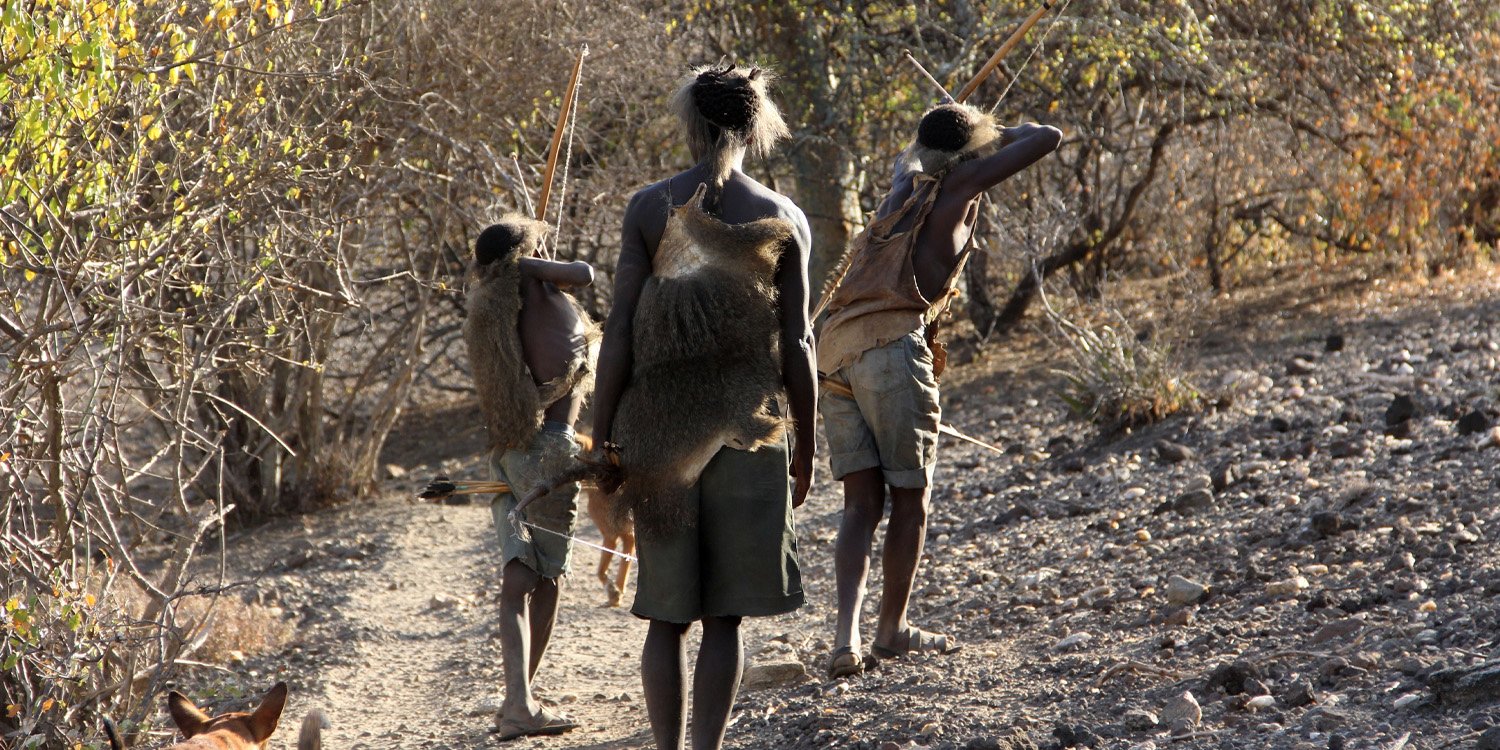
The Hadza people are an indigenous people who live near Lake Eyasi in northwestern Tanzania. Many Hadza people still rely on hunting and gathering for most of their food. Like many foraging societies, they are known for their high level of equality and their habit of sharing food widely across the camp.
The egalitarianism of these groups means that they operate without formal leaders and actively resist major differences in wealth or status. Scientists have debated the motivations for this widespread resource sharing for decades. Some argue that humans have an evolved internal preference to treat others equally and generously.
Other experts suggest that equality is maintained through social pressure. In this view, individuals actively demand food from those who have surplus. Previous economic experiments tested these ideas by giving participants a certain amount of resources and asking them if they wanted to share.
However, these past games rarely matched the high level of equality found in real Hadza daily life. The design of these early games only allowed people to transfer resources. This setting does not accurately reflect how food distribution works in the real world. In reality, distribution among the Hadza often involves people asking for and receiving food from others.
“While food sharing among many hunter-gatherers is fair, “giving” often involves “taking” food from others or asking for food. In the ethnographic literature, this is sometimes referred to as ‘demand sharing’. “Previous economic giving experiments, such as the Ultimatum Game and the Dictator Game, allowed people to redistribute their resource endowments through donations, but rarely allowed them to ‘take’ from others,” explained Duncan Stivard Hawkes, assistant professor at Baylor University and editor-in-chief of the study. Hunter-gatherer research.
To better understand these dynamics, researchers designed a new experiment in which participants could give and receive resources. They wanted to see whether a realistic level of equality emerges when people have the option to get something from their colleagues.
To test these ideas, researchers conducted a game with 117 Hadza adults from nine different camps. During a personal interview away from the main camp, each participant was shown a photo of themselves and a face-down photo of an anonymous campmate. Using real photos helped participants understand that they were interacting with real people in their communities.
Participants were randomly assigned to one of two unequal starting conditions using a coin toss. In the advantageous condition, the participant started with eight tokens and the anonymous campmate started with four tokens. Under adverse conditions, participants received four tokens and their campmates received eight tokens.
This token represented dried banana chips, a highly valuable food that was an important source of calories. Before the final payment, participants were told that they could move their tokens as they liked. They can give tokens to campmates, take tokens from campmates, or leave the distribution as is.
“We used photos to show participants that they were giving and receiving from others in the same camp,” Stivard-Hawkes explained. “We believe this was the first study to do this. Combined with allowing participants to both ‘give’ and ‘take,’ we believe this made the game more realistic than many economic experiments conducted to date in this region.”
The researchers found that in both conditions, participants kept more resources for themselves. Overall, participants chose to give to other players in approximately 31% of their decisions and chose to receive from other players in approximately 43% of their decisions. The most popular choice overall was for players to leave no tokens at all for anonymous campmates.
When participants started with more resources than their campmates, only about 41 percent chose to give some away. About 30 percent of those in this advantaged position actually received tokens from their campmates to increase their wealth. If people started with a surplus, they were unlikely to reach equality.
When participants started with an unfavorable allocation, their behavior changed. In this scenario, almost 59% of participants chose to take resources from other players. When people received tokens to correct personal disadvantages, the final distribution closely resembled the high level of equality found in actual Hadza food distribution.
“Our main operations had a huge impact on the decision of the match,” Stivard-Hawkes told PsyPost. “When it came to the actual decision-making task, participants in the favorable and unfavorable inequality conditions were essentially playing the same game as each other: a fairly standard dictator’s game design of choosing between 12 token allocation patterns. However, the framework of this study, either favorable or unfavorable inequality, had a strong influence on the decision. Therefore, this first-order manipulation is very important and exemplifies the importance of ‘framework’ in economic experiments of this kind.”
These findings suggest that equality in these communities is not primarily driven by unsolicited generosity. Rather, it tends to occur because those who have less actively demand or take from those who have more. The researchers noted that this behavior closely matched actual ethnographic observations of daily life in the camp.
“Descriptions of hunter-gatherer egalitarianism can give the impression that these societies are unusually generous and public-spirited because they haven’t been corrupted by ‘modernity’. This is the plot of the movie ‘The Gods Must Be Mad’, where a coke bottle falls into the Kalahari Desert and causes all sorts of problems,” Stivard-Hawkes told Cypost.
“The backlash against this ‘noble savage myth’ has led some researchers (such as Graeber and Wengrow) to reject the idea of an egalitarian society altogether. But in reality, Hadza food distribution is highly egalitarian, with people donating much of the food they raise. Gatherer food distribution yields ‘egalitarian’ outcomes that are absolutely more fair than found in many market-oriented societies.”
“My point is that it’s not because hunter-gatherers are more or less tolerant than any other group,” Stibbard-Hawkes explained. “In these games, some people were generous, while others were not. Instead, people ensured their equality by pressuring others to share; giving as well as taking. Here, taking was important. This is consistent with the ethnographic explanation, which I detailed in another recent article.”
Scientists also observed clear demographic differences in how people play the game. Men and young people were more likely to give resources when they started with an advantage. In both conditions, women and older adults tended to keep more for themselves, which is consistent with the pattern seen in traditional foraging labor divisions.
The researchers also investigated how exposure to outside culture influences decision-making. Participants completed a questionnaire measuring their experiences with formal schooling, paid work, and Swahili ethnic culture. Those with more exposure to outside cultures were moderately less likely to modify disadvantageous inequalities.
“In other words, they were tolerant of others owning more than them, which makes sense given that the Hadza traditionally did not own much private property,” Stibbard-Hawkes said. “However, this effect was only small.”
This increased tolerance for inequality may reflect changes in traditional sharing practices. As people become more involved in the market economy, they often begin to accumulate more personal wealth. This suggests that changing economic conditions may gradually change the way small communities enforce equality.
Readers may be tempted to interpret these findings as evidence that hunter-gatherer equality is a myth. Scientists stress that this is a misconception. Egalitarianism in these societies is very real and results in very equal living conditions, but it requires active effort.
“I’ve seen coverage of my recent research claiming that “egalitarianism isn’t real,” or that hunter-gatherers “are not actually egalitarian,” Stivard-Hawkes said. “This is not what I’m saying. I think hunter-gatherers are (relatively) very egalitarian.”
“But egalitarianism is not because everyone is especially generous or noble; people often have to secure a fairer share for themselves. Hunter-gatherer egalitarianism is often very stressful and can lead to friction, grumbling, and discontent, as is often the case in any society when people seek fairer outcomes for themselves. But egalitarianism is real, and we often just misunderstand it.”
This study has several limitations that provide avenues for future research. The experiment was conducted anonymously to protect privacy, removing the public scrutiny and social pressure that would come with sharing food in a real camp. Future research could investigate how third-party monitoring eyes influence these sharing decisions.
Additionally, the game relied on a specific currency: dried banana chips, which could have a different value than freshly hunted meat or gathered berries. The scientists plan to continue this research by directly comparing individuals’ choices in experimental games with their real-life sharing habits over time. They also hope to study how continued integration into spot markets will continue to change traditional sharing practices.
The study, “The ‘I’ in Egalitarianism: Hadza hunter-gatherers abhor inequality primarily when it is personally disadvantageous,” was authored by Christopher M. Smith, Duncan N.E. Stivard-Hawkes, Eugen Dimant, Ibrahim A. Mabulla, Cristina Bicchieri, and Collen L. Apicella.
