


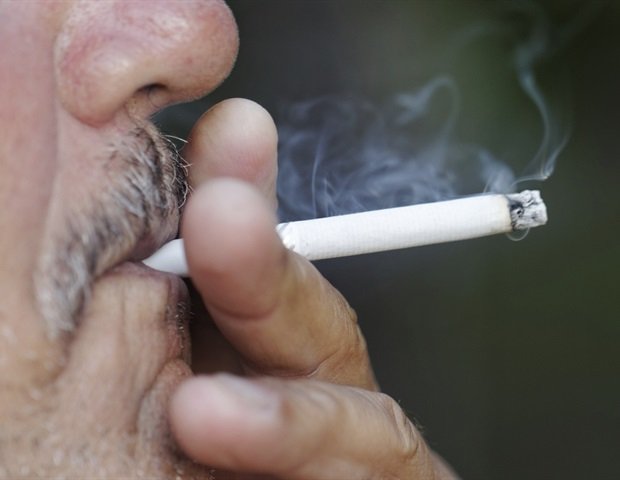
Second-hand smoke exposure in Scotland has fallen by 96% since Scotland’s landmark smoking ban came into force on March 26, 2006, new research from the University of Stirling and the College of Public Health has revealed.
However, analysis shows that many workers are still exposed to second-hand smoke in settings not fully covered by the law, such as private homes visited by care workers and outdoor hospitality jobs.
The study, led by Professor Sean Semple from the Institute of Social Marketing and Health (ISMH) at the University of Stirling, analyzed 26 years of Scottish Health Survey data (1998-2024) and looked at salivary cotinine, a biomarker that measures recent exposure to tobacco smoke in non-smokers.
The research paper, “20 years after the introduction of smoke-free laws in Scotland: A secondary analysis of the Scottish Health Survey dataset (1998-2024) examining changes in household smoking rules and salivary cotinine levels in non-smokers”, was published in the journal Tobacco-Induced Diseases.
The study found that between 1998 and 2024, average salivary cotinine levels in non-smokers fell by 95.7%, with the most rapid decline occurring in the years immediately after Scotland’s smoke-free laws came into force.
However, since 2011, improvements have slowed, with almost a quarter of non-smoking adults still having measurable levels of cotinine in 2024, indicating continued exposure to second-hand tobacco smoke on any given day.
Professor Semple said: “Scotland’s smoke-free laws have brought extraordinary benefits to public health. The scale of the reduction in second-hand smoke exposure since 2006 is astonishing and shows how effective bold legislation can be.”
“Scotland should be extremely proud of this achievement and celebrate its success in cleaning the air and improving the health of millions of people who previously had to breathe second-hand smoke at work or leisure. It has been 20 years since the majority of people in Scotland stopped breathing toxins from tobacco smoke in their daily lives.
“However, nearly a quarter of non-smokers are still exposed to tobacco smoke, and many of these exposures occur at work, particularly during outdoor customer service, transport, and visits to private homes. No one should be forced to smoke at work.
“While exposure levels today are typically much lower than before 2006, repeated low-level exposures still pose health risks. If we are to meet Scotland’s target of reducing smoking prevalence to less than 5 per cent by 2034, we need a renewed focus on protecting workers and tackling growing inequalities in household exposures.”
The study also looked at smoking rules in the home from 2012 to 2024. The proportion of smoke-free homes increased from 75.2% to 90.2%, equating to an additional 380,000 smoke-free homes across Scotland.
However, inequality has widened significantly. Households in the most deprived areas are now more than 10 times more likely to allow indoor smoking than those in the least deprived areas, which is more than double the inequality gap recorded in 2012.
Researchers say extending anti-smoking protection to more workplaces, alongside targeted smoking cessation support and practical interventions to encourage smoking cessation at home, could help reduce remaining exposures and tackle growing health disparities.
As Scotland marks the 20th anniversary of its landmark smoke-free legislation, our research demonstrates both the enduring success of the policy and the need for next steps of action to protect those still at risk. ”
Dr Rachel O’Donnell, co-author, University of Stirling ISMH
Dr Garth Reid, Public Health Consultant at Public Health Scotland, said: “Smoking is one of the biggest causes of ill health and premature death in Scotland. Thanks to the smoking ban, smoking rates in Scotland are historically low and we want to encourage more people to quit as we move towards a smoke-free ban in 2034.”
“Quiting smoking is one of the best things you can do for your health, and even if you’ve been smoking for a long time, you’ll start seeing the benefits right away.
“Whether you are ready to quit smoking or are just starting to think about quitting, NHS Scotland Smoking Smoking Service, Quit Your Way and your local pharmacy can help you quit and stay smoke-free in a way that is right for you.”
Public Health Minister Jenni Minto said: ‘The ban on smoking in indoor public places is a milestone for Scotland and one we can all be proud of.
“Since 2006, cigarette smoking has almost halved. To help people quit, we are funding NHS quit smoking services across Scotland and last year they recorded more than 30,000 quit attempts.
“I am delighted that the Tobacco and Vaping Bill, in its final stages, gives Scottish Ministers new powers to expand existing smoke-free spaces and create vaping and heated tobacco-free spaces. This will ensure we reach our goal of a tobacco-free Scotland by 2034 and further reduce exposure to products that harm our health.”
sauce:
Reference magazines:
Semple, S. others. (2026). 20 years since Scotland’s smoke-free law: A secondary analysis of the Scottish Health Survey dataset (1998-2024) examining changes in household smoking rules and salivary cotinine levels in non-smokers. tobacco-induced diseases. DOI: 10.18332/tid/219319. https://www.tobaccoinduceddiseases.org/Twenty-years-on-from-smoke-free-legislation-in-Scotland-A-Secondary-analysis-of-the,219319,0,2.html
