

Close Menu

    Subscribe to Updates

    Get the latest creative news from FooBar about art, design and business.

    What's Hot

    2026 Pharma Outlook: Key Trends for Pharmacologists and Drug Development Leaders

    September 26, 2026

    The Climate-Health Crisis in Urban Environments: Who It’s For and What You’ll Gain

    September 25, 2026

    Overcoming Access Barriers to Evidence-Based Psychiatric Treatments in Inpatient Settings

    September 24, 2026
    Facebook X (Twitter) Instagram
    Facebook X (Twitter) Instagram
    Health Magazine
    • Home
    • Environmental Health
    • Health Technology
    • Medical Research
    • Mental Health
    • Nutrition Science
    • Pharma
    • Public Health
    • Discover
      • Daily Health Tips
      • Financial Health & Stability
      • Holistic Health & Wellness
      • Mental Health
      • Nutrition & Dietary Trends
      • Professional & Personal Growth
    • Our Mission
    Health Magazine
    Home » News » Scientists trace the shocking origins of the human eye to ancient ‘cyclops’
    Nutrition Science

    Scientists trace the shocking origins of the human eye to ancient ‘cyclops’

    healthadminBy healthadminJuly 26, 2026No Comments5 Mins Read
    Scientists trace the shocking origins of the human eye to ancient ‘cyclops’
    Share
    Facebook Twitter Reddit Telegram Pinterest Email


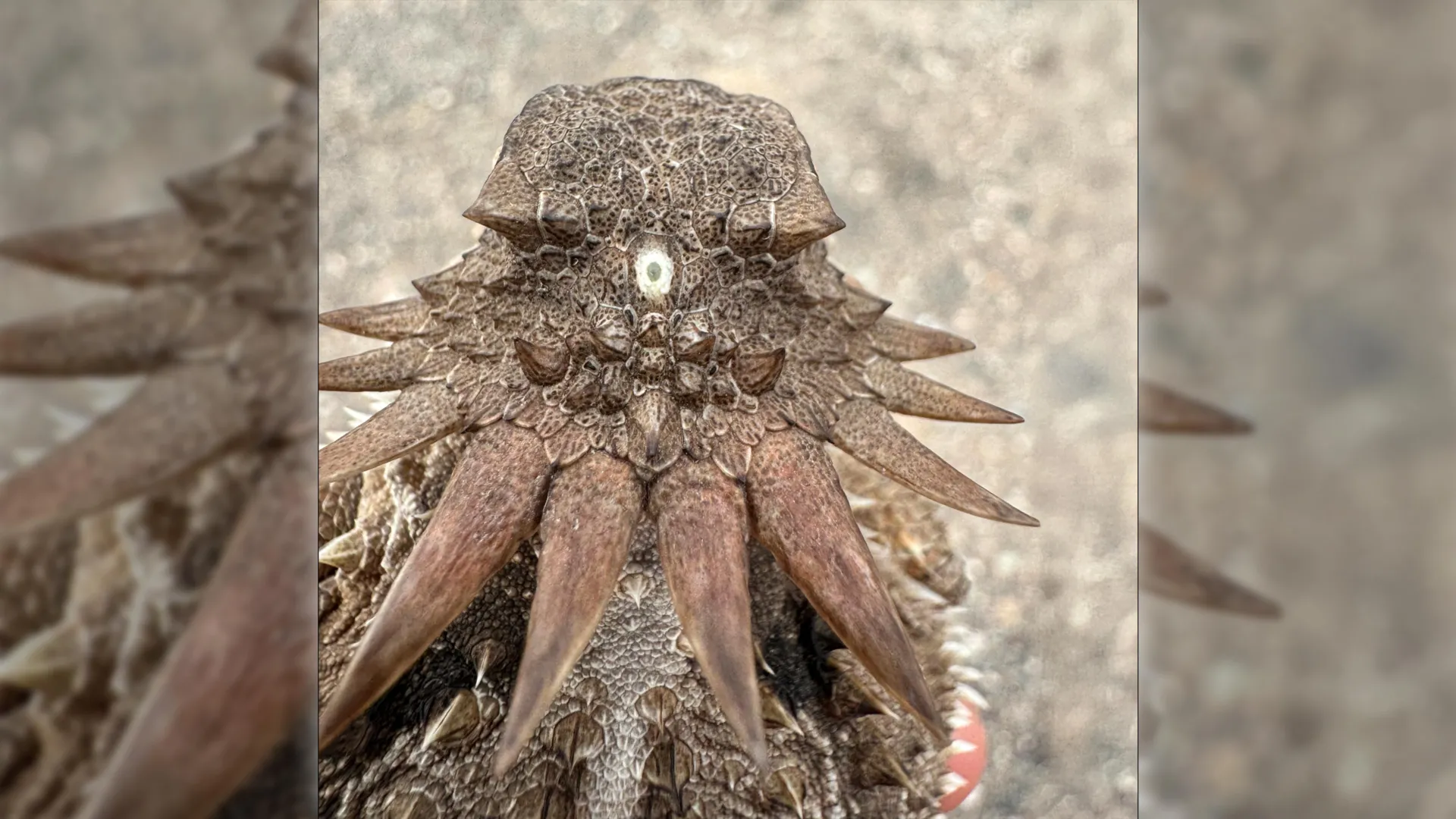
    Humans and other vertebrates may share a surprisingly bizarre ancestry. It is a small creature with one eye in the center of the top of its head.

    A recent study from Lund University and the University of Sussex suggests that the earliest ancestors of vertebrates are thought to have passed through a cyclops-like stage around 600 million years ago. According to the researchers, this animal’s central eye ultimately contributed to the development of the pair of eyes used by today’s vertebrates.

    Even more surprising, part of that ancient visual system may still survive in the modern brain as the pineal gland, an organ that helps regulate sleep.

    “The results are surprising and turn our understanding of eye and brain evolution upside down,” said Dan E. Nilsson, professor emeritus of sensory biology at Lund University.

    small one-eyed ancestor

    The distant ancestors described by researchers were small creatures with bodies similar to insects. They first lived in the ocean about 600 million years ago, spending most of their lives in one place and obtaining food by filtering plankton from the surrounding seawater.

    Early in its evolutionary history, this creature appears to have had two eyes, or at least two groups of cells that can detect light. Paired eyes are common throughout the animal kingdom because they help moving animals judge direction, distance, and location of surrounding objects.

    “We don’t know whether the pairs of eyes on this branch of the evolutionary tree were just light-sensitive cells or simple image-forming eyes. All we know is that organisms later lost them,” says Dan E. Nilsson.

    The creature adopted a quiet, stationary lifestyle and no longer relied heavily on paired vision. Over many generations, the eye gradually disappeared, as it offered little advantage.

    However, this animal retained a cluster of light-sensitive cells in the center of its head. These cells developed into a primitive central eye, also known as the median eye.

    This simple organ probably did not paint a detailed picture. Rather, it may have helped animals distinguish between day and night and determine which direction is up, both of which would have been useful for survival at sea.

    How did the pair of eyes come back?

    After several million years, the descendants of this animal began to swim actively again. Mobile lifestyles have created a new need for vision, especially the ability to detect food, obstacles, predators, and direction of movement.

    The researchers conclude that part of the original median eye was reused during evolution. From this central visual structure, new eyes developed that could eventually form images.

    This unusual process may explain why vertebrate eyes have a very different structure from the eyes of many other animals.

    “We finally understand why the eyes of vertebrates are fundamentally different from the eyes of all other animal groups, such as insects and squids. The membrane of our eyes, the retina, developed from the brain, but the eyes of insects and squids originate from the skin on the sides of their heads,” Dany Nilsson says.

    The retina is a thin layer of tissue that lines the back of the eye. It contains cells that detect light and convert it into electrical signals, which are sent to the brain and assembled into the images we see.

    In vertebrates, the retina developed from brain tissue during evolution and is therefore closely related to the brain. By comparison, eyes in insects and squid emerged through a different evolutionary pathway involving tissues on the surface of the head.

    A strange detour in the evolution of the eye

    Researchers explain that vertebrate eyes are the product of an unusual evolutionary detour. After becoming mostly inactive, our ancestors first lost their paired eyes, retained a simple central eye, and later used some of that structure to build a new, more advanced visual system.

    Their conclusions are based on extensive comparisons of light-detecting cells between animal groups. The researchers investigated where these cells appear in the body, how they function, and how they connect to other tissues and nerves.

    This evidence suggests that vertebrate eyes did not evolve from the same structures that gave rise to the eyes of insects, squids, and other animals, but rather arose through this particular series of changes.

    “For the first time, we also understand the origins of the neural circuitry that analyzes images in the retina,” added Dan E. Nilsson.

    Neural circuits are networks of connected nerve cells that process information. In the retina, these circuits begin to organize visual signals before they reach the brain and help distinguish features such as brightness, contrast, motion, and shape.

    The ancient eyes are still in the brain

    The most surprising part of this theory may be that the ancient median eye never completely disappeared.

    Researchers argue that traces of that evolution survive today in the pineal gland, a small organ located deep in the vertebrate brain. Although humans do not use the pineal gland to see images, the body’s response to light and darkness still involves the pineal gland.

    The pineal gland produces melatonin, a hormone that helps control circadian rhythms. This internal timing system influences when your body feels awake or sleepy, approximately every 24-hour cycle.

    In many vertebrates, the pineal system is directly sensitive to light. In humans, information about light reaches the brain primarily through the eyes, and melatonin production increases at night and decreases during the day.

    “It is surprising that our pineal gland’s ability to regulate sleep in response to light originates from the circular median eye of our distant ancestors 600 million years ago,” concludes Dan-E. Nilsson.


    Source link

    Visited 17 times, 1 visit(s) today
    Share. Facebook Twitter Pinterest LinkedIn Telegram Reddit Email
    Previous Article‘Scandalous, irrational, irresponsible’: French beekeepers outraged over lifting of ban on pesticides | France
    Next Article Hidden genetic diversity helped inbred horseshoe snakes conquer Guam
    healthadmin

    Related Posts

    Bridging the Gaps in 2025-2030 Dietary Guidelines for Metabolic Health

    September 22, 2026

    The Challenge of Updating Dietary Guidelines for Metabolic Health in Clinical Practice

    September 20, 2026

    Navigating Confusion Around the 2025-2030 Dietary Guidelines

    September 18, 2026

    Navigating Gaps in 2025-2030 Dietary Guidelines for Clinical Practice

    September 10, 2026

    Navigating 2025 Dietary Guidelines Challenges in Clinical Practice

    September 3, 2026

    Navigating 2025-2030 Dietary Guidelines for Metabolic Health Challenges

    August 30, 2026
    Add A Comment

    Comments are closed.

    Categories

    • Daily Health Tips
    • Discover
    • Environmental Health
    • Exercise & Fitness
    • Featured
    • Featured Videos
    • Financial Health & Stability
    • Fitness
    • Fitness Updates
    • Health
    • Health Technology
    • Healthy Aging
    • Healthy Living
    • Holistic Healing
    • Holistic Health & Wellness
    • Medical Research
    • Medical Research & Insights
    • Mental Health
    • Mental Wellness
    • Natural Remedies
    • New Workouts
    • Nutrition
    • Nutrition & Dietary Trends
    • Nutrition & Superfoods
    • Nutrition Science
    • Pharma
    • Preventive Healthcare
    • Professional & Personal Growth
    • Public Health
    • Public Health & Awareness
    • Selected
    • Sleep & Recovery
    • Top Programs
    • Weight Management
    • Workouts
    Popular Posts
    • 1773313737_bacteria_-_Sebastian_Kaulitzki_46826fb7971649bfaca04a9b4cef3309-620x480.jpgHow Sino Biological ProPure™ redefines ultra-low… March 12, 2026
    • pexels-david-bartus-442116The food industry needs to act now to cut greenhouse… January 2, 2022
    • 1773729862_TagImage-3347-458389964760995353448-620x480.jpgDespite safety concerns, parents underestimate the… March 17, 2026
    • 1774403998_image_28620e4b6b0047f7ab9154b41d739db1-620x480.jpgGait pattern helps distinguish between Lewy body… March 24, 2026
    • 1773209206_futuristic_techno_design_on_background_of_supercomputer_data_center_-_Image_-_Timofeev_Vladimir_M1_4.jpegMulti-agent AI systems outperform single models… March 11, 2026
    • Leukemia-620x480.jpgBiomimetic platform powers CAR T therapy for… March 9, 2026

    Demo
    Stay In Touch
    • Facebook
    • Twitter
    • Pinterest
    • Instagram
    • YouTube
    • Vimeo
    Don't Miss

    2026 Pharma Outlook: Key Trends for Pharmacologists and Drug Development Leaders

    By healthadminSeptember 26, 2026

    Explore 2026 pharma trends including AI in drug discovery, regulatory changes, and biopharma manufacturing shifts for pharmacologists and executives.

    The Climate-Health Crisis in Urban Environments: Who It’s For and What You’ll Gain

    September 25, 2026

    Overcoming Access Barriers to Evidence-Based Psychiatric Treatments in Inpatient Settings

    September 24, 2026

    Bridging Gaps in Evidence-Based Psychiatric Treatments

    September 23, 2026

    Subscribe to Updates

    Get the latest creative news from SmartMag about art & design.

    HealthxMagazine
    HealthxMagazine

    At HealthX Magazine, we are dedicated to empowering entrepreneurs, doctors, chiropractors, healthcare professionals, personal trainers, executives, thought leaders, and anyone striving for optimal health.

    Our Picks

    Bridging Gaps in Evidence-Based Psychiatric Treatments

    September 23, 2026

    Bridging the Gaps in 2025-2030 Dietary Guidelines for Metabolic Health

    September 22, 2026

    Overcoming Access Barriers: Evidence-Based Insights for Mental Health Professionals

    September 21, 2026
    New Comments
      Facebook X (Twitter) Instagram Pinterest
      • Home
      • Privacy Policy
      • Our Mission
      © 2026 ThemeSphere. Designed by ThemeSphere.

      Type above and press Enter to search. Press Esc to cancel.