

Close Menu

    Subscribe to Updates

    Get the latest creative news from FooBar about art, design and business.

    What's Hot

    These fat-filled brain cells may be worsening multiple sclerosis

    June 29, 2026

    Physicists create strange new quantum state called fractional Fermi sea

    June 29, 2026

    Brain activity under anesthesia casts doubt on what we know about consciousness

    June 29, 2026
    Facebook X (Twitter) Instagram
    Facebook X (Twitter) Instagram
    Health Magazine
    • Home
    • Environmental Health
    • Health Technology
    • Medical Research
    • Mental Health
    • Nutrition Science
    • Pharma
    • Public Health
    • Discover
      • Daily Health Tips
      • Financial Health & Stability
      • Holistic Health & Wellness
      • Mental Health
      • Nutrition & Dietary Trends
      • Professional & Personal Growth
    • Our Mission
    Health Magazine
    Home » News » Scientists open a million-year-old time capsule underground in New Zealand
    Nutrition Science

    Scientists open a million-year-old time capsule underground in New Zealand

    healthadminBy healthadminMarch 26, 2026No Comments4 Mins Read
    Scientists open a million-year-old time capsule underground in New Zealand
    Share
    Facebook Twitter Reddit Telegram Pinterest Email


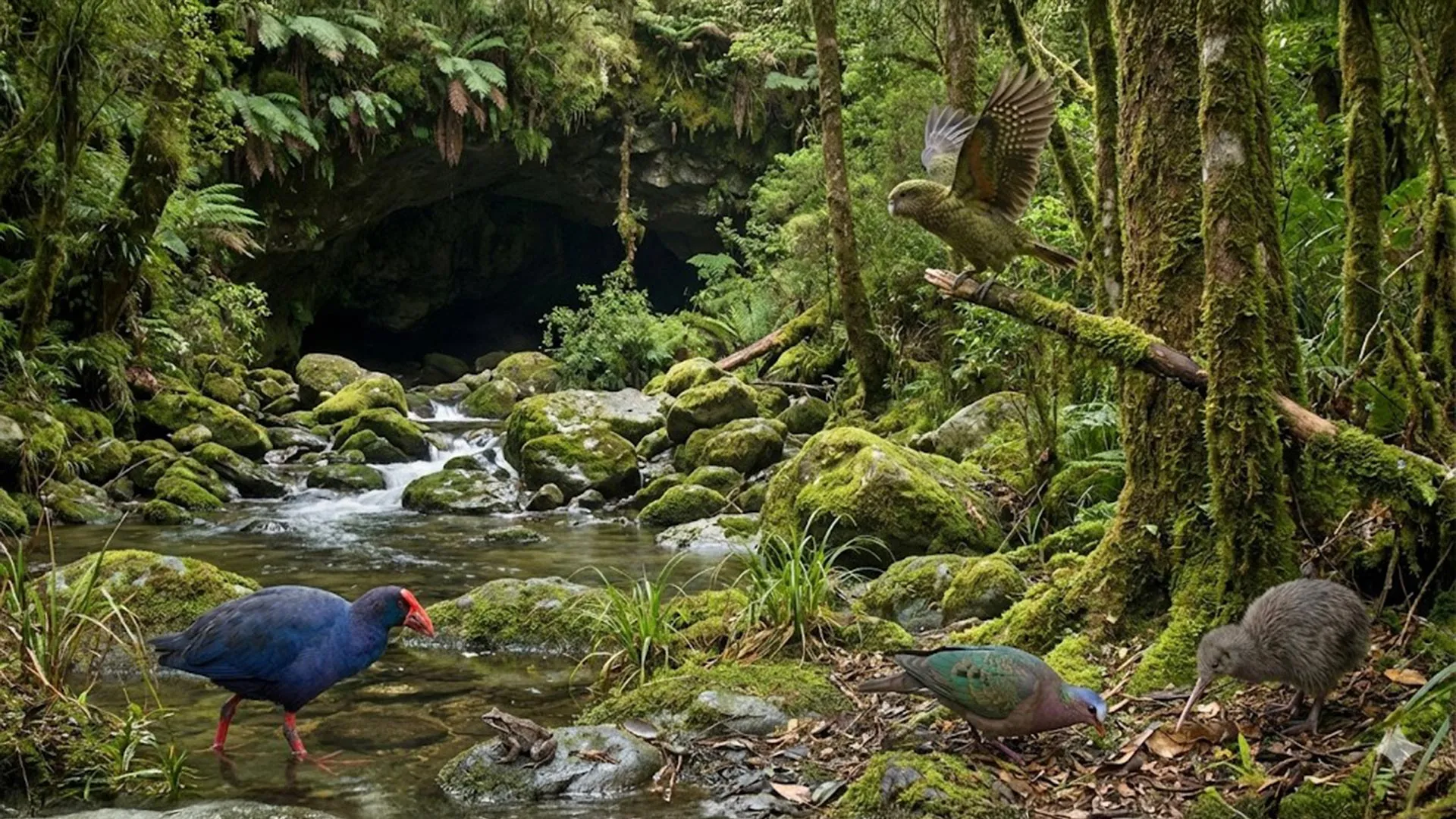
    Scientists from Australia and New Zealand have discovered the remains of an ancient animal in a cave near Waitomo on Aotearoa’s north island. The site contains a large collection of fossils dating back approximately one million years, including a previously unknown ancestor of the kakapo, a large flightless parrot.

    The discovery includes fossils of 12 species of birds and four species of frogs, providing a rare glimpse into what New Zealand’s ecosystem was like at the time.

    Climate change and volcanoes caused ancient extinctions

    The findings show that New Zealand’s wildlife has been largely shaped by dramatic climate change and powerful volcanic eruptions. According to research published in Alcheringa: An Australasian Journal of Palaeontology, these natural phenomena led to repeated waves of extinction and the emergence of new species long before humans arrived.

    Lead author Flinders University Associate Professor Trevor Worthy said the study revealed a previously unknown aspect of the country’s biodiversity.

    “This is a newly recognized bird species in New Zealand, replacing a bird species encountered by humans a million years later,” says Associate Professor Worthy, from Flinders University’s School of Science and Engineering.

    “This surprising discovery suggests that our ancient forests were once home to a wide variety of bird species, but they were unable to survive for millions of years.”

    The fossils were investigated by palaeontologists from Flinders University and Canterbury Museum, in collaboration with volcanologists Joel Baker from the University of Auckland and Simon Barker from Victoria University of Wellington.

    The researchers estimate that between 33 and 50 per cent of species disappeared in the one million years before humans arrived in Aotearoa New Zealand.

    Co-author Dr Paul Schofield, curator of natural history at Canterbury Museum, explains that rapid environmental change was a major factor.

    “These extinctions were caused by relatively rapid climate change and catastrophic volcanic eruptions,” Schofield said.

    “Years of excavation at St Bathans in Central Otago has provided a snapshot of life in Aotearoa between 20 million and 16 million years ago. These new discoveries shed light on a period of 15 million years between then and 1 million years ago that is largely missing from New Zealand’s fossil record,” Dr Schofield said.

    “This wasn’t a missing chapter in New Zealand’s ancient history; it was a missing volume.”

    Ancient kakapo relatives may have been able to fly

    Among the most notable discoveries is a newly identified parrot species, Strigops insulaborrealis, an ancient relative of the modern kakapo. Although modern kakapo are known for being heavy and flightless, this early species may have had the ability to fly.

    Fossil analysis suggests that it likely had weaker legs than modern birds and was less suited for climbing. Researchers say more research is needed to confirm whether it can actually fly.

    The cave also contains fossils of Takahe’s extinct ancestors, helping scientists better understand the evolution of this famous New Zealand bird. Additionally, researchers discovered an extinct pigeon species closely related to the Australian green pigeon.

    “Changes in forest and shrub habitat have caused bird populations to reset,” Dr Schofield added.

    “We believe this was a major driver of the evolutionary diversification of North Island birds and other fauna.”

    Volcanic ash helps date fossils

    Scientists were able to determine the age of the fossil because it was preserved between two different layers of volcanic ash within the cave. One layer dates back to an eruption about 1.55 million years ago, and the other layer comes from a major eruption about 1 million years ago.

    Subsequent eruptions may have covered much of the North Island with several meters of ash. Much of that material was eventually washed away, but some remained protected within the cave. The presence of older ash layers also indicates that this site is the oldest known cave in the North Island.

    The missing piece in New Zealand’s natural history

    Associate Professor Worthy says the discovery fills a major gap in understanding the country’s past.

    The fossil “provides an important reference point that is missing in New Zealand’s natural history”.

    “For decades, the extinction of New Zealand’s birds has been viewed primarily through the lens of the arrival of humans 750 years ago. This study proves that natural forces such as giant volcanoes and dramatic climate change were already shaping the unique identity of our wildlife more than a million years ago.”


    Source link

    Visited 11 times, 1 visit(s) today
    Share. Facebook Twitter Pinterest LinkedIn Telegram Reddit Email
    Previous ArticleLifelong cardiovascular effects of placental abruption
    Next Article Spear bio launches ultra-sensitive neurodegeneration assay
    healthadmin

    Related Posts

    These fat-filled brain cells may be worsening multiple sclerosis

    June 29, 2026

    Physicists create strange new quantum state called fractional Fermi sea

    June 29, 2026

    Brain activity under anesthesia casts doubt on what we know about consciousness

    June 29, 2026

    These tiny soil microbes could save crops from salty farmland

    June 29, 2026

    Only one exercise helped older adults lose fat without losing muscle

    June 28, 2026

    Common pesticides more than double risk of Parkinson’s disease

    June 28, 2026
    Add A Comment

    Comments are closed.

    Categories

    • Daily Health Tips
    • Discover
    • Environmental Health
    • Exercise & Fitness
    • Featured
    • Featured Videos
    • Financial Health & Stability
    • Fitness
    • Fitness Updates
    • Health
    • Health Technology
    • Healthy Aging
    • Healthy Living
    • Holistic Healing
    • Holistic Health & Wellness
    • Medical Research
    • Medical Research & Insights
    • Mental Health
    • Mental Wellness
    • Natural Remedies
    • New Workouts
    • Nutrition
    • Nutrition & Dietary Trends
    • Nutrition & Superfoods
    • Nutrition Science
    • Pharma
    • Preventive Healthcare
    • Professional & Personal Growth
    • Public Health
    • Public Health & Awareness
    • Selected
    • Sleep & Recovery
    • Top Programs
    • Weight Management
    • Workouts
    Popular Posts
    • 1773313737_bacteria_-_Sebastian_Kaulitzki_46826fb7971649bfaca04a9b4cef3309-620x480.jpgHow Sino Biological ProPure™ redefines ultra-low… March 12, 2026
    • pexels-david-bartus-442116The food industry needs to act now to cut greenhouse… January 2, 2022
    • 1773729862_TagImage-3347-458389964760995353448-620x480.jpgDespite safety concerns, parents underestimate the… March 17, 2026
    • 1773209206_futuristic_techno_design_on_background_of_supercomputer_data_center_-_Image_-_Timofeev_Vladimir_M1_4.jpegMulti-agent AI systems outperform single models… March 11, 2026
    • 1774403998_image_28620e4b6b0047f7ab9154b41d739db1-620x480.jpgGait pattern helps distinguish between Lewy body… March 24, 2026
    • Leukemia-620x480.jpgBiomimetic platform powers CAR T therapy for… March 9, 2026

    Demo
    Stay In Touch
    • Facebook
    • Twitter
    • Pinterest
    • Instagram
    • YouTube
    • Vimeo
    Don't Miss

    These fat-filled brain cells may be worsening multiple sclerosis

    By healthadminJune 29, 2026

    Researchers led by Daan van der Vliet, in collaboration with teams from the Netherlands Institute…

    Physicists create strange new quantum state called fractional Fermi sea

    June 29, 2026

    Brain activity under anesthesia casts doubt on what we know about consciousness

    June 29, 2026

    Ape laughter reveals how human voice control evolved

    June 29, 2026

    Subscribe to Updates

    Get the latest creative news from SmartMag about art & design.

    HealthxMagazine
    HealthxMagazine

    At HealthX Magazine, we are dedicated to empowering entrepreneurs, doctors, chiropractors, healthcare professionals, personal trainers, executives, thought leaders, and anyone striving for optimal health.

    Our Picks

    Ape laughter reveals how human voice control evolved

    June 29, 2026

    These tiny soil microbes could save crops from salty farmland

    June 29, 2026

    Melatonin reduces inflammation of fetal membranes associated with preterm birth

    June 29, 2026
    New Comments
      Facebook X (Twitter) Instagram Pinterest
      • Home
      • Privacy Policy
      • Our Mission
      © 2026 ThemeSphere. Designed by ThemeSphere.

      Type above and press Enter to search. Press Esc to cancel.