


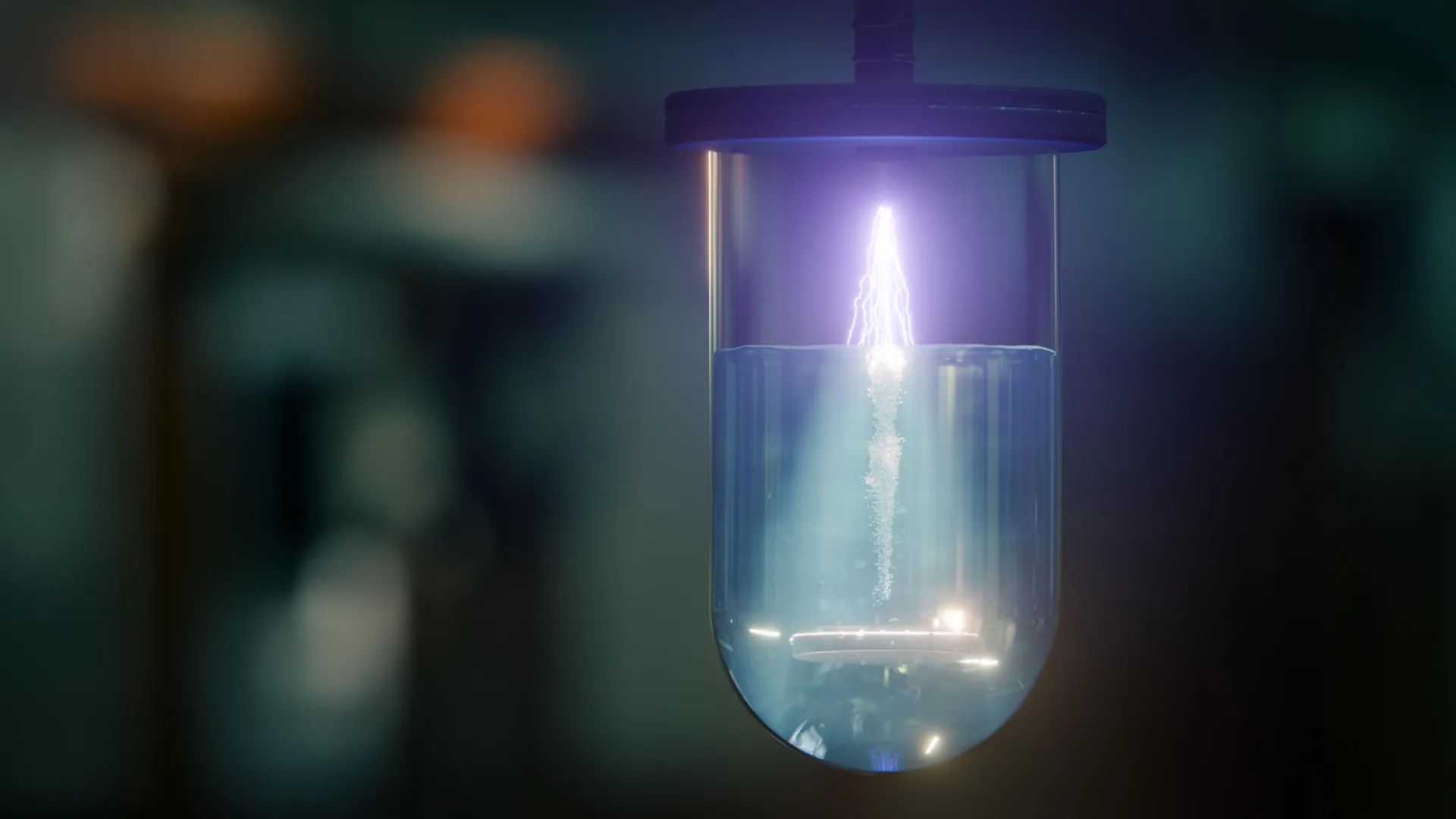
Researchers at Dresden-Rossendorf-Helmholtzzentrum (HZDR) are testing two technologies designed to destroy per- and polyfluoroalkyl substances (PFAS), a vast group of industrial chemicals known to resist natural and conventional degradation processes.
The first approach uses hydrodynamic cavitation to create and collapse small vapor bubbles in contaminated water. The second combines cold atmospheric plasma with gas dispersion. Analysis carried out by experts at the Helmholtz Center for Environmental Research (UFZ) confirmed that PFAS molecules were broken down and fluoride was released during treatment.
If the technology is fully developed for commercial use, it could allow industry to treat contaminated wastewater before it reaches rivers, lakes and oceans.
Why PFAS are so difficult to destroy
Although some PFAS are suspected of damaging genetic material and increasing cancer risk, the biological effects of many compounds in this group are still poorly understood. More than 10,000 short- and long-chain industrial chemicals are classified as PFAS.
Its extraordinary durability is due to its highly stable carbon-fluorine bond, one of the strongest bonds found in organic chemistry. This resistance has earned PFAS the nickname “forever chemicals.”
PFAS enter rivers and oceans through wastewater and are now widespread around the world. Researchers have recently detected high concentrations of a substance in the Elbe River that could pose a health risk to plants, animals and humans.
As part of Germany’s National Water Strategy, which aims to protect water resources and secure the country’s drinking water supply, HZDR scientists are researching ways to reduce PFAS contamination and systematically destroy chemicals rather than simply removing or relocating them.
The pilot study, which began in 2022, was led by postdoctoral researcher Dr. Isabel Huacaro Aguilar. Her team investigated whether hydrodynamic cavitation could degrade PFAS in water.
The collapse of the bubble creates extreme conditions
“Hydrodynamic cavitation involves passing PFAS-enriched water through a constriction, creating tiny vapor bubbles,” explains Dr. Sebastian Reinecke, Head of Water and Environmental Technology at HZDR.
Long-chain PFAS act like surfactants and collect on air bubbles. When the water exceeds the constriction, the pressure increases and the bubbles collapse violently.
“When the bubble ruptures due to increased ambient pressure in the water downstream of the constriction, the PFAS attached to the bubble is exposed to local temperature spikes of several thousand degrees Celsius,” Reinecke explains.
Cavitation also generates highly reactive hydroxyl radicals. These molecules readily react with nearby substances and can help destroy the compounds produced during the early stages of PFAS degradation.
“Our hypothesis is that they attack intermediate products and significantly accelerate the degradation of PFAS.”
Huaccallo-Aguilar and colleagues demonstrated that cavitation can degrade PFAS in tap water while simultaneously mineralizing organically bound fluorine. As treatment continued, the amount of fluorine measured in the water steadily increased, indicating that fluorine was being separated from the original PFAS molecules.
The experiment focused on perfluorooctane sulfonate (PFOS), a well-studied and highly persistent member of the PFAS family. By the end of the test, the process had degraded approximately 37 percent of the dissolved PFOS molecules while maintaining a stable degradation rate.
“We are currently conducting follow-up experiments to increase the rate of degradation,” Reinecke explains. “Our goal is to improve the process to more than 80 percent degradation of PFAS in solution and mineralize more than 50 percent of the fluorine bound to the chemicals. That means breaking the carbon-to-fluorine bonds that are unique to PFAS.”
Cold plasma rapidly attacks PFAS
In another series of experiments, environmental engineer Dr. Amit Kumar used a combination of cold atmospheric plasma and gas dispersion to destroy PFAS.
The method works under normal ambient conditions and does not require catalysts or additional chemicals. During his doctoral research, Kumar studied how reactive species produced by plasma can break down trace pollutants. He applied those findings to PFAS experiments.
“We generated plasma on the water surface and at the same time introduced gas into the PFAS-contaminated water,” Sebastian Reinecke explained of the experimental setup. “PFAS attaches to the surface of the bubble. As the bubble rises, the water constantly circulates. This pulls the PFAS to the surface, where it is broken down in the plasma.”
Plasma treatment resulted in almost complete degradation of both long and short chain PFAS. Also, about 35 percent of the fluorine atoms originally bound in the chemical were released, converting the fluorine atoms into fluoride salts.
Although the results were faster than those produced by cavitation, this method also had important drawbacks.
“While this method has a much faster reaction rate than cavitation, it also consumes much more energy per unit volume,” Reinecke points out. “Additionally, this process produces a number of transformation products that have not yet been investigated in detail, such as gaseous compounds formed during the reaction.”
Additional experiments are underway to determine whether these converted products may pose a health risk. Researchers also hope to identify ways to prevent the production of potentially harmful substances.
Combination of cavitation and plasma
The research team is currently adapting the plasma system to treat large amounts of contaminated water. The researchers increase the reaction volume from about 50 milliliters to 5 liters by using multiple electrodes and a technical gas injector.
Their long-term goal is to combine plasma treatment and hydrodynamic cavitation to incorporate the best of both technologies into a single system.
“We believe that high degradation rates can be achieved by combining highly reactive species from the plasma with the effects of cavitation,” Reinecke says.
If successful, this combined approach could lead to new, more efficient techniques for destroying PFAS in contaminated water before the chemicals disperse into the environment.
This research was funded by the Impulse and Networking Fund of the Helmholtz Association through the Clean Water Technology Lab (CLEWATEC), a Helmholtz Innovation Lab (reference number HIL-A02). The projects “HyKaPro SAB-EFRE” and “Plasma4PFAS SAB-EFRE” are co-financed by the European Union and by tax revenues approved in the state budget of the State Parliament of Saxony.
