


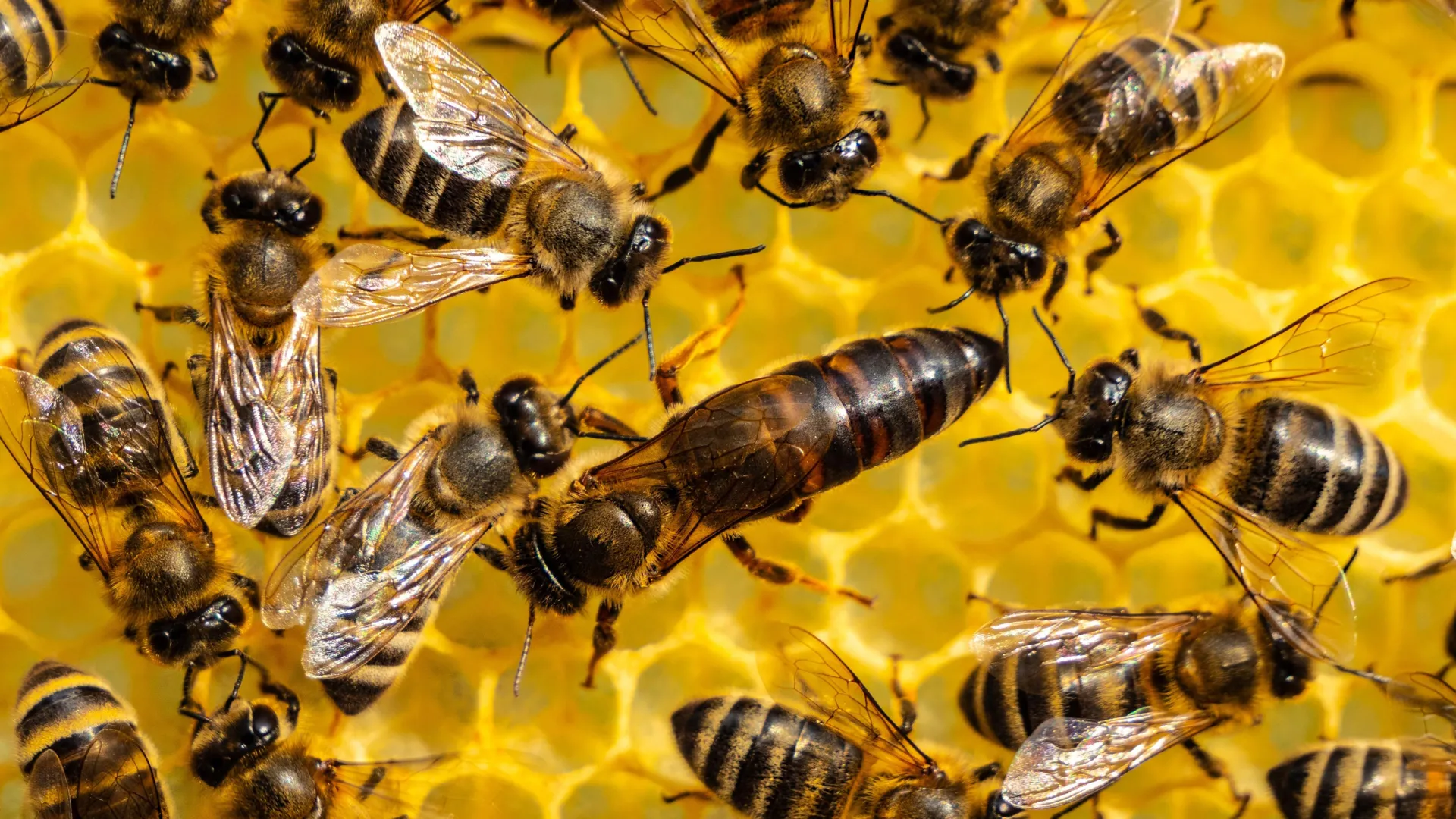
Scientists have long believed that the recipe for producing queen bees is simple. By feeding the developing larvae with plenty of royal jelly, the queen bee becomes the ruler of the colony.
New research suggests the reality is much more complex.
The researchers discovered that future queen bees are raised in specially designed nurseries created by young worker bees. These chambers provide unique wax, a warm environment, and dedicated care to help the larvae develop into healthy queens.
The survey results were published in a magazine natureshowing that the structure known as the queen cell, also known as the “royal crib,” is more than just a protective container. These are carefully constructed environments that play an important role in the development of the queen bee. The researchers also identified a previously unknown group of young worker bees called “queen cell builders” that appear to be particularly suited to creating and maintaining these chambers.
“The old idea was relatively simple: You take the eggs, put them in the queen hive, feed them royal jelly, and the queen will be born,” said entomologist Boris Baer, director of the Center for Integrative Honey Bee Research (CIBER) at the University of California, Riverside, who contributed to the study. “What we discovered is that there’s a whole machine behind this process, and it’s much more sophisticated than we ever imagined.”
Queen bees need more than royal jelly
Queen bees and worker bees are born from almost the same eggs and start their lives in much the same way. Despite their similar beginnings, queens can grow larger, develop faster, and live much longer than workers. They also serve as the only egg-laying female in the colony, producing the next generation of bees.
For decades, researchers believed that royal jelly, a nutrient-rich substance that worker bees feed their young larvae, was the main driver of this dramatic change.
New research shows that nutrition alone doesn’t explain what happens.
Scientists used a combination of thermal imaging, behavioral monitoring, materials science techniques, and chemical analysis to investigate the environment in which the queen bees are kept. They found significant differences between queen cells and the familiar hexagonal chambers used to rear worker bees.
Special role of queen cells
Queen Cell has a unique peanut-like shape and is made from a wax that is physically and chemically different from regular honeycomb wax. This material is low density, flexible, and retains heat and moisture well, creating favorable conditions for queen development.
The researchers also discovered differences in fatty acids and chemical signals in the wax, suggesting that queen cells provide a unique developmental environment.
To determine whether these chambers really affected development, the researchers reared queen larvae in cells made of either queen wax or standard worker wax. Even when both groups were fed the same food, larvae raised on worker wax were more likely to die and eventually develop into small queens.
The results suggest that the surrounding environment is as important as diet in shaping future queens.
Introducing Queen Cell Builder
The study also revealed the worker bees responsible for creating and maintaining these royal nurseries.
These bees, known as queen cell builders, are typically younger than many other workers in the hive. While caring for the developing queen, the queen maintains a higher body temperature and undergoes physiological changes that may be related to its specialized role.
The added warmth may help explain why queens grow so quickly. Queen bees mature in about 16 days, while worker bees take about 21 days. This faster development is very important if the colony urgently needs a new queen.
Rather than simply reusing existing wax, Queen Cell builders actively collect, modify, and enhance the materials used in the royal family. Their bodies also activate different biological pathways associated with wax production, effectively altering their ability to perform this task.
To find out how these materials were collected, the researchers added trace amounts of graphite to regular honeycombs. Over time, dark wax appeared inside the queen’s hive, indicating that the worker bees were selectively collecting and converting material from elsewhere in the hive for use in queen development.
royal court in the nest
The process resembles something much more organized than a typical insect nursery, Baer said.
Evidence shows that the colonies made a highly coordinated effort to produce their next rulers.
“You can think of it like Buckingham Palace,” he said. “There’s a group of dedicated bees dedicated to rearing the queen, and if they don’t raise it correctly, the colony won’t be able to reproduce.”
The researchers observed the same pattern in both Asian and European honey bee species, suggesting that this strategy evolved long ago and may be widespread among honeybees.
The project brought together experts in behavior, physiology, chemistry, materials science, and genomics. It was led by former UCR postdoctoral researchers Yu Fang and Yahya Al Naggar.
“In its collaborative nature, this project reflects CIBER’s broader philosophy of bringing together different disciplines to tackle complex biological problems,” Baer said.
What this discovery means for more than just bees
This discovery could have implications beyond honey bees. They suggest that development can be shaped not only by genetics and nutrition, but also by the physical and social environment that an organism experiences.
For many years, queen bees appeared to provide one of the simplest developmental examples in biology. In other words, special foods produce special insects. This study paints a richer picture. Queen bees are not born only from royal jelly. Instead, the entire colony works together to create the conditions necessary for her success.
“This study highlights how sophisticated there is within insect societies,” Baer said. “A honey bee colony is more than just a collection of individuals. Bees function as integrated biological systems that can manipulate their own environments.”
