

Close Menu

    Subscribe to Updates

    Get the latest creative news from FooBar about art, design and business.

    What's Hot

    The Core Problem with 2025-2030 DGAs for Clinical Practice

    August 11, 2026

    The Urgent Health Risks from Climate Change and Pollution

    August 10, 2026

    AI-Powered Wearables and Telemedicine Trends Driving Adoption

    August 9, 2026
    Facebook X (Twitter) Instagram
    Facebook X (Twitter) Instagram
    Health Magazine
    • Home
    • Environmental Health
    • Health Technology
    • Medical Research
    • Mental Health
    • Nutrition Science
    • Pharma
    • Public Health
    • Discover
      • Daily Health Tips
      • Financial Health & Stability
      • Holistic Health & Wellness
      • Mental Health
      • Nutrition & Dietary Trends
      • Professional & Personal Growth
    • Our Mission
    Health Magazine
    Home » News » Scientists finally figure out why mint feels cold
    Nutrition Science

    Scientists finally figure out why mint feels cold

    healthadminBy healthadminMarch 8, 2026No Comments4 Mins Read
    Scientists finally figure out why mint feels cold
    Share
    Facebook Twitter Reddit Telegram Pinterest Email


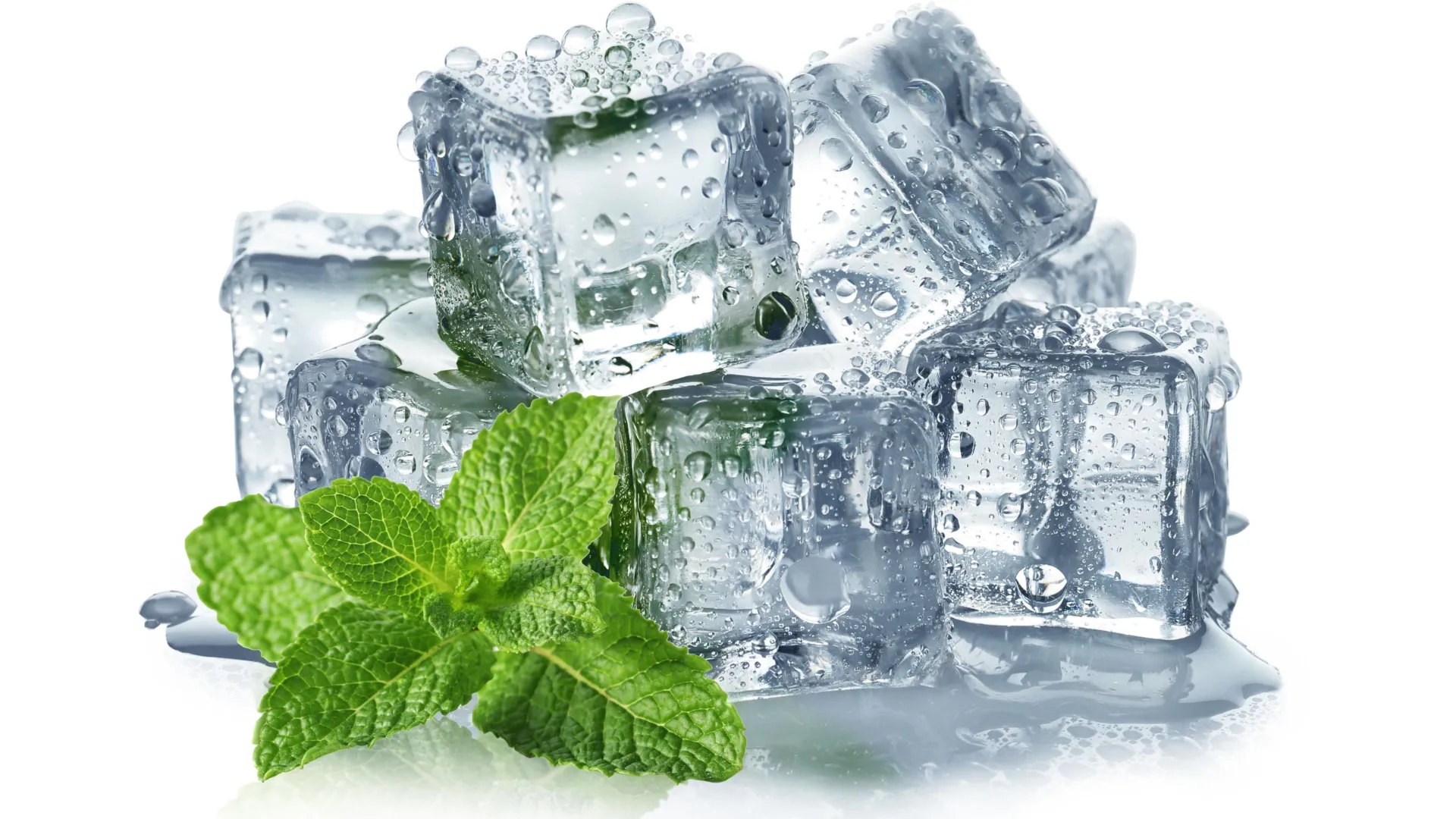
    Stepping outside or putting mint in your mouth on a cold winter morning will instantly give you a cooling sensation. The sensation begins with tiny sensors in your body that signal your brain when something is cold. Scientists have created the first detailed images of how this sensor works, revealing how it responds to both actual temperature drops and menthol, a cooling compound found in mint plants. The findings were presented at the 70th Annual Meeting of the Biophysical Society in San Francisco.

    The study focused on a protein channel known as TRPM8. “Imagine TRPM8 as a microscopic thermometer inside your body,” said Hyukjun Lee, a postdoctoral fellow in Seokyoung Lee’s lab at Duke University. “This is the main sensor that tells the brain that it’s cold. We’ve known for a long time that this happens, but we didn’t know how. Now we can confirm it.”

    TRPM8 is embedded in the membranes of sensory neurons that function in the skin, oral cavity, and eyes. When the temperature drops to a range of about 46°F to 82°F, the channels open, allowing ions to move into the cell. This movement triggers nerve signals that are sent to the brain, causing a sensation of coldness. The same mechanism explains why menthol, eucalyptus, and related compounds produce a cooling sensation even when the temperature has not actually decreased.

    “Menthol is like a trick,” Lee explained. “The menthol attaches to certain parts of the channels, and the cold triggers them to open. So, even though the menthol isn’t actually freezing anything, your body receives the same signals as if you were touching ice.”

    Cryogenic electron microscopy reveals the mechanism by which TRPM8 opens

    To examine this process in detail, the research team used cryo-electron microscopy, a method that images proteins rapidly frozen with an electron beam. This allowed us to obtain several structural snapshots of TRPM8 as it transitions from the closed to open state.

    The images showed that low temperature and menthol activate the channel through different but related pathways within the protein. Cold mainly causes structural changes in the pore region (the part that opens to allow ions to pass through). Menthol binds to another region of the protein, causing a shape change that spreads toward the pore and ultimately opens it.

    “When you combine cold air and menthol, the reaction is synergistically enhanced,” Lee said. “We used this combination to capture channels in the open state, something we could not have achieved with cold alone.”

    Potential medical benefits of understanding cold sensors

    Understanding TRPM8 could also help scientists develop new treatments. Problems with this pathway have been linked to conditions such as chronic pain, migraines, dry eyes, and certain cancers. One drug that targets this pathway is acoltremon, an FDA-approved eye drop used to treat dry eye disease. As an analog of menthol, it activates cooling pathways, stimulates tear production, and relieves irritation.

    The researchers also discovered what they called “cold spots.” This is a specific part of the protein that plays a key role in temperature sensing and helps maintain channel responsiveness during prolonged exposure to cold.

    “Until now, it was unclear how cold air activates this channel at the structural level,” Lee said. “We now know that cold weather induces specific structural changes in the pore region. This provides the basis for developing new treatments targeting this pathway.”

    Solving a long-standing mystery about cold sensations

    The study provides the first molecular explanation of how temperature and chemical signals combine to produce the sensation of cold. By showing how TRPM8 integrates both cold and menthol signals, this study answers a long-standing question in sensory biology that scientists have been trying to answer for decades.


    Source link

    Visited 383 times, 1 visit(s) today
    Share. Facebook Twitter Pinterest LinkedIn Telegram Reddit Email
    Previous ArticleMore than 500,000 tonnes of sewage sludge spread across Scottish fields
    Next Article NASA DART mission reveals asteroids are throwing ‘cosmic snowballs’ at each other
    healthadmin

    Related Posts

    The Core Problem with 2025-2030 DGAs for Clinical Practice

    August 11, 2026

    Addressing Challenges in Applying 2025-2030 Dietary Guidelines for Metabolic Health

    August 3, 2026

    This 4,000-year-old city defied the rules of history

    July 30, 2026

    Rice Bran Compounds May Relieve Irritable Bowel Symptoms

    July 30, 2026

    What would happen if the brain did not generate consciousness?

    July 30, 2026

    Scientists discover that evolution repeats itself in the Galapagos Islands

    July 30, 2026
    Add A Comment

    Comments are closed.

    Categories

    • Daily Health Tips
    • Discover
    • Environmental Health
    • Exercise & Fitness
    • Featured
    • Featured Videos
    • Financial Health & Stability
    • Fitness
    • Fitness Updates
    • Health
    • Health Technology
    • Healthy Aging
    • Healthy Living
    • Holistic Healing
    • Holistic Health & Wellness
    • Medical Research
    • Medical Research & Insights
    • Mental Health
    • Mental Wellness
    • Natural Remedies
    • New Workouts
    • Nutrition
    • Nutrition & Dietary Trends
    • Nutrition & Superfoods
    • Nutrition Science
    • Pharma
    • Preventive Healthcare
    • Professional & Personal Growth
    • Public Health
    • Public Health & Awareness
    • Selected
    • Sleep & Recovery
    • Top Programs
    • Weight Management
    • Workouts
    Popular Posts
    • 1773313737_bacteria_-_Sebastian_Kaulitzki_46826fb7971649bfaca04a9b4cef3309-620x480.jpgHow Sino Biological ProPure™ redefines ultra-low… March 12, 2026
    • pexels-david-bartus-442116The food industry needs to act now to cut greenhouse… January 2, 2022
    • 1773729862_TagImage-3347-458389964760995353448-620x480.jpgDespite safety concerns, parents underestimate the… March 17, 2026
    • 1774403998_image_28620e4b6b0047f7ab9154b41d739db1-620x480.jpgGait pattern helps distinguish between Lewy body… March 24, 2026
    • 1773209206_futuristic_techno_design_on_background_of_supercomputer_data_center_-_Image_-_Timofeev_Vladimir_M1_4.jpegMulti-agent AI systems outperform single models… March 11, 2026
    • Leukemia-620x480.jpgBiomimetic platform powers CAR T therapy for… March 9, 2026

    Demo
    Stay In Touch
    • Facebook
    • Twitter
    • Pinterest
    • Instagram
    • YouTube
    • Vimeo
    Don't Miss

    The Core Problem with 2025-2030 DGAs for Clinical Practice

    By healthadminAugust 11, 2026

    Dietitians and researchers examine critical gaps in the 2025-2030 Dietary Guidelines for Americans and their implications for metabolic health interventions.

    The Urgent Health Risks from Climate Change and Pollution

    August 10, 2026

    AI-Powered Wearables and Telemedicine Trends Driving Adoption

    August 9, 2026

    The Urgent Health Crisis from Pollution and Climate Change

    August 8, 2026

    Subscribe to Updates

    Get the latest creative news from SmartMag about art & design.

    HealthxMagazine
    HealthxMagazine

    At HealthX Magazine, we are dedicated to empowering entrepreneurs, doctors, chiropractors, healthcare professionals, personal trainers, executives, thought leaders, and anyone striving for optimal health.

    Our Picks

    The Urgent Health Crisis from Pollution and Climate Change

    August 8, 2026

    Overcoming Drug Development Challenges: What Pharmacologists and Executives Will Gain in 2026

    August 7, 2026

    The 2026 Challenge: Fragmented Infrastructure and Access Barriers in Mental Health

    August 5, 2026
    New Comments
      Facebook X (Twitter) Instagram Pinterest
      • Home
      • Privacy Policy
      • Our Mission
      © 2026 ThemeSphere. Designed by ThemeSphere.

      Type above and press Enter to search. Press Esc to cancel.