


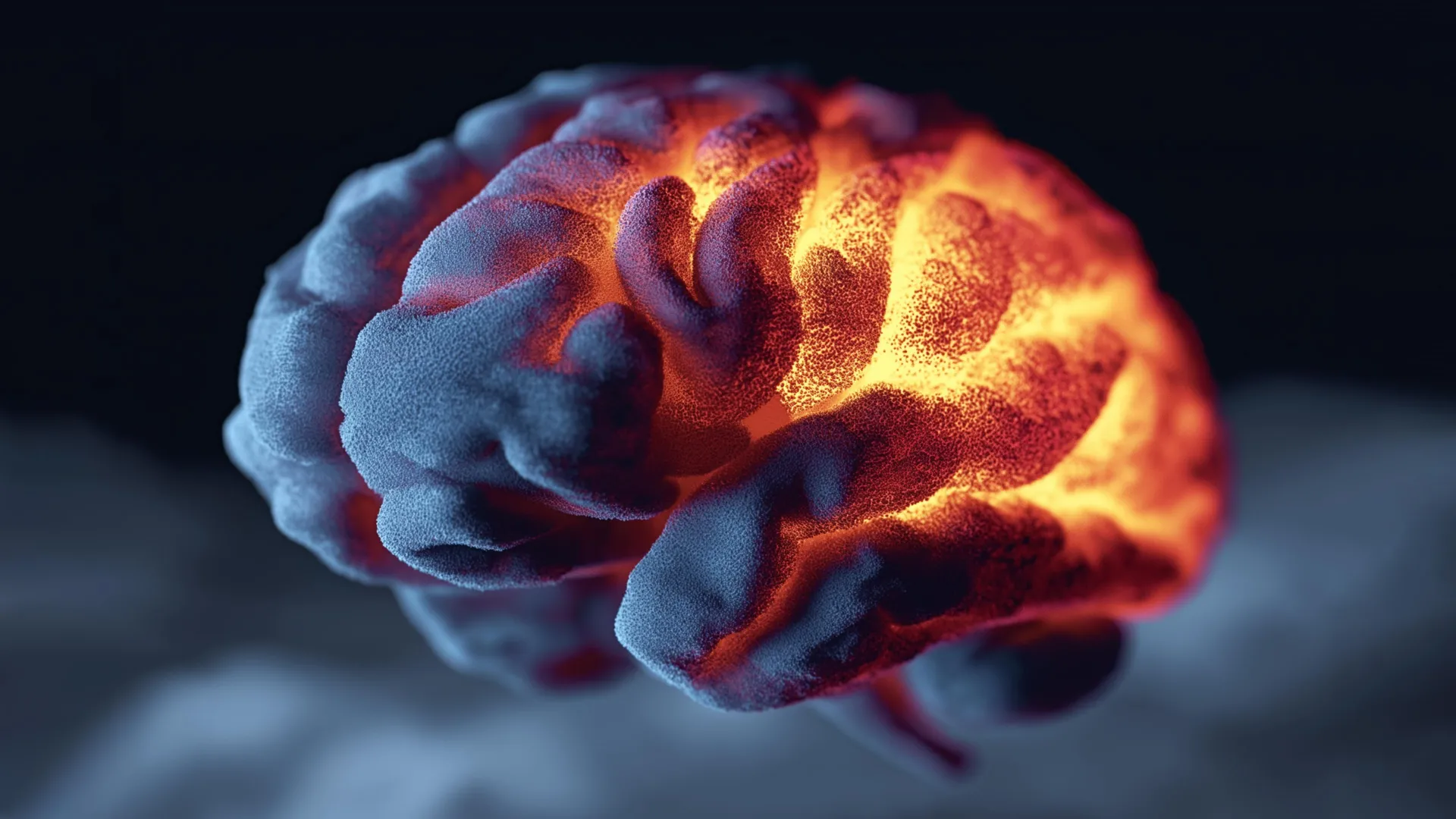
Researchers have identified specific parts of the brain that may play an important role in high blood pressure.
This area, called the lateral parafacial area, is located in the brainstem, the oldest part of the brain, which is responsible for automatic functions such as breathing, digestion, and heart rate.
Professor Julian Peyton, director of Manaaki Manawa and lead researcher at the Waipapa Taumata Rau Heart Research Center at the University of Auckland, says: “The transverse facial region is activated and causes us to exhale when we laugh, exercise and cough.”
“These exhalations are what we call ‘forced’ and are driven by strong abdominal muscles.
“In contrast, normal exhalation does not require these muscles to contract. The lungs have elasticity, so contractions occur.”
Relationship between breathing and blood pressure
The researchers found that this brain region is also associated with nerves that constrict blood vessels and increase blood pressure.
“We’ve discovered a new region in the brain that causes high blood pressure. Yes, high blood pressure is in the brain!” Peyton says.
“We found that the lateral parafacial region is activated in hypertensive conditions, and when our team deactivated this region, blood pressure fell to normal levels.”
These findings suggest that certain breathing patterns, particularly those that use the abdominal muscles more, may contribute to increased blood pressure. Identifying abdominal breathing in hypertensive patients may help pinpoint the cause and guide more targeted treatment.
This study was recently published in the journal circulation research.
Potential new therapeutic targets
“Can we target this brainstem region?”
The researchers then investigated whether this part of the brain could be treated with drugs.
“Targeting the brain with drugs is difficult because they act throughout the brain rather than in selected areas, such as the parafacial nucleus,” Payton says.
A key advance came when the team discovered that this region was activated by signals originating from outside the brain. These signals originate from the carotid body, a small group of cells in the neck near the carotid arteries that monitor oxygen levels in the blood.
The carotid body can be safely targeted for drug therapy and thus represents a promising alternative approach.
“Our goal is to target the carotid body, and we are importing a new drug that suppresses carotid body activity and is being repurposed to ‘remotely’ inactivate the parafacial region safely, without the need to use drugs that penetrate the brain.”
The discovery could lead to new ways to treat high blood pressure, especially in people with sleep apnea, where activity in the carotid body increases when breathing stops during sleep.
