



Listen to the audio version of this article (generated by AI).
Given strong scientific evidence that glyphosate, the world’s most widely used herbicide, can cause cancer and other health problems, U.S. and European regulators should take urgent steps to more tightly regulate glyphosate, an international group of scientists said Friday.
Scientists gathered at the Glyphosate Symposium in Seattle on March 25-26 to examine a variety of studies conducted over the past decade and determined that the evidence that glyphosate herbicides can harm human health is “now too strong to justify further delays in regulating glyphosate.”
The group confirmed previous findings related to exposure to non-Hodgkin’s lymphoma and warned that adverse health effects have been found at exposure levels consistent with current patterns of use.
“To protect public health, government agencies should act without delay to limit their use or, if legally required, eliminate them,” the scientists said in a statement.
Participating scientists included experts from multiple U.S. universities, the Centers for Disease Control and Prevention, and the National Cancer Institute, as well as experts from Europe and Canada.
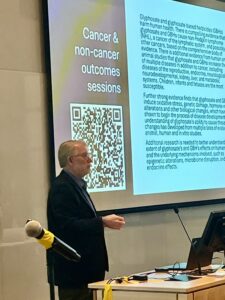 Experts gathered in Seattle in March 2026 to evaluate the scientific evidence regarding the health effects of glyphosate.
The group’s full findings, which include experts in epidemiology, toxicology, cancer and risk assessment, will be detailed in a peer-reviewed paper the group plans to publish later this year.
Glyphosate, widely used by farmers, landscapers and others, was introduced by Monsanto 50 years ago and marketed as a uniquely safe method of weed control.
However, evidence has grown over the years that glyphosate is associated with a variety of health and environmental hazards.
The research at the Seattle symposium comes more than a decade after the World Health Organization’s International Agency for Research on Cancer (IARC) conducted an extensive review of the scientific literature on glyphosate before 2015 and determined the chemical was “probably” carcinogenic to humans.
A more recent scientific review in Seattle confirms and strengthens that classification, scientists at the symposium said. Many people are now convinced that there is no longer any doubt that glyphosate is carcinogenic.
“It’s clear that the evidence has changed and gotten stronger since 2015,” said Christopher Portier, a former U.S. government scientist and adjunct professor at Emory University. He also participated in the Seattle symposium and the 2015 IARC glyphosate review.
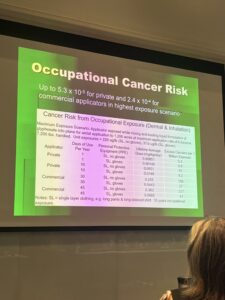 Experts at the Glyphosate Symposium in Seattle reviewed a variety of data on potential health effects.
Additionally, the scientists said there is evidence from human and/or animal studies that glyphosate and glyphosate-based herbicides increase the risk of multiple adverse health problems, including kidney and liver disease. Studies have also shown effects on the reproductive, endocrine, nervous, and other metabolic systems. Scientists say children, infants and fetuses are most susceptible.
Scientists focused on studies conducted since 2016, examining data on where and how people are exposed, statistics on the prevalence of glyphosate in household dust in certain agricultural regions, and statistics on the prevalence of glyphosate in urine samples.
The scientists also warned that other pesticides are not properly evaluated and regulated and that approval processes around the world need a “fundamental overhaul” to protect human health. They said precautions to reduce human exposure should be implemented without delay while research continues.
Scientists at the symposium said that while glyphosate is an important example, it is not the only chemical in which regulators are not acting on scientific evidence of harm.
“There’s a huge contrast, a contradiction, between the scientific consensus and the regulatory perspective,” said symposium organizer Leanne Shepherd, a professor of public health sciences at the University of Washington. “This (glyphosate) is the most obvious example of that.”
Scientists are proposing an overhaul of the regulatory system, requiring scientific data from independent laboratories and organizations with no conflicts of interest, and for the research to be paid for by the agrochemical industry. Regulators should base pesticide approval decisions on “unbiased” health effects data, rather than relying heavily on unpublished data submitted by companies seeking approval for pesticide products, scientists said. For pesticide products on the market, regulators “need to closely monitor use, exposure data, and adverse outcomes, especially for sensitive and highly exposed groups,” the scientists said.
Ultimately, the group concluded, pesticide use needs to be reduced overall and “eliminated wherever possible.”
“This is essential for the health of humans, ecosystems and future generations,” the group said in a statement.
 Stanford University professor Tracy Woodruff also attended the symposium.
“It’s hard to get the government to change, especially since industry spends a lot of money lobbying Congress to make sure the laws are in their favor,” said Tracy Woodruff, a Stanford University professor and former senior fellow in the EPA policy office who attended the symposium.
“People are really angry that they’re getting sicker, that their family members are getting sicker, that they’re being exposed to toxic chemicals. There’s universal agreement that people don’t want to be exposed to toxic chemicals.”
Germany-based Bayer, which acquired Monsanto in 2018 and inherited the glyphosate-based Roundup brand and other glyphosate-based herbicides, is currently embroiled in a lawsuit filed in the United States by tens of thousands of people who claim that exposure to the company’s glyphosate herbicides caused them to develop non-Hodgkin’s lymphoma, a type of blood cancer.
Bayer claims that its glyphosate products are safe and do not cause cancer or other health problems, but several studies challenge that view.
For example, a 2022 study found that glyphosate can have neurotoxic effects at lower doses than regulators consider safe. And a 2023 study linked childhood glyphosate exposure to liver inflammation and metabolic disorders.
Last month, a review of 15 years of published research confirmed that human exposure to glyphosate herbicides is associated with a number of adverse health effects, including cancer, liver and metabolic problems, as well as effects on the reproductive and endocrine systems, disruption of the microbiome, and more.
Bayer is seeking to resolve the lawsuit and is pursuing an appeal to the U.S. Supreme Court that could limit future litigation.
Bayer officials monitored the symposium via livestream and said in a statement afterward that they “support the safety of glyphosate-based products that have been extensively tested, approved by regulators, and used worldwide for more than 50 years.”
The company said, “No health regulator anywhere in the world has found that glyphosate poses a threat to human health.” Instead, the company said, regulators have “repeatedly concluded that glyphosate-based products, the most widely used and extensively studied products of their kind, can be used safely according to product label instructions.”
Asked for comment, the U.S. Environmental Protection Agency (EPA) said its clear goals are to “protect children, support farmers, and ensure decisions are made based on science, not politics or special interests.”
“We are unequivocally committed to the gold standard of science in this review and will take appropriate action based on the review results,” the agency said in a statement.
The agency further stated:This year, EPA plans to conduct a comprehensive, transparent, and rigorous scientific review of glyphosate to evaluate its use and ensure that decisions are fully consistent with the best available science and the protection of human health and the environment. This review will include expanding public access to underlying data and science, analyzing independent peer-reviewed research on potential cancer and developmental risks, evaluating opportunities to reduce exposure, and coordinating with the Department of Agriculture, Health Services, and states to promote integrated pest management and viable alternative weed management strategies. EPA will also work with USDA and HHS to develop a research and evaluation framework for exposure to all chemicals in the food supply, while working with federal partners to strengthen residue monitoring in food and water. ”
-
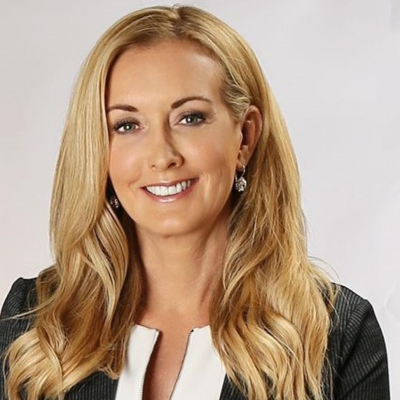
Carrie Gillum is editor-in-chief of The New Lede and a veteran investigative journalist with more than 30 years of experience covering U.S. news, including 17 years (1998-2015) as a senior correspondent for Reuters International. She is the author of Whitewashing: A Story of Herbicides, Cancer, and the Corruption of Science, which exposed the agricultural corruption of the Monsanto corporation. The book won the coveted Rachel Carson Book Award from the Society of Environmental Journalists in 2018. Her second book, the narrative law thriller The Monsanto Documents, was released on March 2, 2021.
She also contributed chapters to a textbook on environmental journalism and a book on pesticide use in Africa.
Mr. Gillum testified about his research as an invited expert before the European Parliament in 2017 and was a featured speaker at the World Democracy Forum in Strasbourg, France in 2019. He has also been a keynote speaker and panel speaker at events and universities in North America, Australia, the Netherlands, Brussels, and France.
Gillam is a regular contributor to the Guardian. Her work has also appeared in The New York Times, Huffington Post, Time, and other outlets.
In 2022, Gillum helped launch The New Lede as a journalism initiative of the Environmental Working Group.
Gillum is a member of the Association of Environmental Journalists.
