


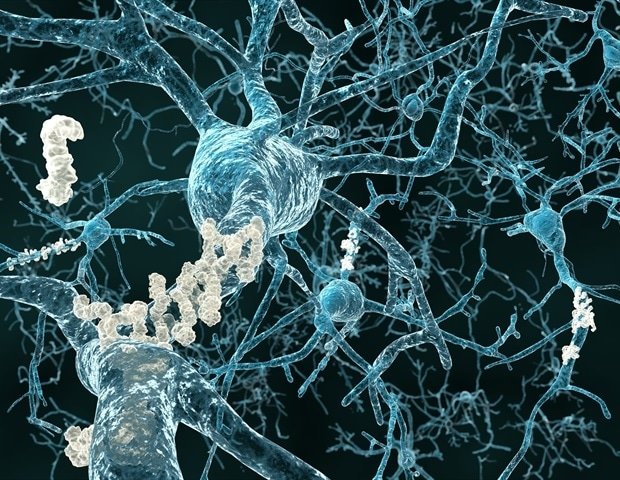
Researchers at Columbia University have uncovered new clues about the earliest molecular events that can cause Alzheimer’s disease, elucidating how toxic tau filaments begin to form in the brain. The findings could guide future treatments aimed at stopping the disease before it causes significant memory loss or cognitive decline.
The study focused on tau, a protein that normally helps stabilize neurons, but can deform and accumulate into tangled filaments in the brains of Alzheimer’s patients. Although amyloid plaques have long been associated with Alzheimer’s disease, increasing evidence suggests that tau pathology is more closely linked to the progression of cognitive symptoms.
Although recently approved amyloid-clearing therapies have shown limited efficacy, many researchers believe that tau-focused approaches may be more effective at slowing or preventing cognitive decline.
Researchers have long sought to understand how tau misfolds into the filaments that make up the tangles associated with Alzheimer’s disease. But in animal models of Alzheimer’s disease, tau doesn’t misfold as it does in humans, so the researchers had to extract the tangles from patients’ brains and inject them into the animals.
Although these previous studies were unable to understand how tau misfolds in Alzheimer’s disease, understanding how tau aggregation begins is important if we want to develop treatments that prevent neurodegeneration before it begins. ”
Kapil Ramachandran, lead author of the study and assistant professor of neuroscience at Columbia University
Previously, Dr. Ramachandran had discovered that neurons in the brain have an additional disposal system that spans the outer membrane of the neuron. He also discovered that an additional processing system called the neuroproteasome destroys only newborn proteins that are highly vulnerable to misfolding.
“In our new study, we wanted to see what would happen if we blocked the neuroproteasome,” Ramachandran says. “To make that happen, we had to build a set of molecular tools, and that’s when we discovered tau filaments.”
In the new study, the scientists found that disrupting the neuroproteasome rapidly caused tau to misfold into filaments that are very similar to those found in Alzheimer’s patients. They also found that ApoE4, a protein known to double the risk of Alzheimer’s disease, reduces the number of discarded units and dramatically increases susceptibility to the development of tau tangles. In contrast, ApoE2, a variant that reduces the risk of Alzheimer’s disease, has the opposite effect.
Researchers observed the same pattern in human brain tissue. People with two copies of the APOE4 gene have far fewer neuroproteasomes in their brains. Neuroproteasomes also decreased with age.
“The association between tau filament formation and APOE variants, the biggest risk factors for Alzheimer’s disease, and aging suggests that we may have discovered a mechanism that explains how this important aspect of the disease begins,” Ramachandran said. “Our hope now is that our findings will lead to the development of treatments that prevent tau tangles from forming in the first place.”
sauce:
Columbia University Irving Medical Center
Reference magazines:
Paradise, V. Others. (2026). Neuroproteasomes control endogenous tau versus helical filament formation in an APOE genotype- and age-dependent manner. natural neuroscience. DOI: 10.1038/s41593-026-02297-x. https://www.nature.com/articles/s41593-026-02297-x
