

Close Menu

    Subscribe to Updates

    Get the latest creative news from FooBar about art, design and business.

    What's Hot

    Scientists have discovered a ‘holy grail’ gene that could one day help humans regenerate limbs

    May 9, 2026

    NIH funding cuts disproportionately impact marginalized health equity researchers

    May 9, 2026

    LSD microdosing is associated with acute mood improvement in adult depression

    May 9, 2026
    Facebook X (Twitter) Instagram
    Facebook X (Twitter) Instagram
    Health Magazine
    • Home
    • Environmental Health
    • Health Technology
    • Medical Research
    • Mental Health
    • Nutrition Science
    • Pharma
    • Public Health
    • Discover
      • Daily Health Tips
      • Financial Health & Stability
      • Holistic Health & Wellness
      • Mental Health
      • Nutrition & Dietary Trends
      • Professional & Personal Growth
    • Our Mission
    Health Magazine
    Home » News » Researchers develop DNA aptamer to detect Alzheimer’s disease biomarkers
    Discover

    Researchers develop DNA aptamer to detect Alzheimer’s disease biomarkers

    healthadminBy healthadminMarch 10, 2026No Comments4 Mins Read
    Researchers develop DNA aptamer to detect Alzheimer’s disease biomarkers
    Share
    Facebook Twitter Reddit Telegram Pinterest Email


    As the population ages, the need for better tools to diagnose and monitor Alzheimer’s disease (AD), the most common cause of dementia, has never been more urgent. The disease is characterized by a gradual loss of nerve cells, known as neurodegeneration, which begins years before obvious symptoms appear. One way to detect this damage is to look for signs of nerve cell damage. An important new biomarker of neurodegeneration is neurofilament light chain (NfL), a structural protein component of large nerve fibers. When neurons are damaged, NfL escapes into the cerebrospinal fluid and eventually into the bloodstream, providing a gateway to ongoing neurodegeneration.

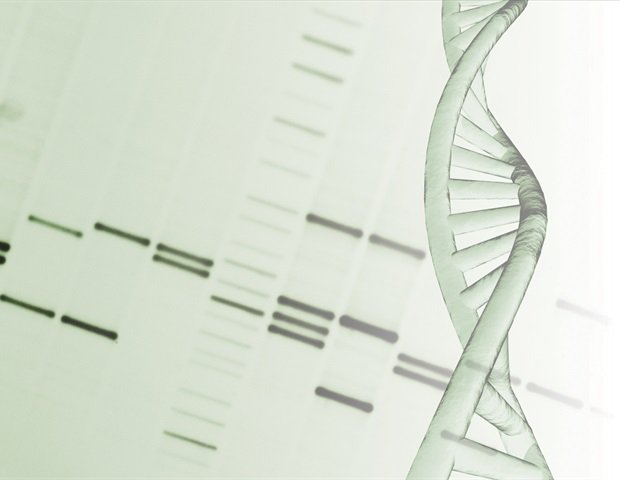
    Exploiting the potential of NfL as a biomarker, Japanese researchers have developed the world’s first aptamer (a small single-stranded synthetic DNA molecule) that can bind to NfL with high affinity and specificity. These aptamers are cost-effective and can be manufactured to consistently high standards, making them attractive components for next-generation biosensor technologies and blood-based diagnostics.

    This research was conducted in collaboration with Associate Professor Kaori Tsukagoshi of the Department of Chemistry, Tokyo University of Science, Miyu Matsumoto, a second-year master’s student in the Department of Biotechnology, Tokyo University of Agriculture and Technology, and Distinguished Professor Kazunori Ikebukuro. Their work became available online on December 16, 2025 and was published in volume 796 of the magazine. Biochemical and Biophysical Research Communication (BBRC) journal These discoveries are the result of a joint UK-Japan research project supported by AMED-SICORP.

    ”We are the first in the world to report a DNA aptamer that binds to NfL, which is released into the blood in response to neurodegeneration in various neurodegenerative diseases. The developed aptamer has a binding affinity comparable to that of commercially available antibodies, and is expected to have a variety of applications in the future, such as diagnosing the progression of Alzheimer’s disease. ” says the associate professor. Mr. Tsukagoshi.

    The aptamer was generated through a process called systematic evolution of ligands by exponential enrichment (SELEX). In this process, vast libraries of random single-stranded DNA sequences are screened over repeated cycles, leaving only the strongest and most selective binders. The researchers conducted seven rounds of selection, recovering, amplifying, and reusing DNA strands that bound to NfL, while removing sequences that bound to irrelevant tags. This process yielded 86 unique aptamer candidates. After removing sequences that could form multimers and cause nonspecific binding, the researchers were able to obtain 30 promising sequences that successfully recognized the full-length NfL protein.

    Two aptamers stood out from this group, named MN711 and MN734. These bound to NfL with significant affinity, with binding and dissociation constants of 11 nM and 8.1 nM, respectively, and exhibited a strength comparable to antibodies currently used in commercially available NfL tests. Furthermore, they were highly specific and bound exclusively to NfL over other AD-related biomarkers such as amyloid-β and phosphorylated tau. Of note, the aptamers were found to recognize a specific region of the NfL protein, including amino acid residues 281-338, which are known to be present in fragments of NfL found in human plasma, providing further evidence of their specific binding behavior. Importantly, this binding ability was maintained when the protein was mixed with human plasma despite its complex environment, suggesting potential for blood-based diagnostics.

    Current blood tests for NfL rely on advanced immunoassay platforms that use pairs of antibodies to achieve high sensitivity. Although effective, these antibody-based methods are expensive to manufacture, can vary from batch to batch, and are difficult to modify for use in new types of biosensors. DNA aptamers offer an attractive alternative, combining high affinity and specificity with the practical advantages of chemical synthesis. This means they can be manufactured at low cost with minimal batch-to-batch variation, and can be easily modified with chemical groups that can be attached to electrodes or other device surfaces, making them suitable for future biosensor applications.

    ”The main advantage of DNA aptamers is their compatibility with chemical modification. Aptamers can be synthesized with terminal functional groups that allow direct immobilization to metal- or carbon-based electrode surfaces commonly used in electrochemical biosensors. This property allows aptamers such as MN711 and MN734 to be integrated into compact sensing platforms designed for point-of-care testing. ” concludes the associate professor. Mr. Tsukagoshi.

    sauce:

    Tokyo University of Science

    Reference magazines:

    Masato Matsumoto others. (2025). Competitive SELEX discovery of DNA aptamers selective for neurofilament light chains in human plasma. Biochemistry and Biophysical Research Communication. DOI: 10.1016/j.bbrc.2025.153151. https://www.sciencedirect.com/science/article/pii/S0006291X25018674


    Source link

    Visited 21 times, 1 visit(s) today
    Share. Facebook Twitter Pinterest LinkedIn Telegram Reddit Email
    Previous ArticleBiggest patient safety threat in 2026: AI misdiagnosis, rural access
    Next Article Immune cells found to actively promote plaque formation in Alzheimer’s disease
    healthadmin

    Related Posts

    NIH funding cuts disproportionately impact marginalized health equity researchers

    May 9, 2026

    Short bouts of exercise help smokers manage nicotine cravings instantly

    May 8, 2026

    Engineered regulatory T cells offer a path to immunosuppression-free transplantation

    May 8, 2026

    Inhibiting TGF-β signaling reactivates dormant bone cells and treats osteoporosis.

    May 8, 2026

    Socioeconomic inequality has a major impact on temperature-related mortality across Europe

    May 8, 2026

    Clinicians find evolutionary explanations more helpful than genetics for anxiety

    May 8, 2026
    Add A Comment

    Comments are closed.

    Categories

    • Daily Health Tips
    • Discover
    • Environmental Health
    • Exercise & Fitness
    • Featured
    • Featured Videos
    • Financial Health & Stability
    • Fitness
    • Fitness Updates
    • Health
    • Health Technology
    • Healthy Aging
    • Healthy Living
    • Holistic Healing
    • Holistic Health & Wellness
    • Medical Research
    • Medical Research & Insights
    • Mental Health
    • Mental Wellness
    • Natural Remedies
    • New Workouts
    • Nutrition
    • Nutrition & Dietary Trends
    • Nutrition & Superfoods
    • Nutrition Science
    • Pharma
    • Preventive Healthcare
    • Professional & Personal Growth
    • Public Health
    • Public Health & Awareness
    • Selected
    • Sleep & Recovery
    • Top Programs
    • Weight Management
    • Workouts
    Popular Posts
    • 1773313737_bacteria_-_Sebastian_Kaulitzki_46826fb7971649bfaca04a9b4cef3309-620x480.jpgHow Sino Biological ProPure™ redefines ultra-low… March 12, 2026
    • the-pros-and-cons-of-paleo-dietsThe Pros and Cons of Paleo Diets: What Science Really Says April 16, 2025
    • pexels-david-bartus-442116The food industry needs to act now to cut greenhouse… January 2, 2022
    • 1773729862_TagImage-3347-458389964760995353448-620x480.jpgDespite safety concerns, parents underestimate the… March 17, 2026
    • Improve Mental Health10 Science-Backed Practices to Improve Mental Health… March 11, 2025
    • 1773209206_futuristic_techno_design_on_background_of_supercomputer_data_center_-_Image_-_Timofeev_Vladimir_M1_4.jpegMulti-agent AI systems outperform single models… March 11, 2026

    Demo
    Stay In Touch
    • Facebook
    • Twitter
    • Pinterest
    • Instagram
    • YouTube
    • Vimeo
    Don't Miss

    Scientists have discovered a ‘holy grail’ gene that could one day help humans regenerate limbs

    By healthadminMay 9, 2026

    Scientists studying axolotls, zebrafish and mice have discovered a common set of genes that could…

    NIH funding cuts disproportionately impact marginalized health equity researchers

    May 9, 2026

    LSD microdosing is associated with acute mood improvement in adult depression

    May 9, 2026

    AI-augmented behavior provider Theris launches from stealth

    May 8, 2026

    Subscribe to Updates

    Get the latest creative news from SmartMag about art & design.

    HealthxMagazine
    HealthxMagazine

    At HealthX Magazine, we are dedicated to empowering entrepreneurs, doctors, chiropractors, healthcare professionals, personal trainers, executives, thought leaders, and anyone striving for optimal health.

    Our Picks

    AI-augmented behavior provider Theris launches from stealth

    May 8, 2026

    New brain scan metric detects hidden Alzheimer’s disease patterns before memory loss begins

    May 8, 2026

    New obesity discovery rewrites decades of fat science

    May 8, 2026
    New Comments
      Facebook X (Twitter) Instagram Pinterest
      • Home
      • Privacy Policy
      • Our Mission
      © 2026 ThemeSphere. Designed by ThemeSphere.

      Type above and press Enter to search. Press Esc to cancel.