


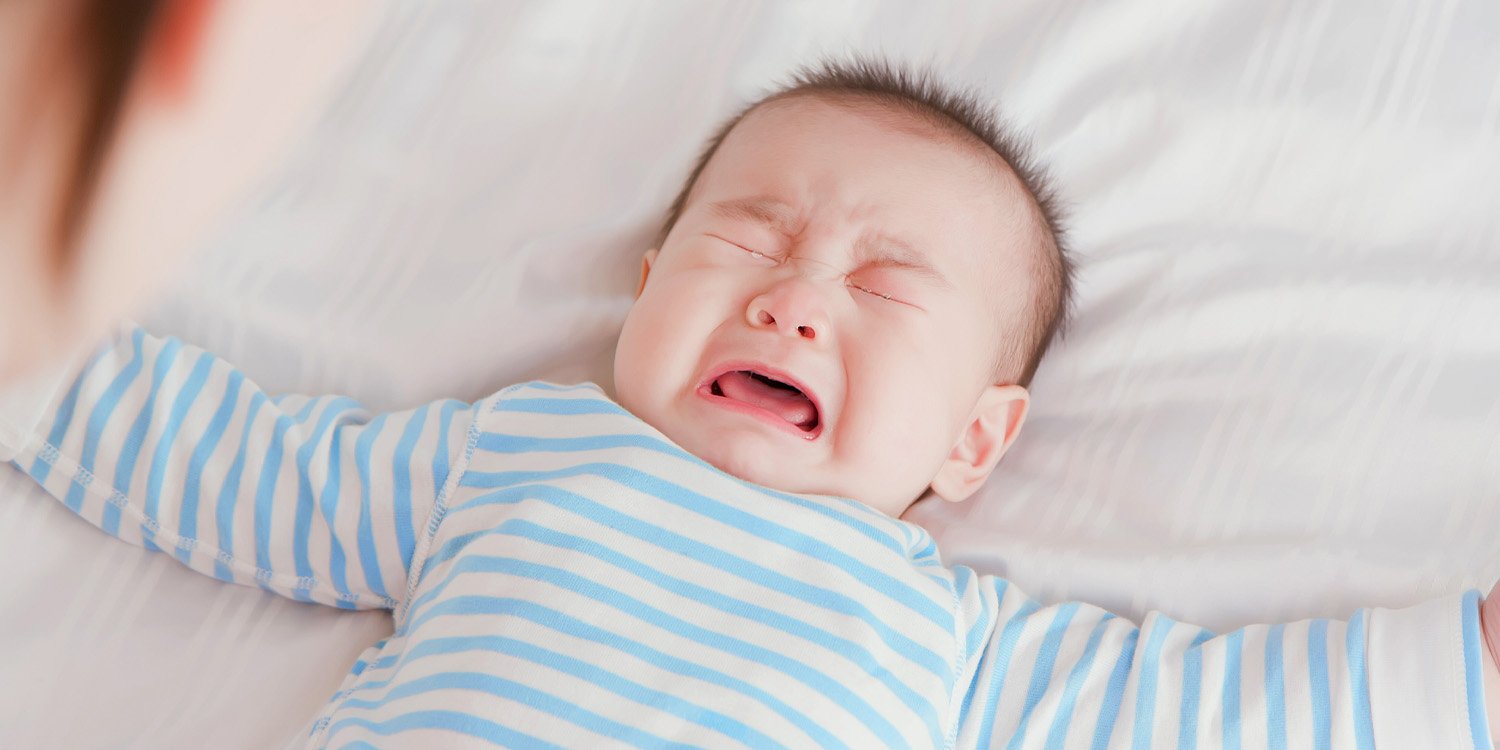
New research published in Developmental cognitive neuroscience Newborn babies show stronger brain responses to infant cries than to spoken words. The findings suggest that an infant’s biological ability to produce specific sounds may shape how the brain processes auditory information from the moment it is born. The findings provide evidence that the biological link between vocalization and speech recognition begins much earlier in human development than scientists previously assumed.
In adult human communication, listening and producing sounds are deeply interconnected processes. When adults listen to language, the areas of the brain responsible for mouth, tongue, and throat movements tend to activate in parallel with areas that process auditory sensations. Scientists refer to this interaction as the perception-production link, which allows individuals to compare the sound they hear with the physical movements required to reproduce it.
Human infants are born into the world with advanced listening abilities, even though they cannot speak. During pregnancy, the mother transmits speech sounds through the uterine wall, and the fetus becomes able to hear speech from around the 20th to 24th week of pregnancy. This early exposure gives newborns a strong preference for hearing human voices over many other environmental noises.
Spoken language represents the acoustically complex signals that infants hear for several months before they are born. A baby’s cry, on the other hand, is a simple sound that a baby only begins to hear after entering the world. However, crying is unique because it is the only communicative sound that a newborn baby can physically make on their own.
To investigate how early physical abilities influence auditory development, researchers assessed whether newborns process cries in a similar way to speech. Judith Gervain, professor of developmental psychology at the University of Padua and senior researcher at the Center for Integrative Neuroscience and Cognition in Paris, detailed the rationale behind the study. She said a growing body of research shows that even before babies can speak, they are sensitive to mouth and tongue movements, which can shape how they process sounds.
“In other words, the development of the ability to produce words is closely related to the ability to perceive words,” Jarvan explained. “We wanted to test how early this production-perception link begins. And since the earliest communication sound a baby makes is a cry, and in fact the first sound a newborn makes soon after birth is a cry, we decided to test how babies perceive cries and whether it is similar to the way they perceive speech.”
To test this idea, researchers tested 25 healthy full-term newborns who were exposed to French during pregnancy. This group included 15 females and 10 males, with an average age of about 2 days, ranging from 1 to 4 days old. The infants had an average gestational age of 39 weeks and 6 days, an average birth weight of 3,320 grams, and a good health score at birth.
An additional 45 infants participated in the experiment but were excluded from the final analysis due to movement, crying, or technical problems. The main reason for this high exclusion rate involves a natural reaction known as emotional contagion. This happens when a newborn becomes distressed and begins to cry when hearing the cries of other infants. The researchers also tested 27 adults whose native language was Italian with no prior knowledge of French.
The researchers measured brain activity using functional near-infrared spectroscopy, a non-invasive imaging technique often abbreviated as fNIRS. This technique uses a cap fitted with special lights and sensors to measure changes in blood oxygen levels through the skull. When a particular brain region is activated, more oxygen is consumed, allowing sensors to track neural responses in the frontal, temporal, and parietal areas of the brain.
The auditory stimuli consisted of recordings of the cries of 10 French newborns and spoken French sentences recorded by 10 adult French women. Each cry was paired with an audio sentence of equal length, taking an average of approximately 1.09 seconds per item. Although the volume of all recordings was normalized to ensure consistency, the average pitch of infant cries was higher at 430 Hz compared to 233 Hz for adult speech.
During the experiment, participants heard 20 blocks of auditory stimuli. Ten of the blocks contained crying sounds and 10 blocks contained spoken words. Each block lasted approximately 20 seconds and contained 10 different audio samples presented in random order. A quiet break period lasting 25–30 seconds was provided between blocks to give the brain time to reset.
Comparing the neural activity evoked by both sound types, the authors observed that newborns showed greater activity within the right temporal region of the brain in response to crying than speech. Temporal areas are primarily involved in processing sounds and acoustic patterns. When listening to spoken words alone, infants showed increased left temporal and right temporoparietal activation compared to baseline periods of silence.
It was found that when newborns heard cries, activity increased not only in the right frontal, temporal, and parietal regions, but also in the left frontal, temporal, and parietal regions. Activation in the frontal cortex is noteworthy because it contains motor areas that control body movement. Spoken words did not trigger activity in this motor area in newborns, suggesting that brain areas associated with movement respond specifically to sounds made by infants.
These results were contrary to the research team’s initial expectations regarding early language processing. “Language is so important, and babies learn it so quickly, that we initially expected that in just a few years, their brains would have a stronger response to sounds than to cries,” Jarvan told Cypost. “We were actually surprised to see that newborns responded more strongly to crying, which suggests that what newborns are able to emit is important to them.”
Adult participants showed different neural response patterns than infants. In adults, spoken words evoked significantly greater brain activity than infant cries across left temporoparietal and right temporal regions. Because the adult participants spoke Italian and did not understand French, their temporal lobes processed the unfamiliar sounds based on the acoustic structure rather than the meaning of the words.
Adults show activation in the frontal motor cortex when hearing both spoken words and newborn cries, reflecting their physical ability to produce both sound types. Jarvan highlighted key takeaways from how the newborn brain processes these signals. “Our findings show that after one or two days of birth, a newborn’s brain responds more strongly to cries, the communicative sounds that the baby makes itself, than to words,” Dr Jarvan said. “This suggests that sound production may play a stronger role in perception than we previously thought.”
She added that self-vocalization served a practical purpose in early human development. “The sounds that babies make themselves are very important to them and help them learn about the sounds themselves and about communication more generally,” Jarvan said.
The emotional intensity of crying represents one potential factor that requires careful consideration when interpreting these findings. Crying naturally communicates distress, tends to increase emotional arousal in the listener, and can potentially increase brain activity independent of voice production. Emotional arousal alone does not fully explain why motor areas of the brain are activated only by crying in newborns, but by both sounds in adults.
Future research could build on these findings by assessing how infants respond to cries made by newborns with different language backgrounds, and by testing whether babies exhibit unique brain patterns when listening to recordings of their own cries. Jarvan and his colleagues are now extending this research to older children to examine how their brain responses evolve as their vocal abilities develop.
“Continuing with this policy, we are now observing slightly older infants, 6 to 10 months old, to see how they respond to babbling,” Jarvan said. “Following the logic of this study, babbling may be particularly important for infants aged 6 to 10 months because they are just beginning to speak and their vocalizations, or babbling, are not yet as strong as adult speech, but this is something they can produce themselves.”
She said her team is now recording brain activity to track these changes throughout development. “So we’re currently testing how babies’ brains respond to babbling between six and 10 months of age, and whether this changes as their babbling and speaking skills improve,” Jarvan explained.
The study, “Do babies recognize cries as sounds?”, was authored by Gaia Lucarini, Irene de la Cruz-Pavia, Jessica Gemignani, Caroline Narret, Alexandre Rapillonne, and Judith Jarvan.
