


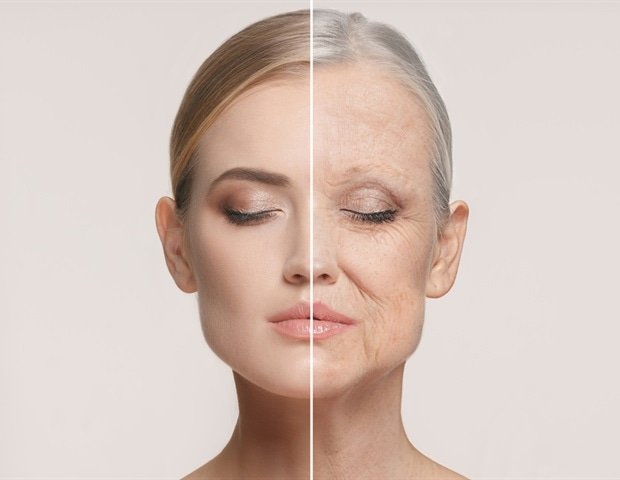
Age is more than just a number. Neuroscientists previously thought of cognitive aging as a single trend line, but now recognize that large individual differences require a more predictive and individualized approach. As we uncover more factors that influence cognition over time, we are finding that modeling the aging brain requires more diverse data than previously available.
“We need to understand that the process of human aging is as much a biological process as it is a social one,” said Simon Fraser University’s Randy McIntosh, chair of a symposium on brain resilience at the Cognitive Neuroscience Society (CNS) annual meeting.
“This means there is no single molecule or single protein that is a biomarker of aging in a healthy brain; there will be some combination. And while capturing the intersection between what’s happening in our brains and what’s happening in our environment and culture is difficult, it’s also an exciting opportunity, especially in this age of machine learning.”
In fact, as will be presented today at the CNS Conference in Vancouver, British Columbia, researchers are now going beyond fMRI scanners to incorporate a wide range of data into the study of cognition across the lifespan, from sleep and vascular health to religion and lifestyle.
At the same time, they are broadening the scope of their research, moving from simply controlled laboratory work to more naturalistic settings, such as watching movies, to more representative samples and the conditions under which brain health is tested. New data shows, for example, how even low-level depression can contribute to cognitive decline.
Together, these efforts will create a broader picture of brain aging that will help diagnose and treat clinical diseases such as depression, dementia, and Alzheimer’s disease, as well as optimize cognitive function in healthy people.
Clarifying the role of depression
Cognitive neuroscientist Audrey Duarte has observed major changes in cognitive aging over the past few decades.
At the time, we thought of age as young and old, but when we look at the data, two 70-year-olds can perform incredibly differently in terms of cognitive assessments, overall health, and age-related illnesses. And our cognitive aging model did not incorporate any individual difference factors. ”
Audrey Duarte, Cognitive Neuroscientist, Cognitive Neuroscience Association
For Duarte and his team at the University of Texas at Austin, this shift means going beyond genetic factors that contribute to aging and understanding some of the more “malleable” factors that people can change and implement at any age to make their brains more resilient over time. Importantly, her team also hopes to expand the population from which they collect data with a larger, multi-center study of approximately 330 participants, ranging in age from 18 to 75 and of diverse racial and ethnic backgrounds.
Now in the second year of this five-year project, Duarte’s team has already uncovered new insights into brain aging. The results of a new, unpublished study, which they plan to present in CNS, show that even mild depression can cause executive dysfunction that underlies age-related memory impairment. Researchers have found that this effect may be exacerbated in blacks and Mexican Americans, who have been found to have higher prevalence of depression and Alzheimer’s disease than non-Hispanic whites.
Research by Duarte’s postdoctoral fellow Sarah Henderson, also published in CNS, is also investigating the mechanisms by which depression-related memory impairment occurs. When the researchers correlated symptoms of depression reported in the study cohort with a series of memory tasks that participants completed during fMRI testing, they found that an impairment in the ability to counter interference from competing information contributed to depression-related memory decline.
Other findings from Duarte’s research revealed social factors such as religiosity that appear to confer cognitive resilience as we age, as well as insights from lifestyle factors such as sleep. Making these connections required sustained efforts in local communities to build trust with groups that have been underrepresented in neuroscience research. “By listening to people talk about their experiences with aging and their parents’ experiences, we learned a lot about social support factors, other emotional support factors, and even lifestyle factors, all of which contribute to how people age,” Duarte says.
The overall goal is to link these new data to the demands of the brain’s executive functions, allowing researchers to understand how aging differs across the lifespan across racial, ethnic, and social backgrounds. “For example, are there any factors that might make us more resilient or worsen the memory problems associated with depression?” Duarte asserts.
Answering such questions could lead to tailored approaches to accelerate cognitive aging. For example, in participants whose brain scans show high white matter vascular load, physical activity may be an effective treatment for depression instead of or in conjunction with medication. “We aim to build decision trees that help overcome all these individual differences,” Duarte said.
Uncovering the power of the natural environment
Karen Campbell’s research into cognitive aging began in a personal way by observing how her grandmother maintained her memory until the end, allowing her to share her memories of growing up in Poland, the Auschwitz concentration camp during World War II, and eventually immigrating to Canada to start a new life. “That got me interested in aging and memory and why some people are able to withstand age-related decline in the face of trauma,” said Campbell, of Ontario’s Brock University.
When Campbell began researching aging during her doctoral studies, she quickly noticed how the study of memory differed from how people use memory in everyday life. While lab tasks ask research participants to go through lists of words or pictures and then intentionally recall or recognize them, “in the real world, people often let things pop into their heads unintentionally, guided by their knowledge of a given situation,” she says. This realization led Campbell to look for opportunities to study memory and perception in more natural settings, such as when people watch movies or read stories.
Campbell’s team’s findings, which she plans to present today at a CNS conference, reveal that under natural conditions, the brains of young and old people are not as different as previously reported. The researchers’ recent study shows that older adults and younger study participants who watched the movie perceived and remembered it similarly, building on previous research showing that artificial tasks in the lab can induce a different type of brain activity than natural language processing. Participants watched the film naturally without any challenges and then answered questions about the film, such as identifying changes in the story. “Our results suggest that similar neural mechanisms underlie the memory improvements in both groups,” Campbell said.
Overall, Campbell’s research shows that “aging is not all bad,” she says. “Most older adults function well in daily life, especially when they can draw on their existing knowledge and accumulated expertise,” Campbell explains. “We still need to understand what causes some people to age prematurely, but we have some clues, such as exercising, getting hearing aids if needed, and trying to maintain social connections.”
Campbell’s team is currently working on interventions to help people remember things in everyday life. Participants are encouraged to watch a movie, pause at certain points, and come up with keywords to describe the events they just watched. “For example, we’re using the BBC’s Sherlock, so at the end of a scene a participant might say, ‘Sherlock, morgue, on the crop,'” she says. “We think that by generating these keywords, people need to reflect on what just happened and rehearse the important parts.” This kind of search technique has improved memory in more standard list-learning paradigms, for example, but hasn’t been applied more widely in more naturalistic scenarios, Campbell says. Their preliminary results suggest that this intervention may improve memory and make individual events more distinguishable.
“What is emerging is a view of brain aging that is fundamentally about possibilities,” says McIntosh, who is working on creating generative models based on a variety of novel datasets. “By modeling how biology, experience, and environment interact over time, we are moving beyond the average toward a science that values individual life and opens new paths for lifelong resilience.”
source:
Cognitive Neuroscience Society
