


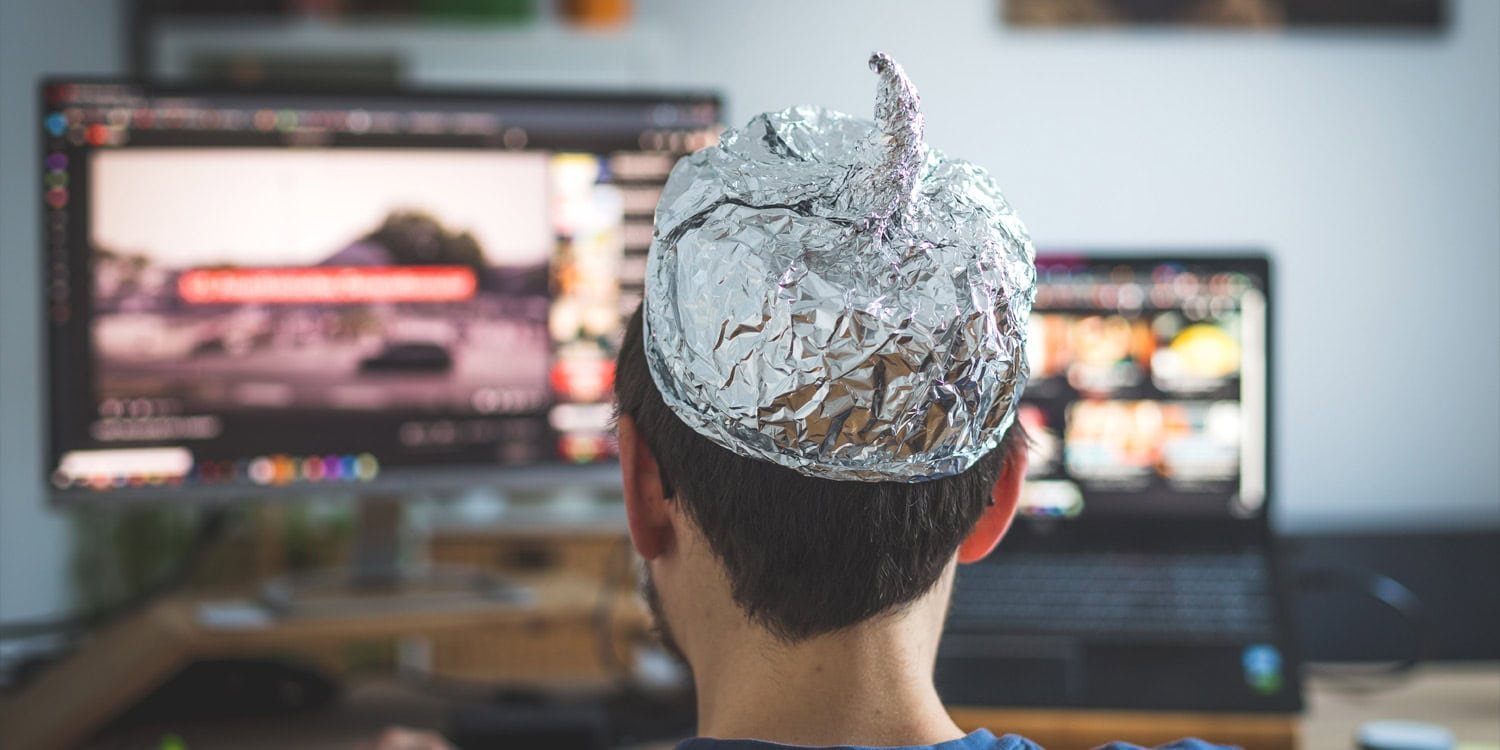
People who have a strong psychological need to find patterns and strict rules in their daily lives are more likely to believe in conspiracy theories. Recent research published in journals cognitive processing We found that this tendency toward rigid structure can lead people to accept conspiratorial ideas, even if they have strong scientific reasoning skills. These results suggest that fact-checking alone may not be enough to change minds because conspiracy theories provide a comforting sense of order to those who seek them.
Conspiracy theories often offer straightforward explanations for chaotic global events. They tend to blame corruption and malice for complex world problems. This provides a single narrative that makes the world easier to understand.
Past research suggests that people usually fall for these theories because they lack analytical thinking skills. Psychologists often assume that people with lower levels of education or poor critical reasoning skills are simply unable to evaluate the information they read.
However, recent research has revealed discrepancies regarding people with advanced autistic traits. Although these people generally prefer analytical and logical thinking, previous research has shown that they are actually more likely to support conspiracy theories. They also show a strong bias against counter-evidence, meaning they have a hard time changing their minds when presented with facts that debunk their beliefs.
Neophytos Georgiou, a psychology researcher at Flinders University in Australia, wanted to understand this contradiction. Georgiou and his team suspected that specific cognitive characteristics, rather than a lack of intelligence, were causing this vulnerability.
They focused on a concept called systemization. Systematization is a psychological term that describes the drive to analyze information, identify patterns, and organize the world into strict, predictable rules. People high in systematization have difficulty accepting that events occur randomly and prefer to uncover logical causes for all events.
Gheorgiou proposed the hypersystemization hypothesis to explain the association between autistic traits and conspiracy theory beliefs. He theorized that individuals with a strong desire for structure may be naturally drawn to conspiracy theories. These theories provide neat, interconnected explanations that satisfy the need for a predictable world.
“People often think conspiracy theories are formed because someone isn’t thinking critically,” Gheorgiou says. “But our findings show that for people who prefer systematic structure, conspiracy theories can feel like highly organized ways to make sense of confusing or unpredictable events.”
To test this hypothesis, the research team designed two separate studies. The initial study involved 412 adults from the general population, primarily residing in the United States, United Kingdom, and Europe. Participants completed a series of online surveys and tasks to measure their traits and thinking styles.
The researchers used standard psychological surveys to assess participants for autistic traits and organizing tendencies. We also measured scientific reasoning ability by asking participants to evaluate scenarios that included core scientific concepts. This allowed the team to see if a fundamental misunderstanding of the scientific method was responsible for their beliefs.
For example, one inference scenario described an experiment in which a subject solved a jigsaw puzzle in a warm room without a radio, while another subject solved a jigsaw puzzle in a cold room with a loud radio in the background. Participants needed to identify confounding variables and understand why scientists cannot determine whether radio is causing the delay.
Finally, participants completed a questionnaire measuring their general tendency to believe in conspiracy theories. To measure cognitive flexibility, the team used a specific test called the “Bias Against Disconfirming Evidence” task. This test assesses how well people update their beliefs when given new information.
Participants first read a short text scenario that suggested one highly plausible interpretation. For example, a sentence stating that a girl named Jenny cannot sleep may lead the reader to infer that she is nervous about a school exam.
As participants read subsequent passages, their initial conclusion became much less likely. New truths that were initially hidden are revealed, including the detail that Jenny can’t wait for Christmas morning.
The researchers wanted to see if participants would adjust their answers based on new evidence. Their failure to update their beliefs demonstrated a bias toward rebuttal evidence. This means that they stubbornly stuck to their initial assumptions even though the facts proved them wrong.
The researchers used statistical grouping techniques to classify a general population sample into four different profiles based on test scores. The results revealed a clear cognitive pathway to conspiratorial thinking.
One particular group of participants showed a high tendency to systematize, along with elevated autistic traits. These people had higher rates of support for conspiracy theories and lower performance on cognitive flexibility tasks. It turned out that they were very reluctant to abandon their initial flawed interpretations.
However, these same people performed very well on science puzzle tests. Their ability to understand scientific concepts did not protect them from believing in conspiracies.
“What was striking was that people who systematize really want the world to make sense in a very consistent way,” Gheorgiou says. “Conspiracy theories often provide that sense of order. They tie up loose ends.”
“Even if someone has strong reasoning abilities, the desire for rigorous explanations can overshadow their ability to question their beliefs,” he added. The second study focused entirely on clinical samples to investigate this further. Researchers recruited 145 adults with a formal diagnosis of autism spectrum disorder.
These participants completed the exact same set of online surveys and cognitive tasks as the first group. The goal was to determine whether codification tendencies influence the relationship between autistic traits and conspiracy theories within the autistic population. The data confirmed the researchers’ suspicions.
Autistic traits aren’t the only ones directly responsible for the rise in conspiracy theories. Instead, codifying trends served as a bridge between the two. Participants who scored high on both autistic traits and systemizing tendencies showed the highest levels of conspiracy theory.
For people low in systemizing tendencies, the association between autistic traits and conspiracy theories was not statistically significant. Additionally, cognitive rigidity played a large role in the clinical sample. Participants who had trouble regulating their opinions during the reading task were much more likely to support conspiracy theories.
“In tasks that required participants to revise their opinions when presented with new information, participants who were more likely to systematize were less likely to change their perspective,” Gheorghiu says. “This may help explain why conspiracy theories persist even when contradictory information is available.”
The researchers noted several caveats regarding their methodology. In the second study, participants self-reported their autism diagnosis through an online survey panel. Although they scored above standard clinical thresholds on the questionnaire, they did not undergo an in-person medical evaluation in this study.
Furthermore, users of international online survey panels tend to have higher levels of education than the general population. This demographic bias means that the results may not fully reflect the broader population. This research also relies on individual testing, ignoring how social influences within groups shape individual beliefs over time.
Future research should examine how people with strong organizing tendencies interact with conspiracy theories in group settings. Assessing behavior in mock chat forums could reveal how social dynamics influence these rigid belief structures.
These findings suggest that society needs to rethink how it combats misinformation. Currently, most interventions focus on debunking false claims through fact-checking and logical argumentation.
If someone embraces a conspiracy theory to satisfy a psychological need for order, simply presenting them with contrary facts may not be enough to change their mind. Interventions for people with highly structuring traits may need to address the underlying need for structure.
“This is about the cognitive style that someone brings to information,” Gheorgiou says. “For people who naturally seek structure and predictability, conspiracy theories can be appealing because they provide a sense of order, logic, and consistency to events that feel chaotic.”
Public health officials and science communicators may need to develop new strategies to recognize these different cognitive profiles. “Rather than relying solely on fact-checking and logic-based interventions, strategies may need to reflect how people process information,” Gheorgiou says. “Conspiracy theories fill a psychological need, but to ignore that is to miss what makes these stories actually compelling.”
The study, “The Hypersystemic Hypothesis: How Systematizing Tendencies Influence Conspiracies Beliefs and Belief Flexibility in Clinical and General Populations,” was authored by Neophytos Gheorgiou, Paul Delfabro, Ryan P. Balzan, Nathan Caruana, and Robin Young.
