


When a public health crisis occurs, government officials believe that educating the public accurately about the threat will naturally encourage safe practices. The general expectation is that people first need to be persuaded that a medical intervention is effective before they actually use it. A large-scale study assessing the political response to the coronavirus pandemic challenges this assumption. Researchers who tracked reactions to former President Donald Trump’s unexpected support for mask-wearing in 2020 found that his supporters readily adopted the behavior without changing their personal beliefs. These findings were published in American Sociological Review.
Social scientists have been debating for decades the extent to which political leaders’ speeches can change human choices. One traditional view holds that citizens have non-negotiable preferences and customs. In this view, voters simply choose leaders who naturally reflect their established views. If voters are inflexible, politicians changing their minds on issues will have little effect on the crowd’s daily activities.
Another framework, known as dual-process theory, suggests that human decision-making is much more fluid. We propose that people typically rely on automatic habits, but that alertness may be heightened during emergencies. In stressful situations, the public can be highly sensitive to new information from trusted authorities. The pandemic provided an ideal backdrop to examine these competing theories of political polarization.
Conservative voters generally opposed pandemic guidelines early on. Some scholars have argued that this resistance stemmed from a deep-seated skepticism toward institutional medicine. Some speculated that the protests were simply the result of following instructions from populist politicians who vocally opposed the safety rules.
Bartholomew A. Koneczny, a sociologist at the Paris Institute of Sciences, set out to clarify these possibilities. He witnessed the moment when a prominent leader suddenly changed his tune about a disappointing action. At the beginning of the pandemic, there was a heated debate about face masks. President Trump has consistently said he will not wear a mask, ignoring recommendations from national health agencies.
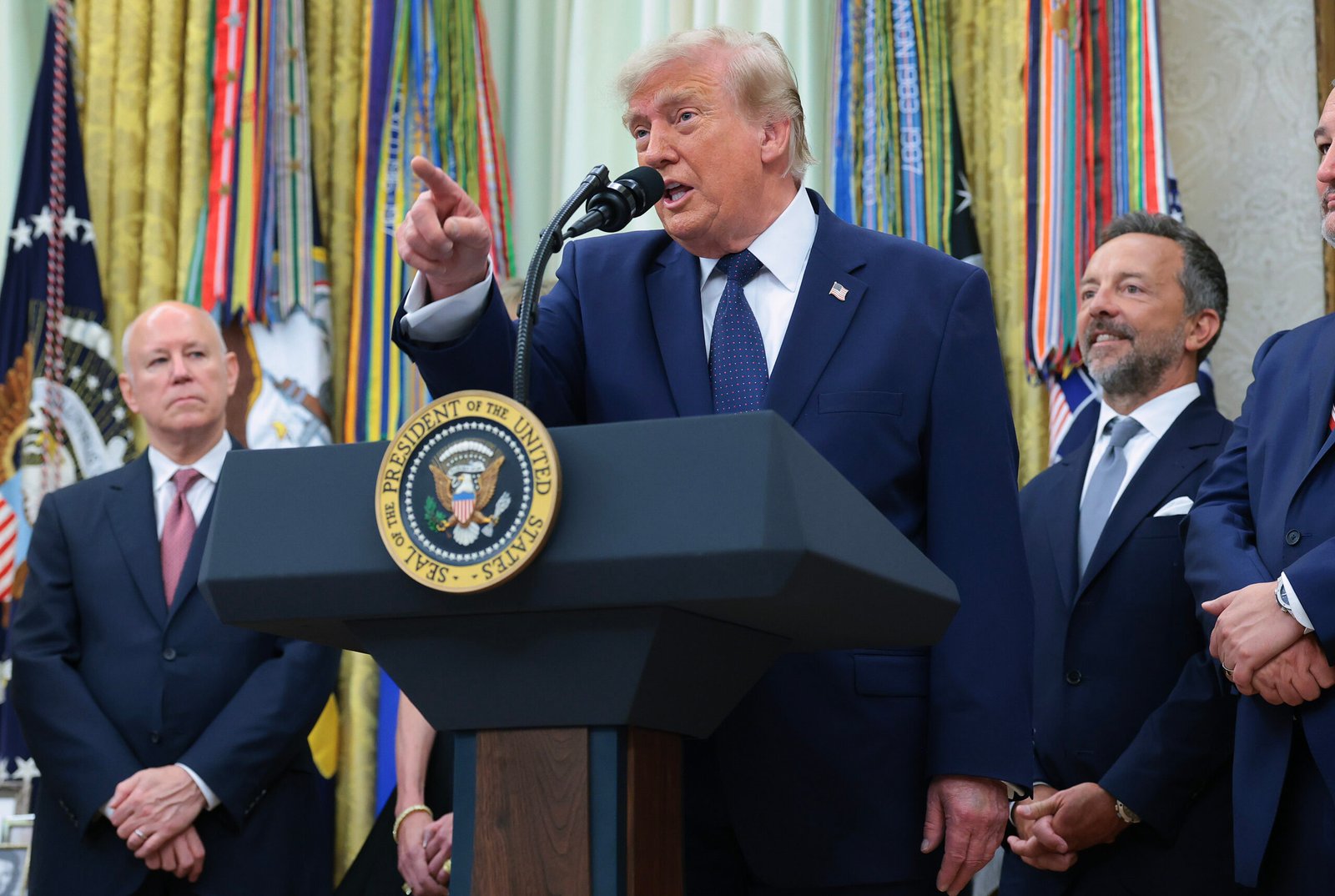
Then, on July 1, 2020, President Trump took part in a television interview and surprisingly changed his message. He said he thinks masks are a good idea. He added that he has been wearing a dark-colored face covering lately and likes the way it looks. He said, “It was a thick black mask, but I thought I was okay. I looked like the Lone Ranger.”
The comment, which compared his appearance to the famous fictional cowboy, was clearly spontaneous. It provided the perfect natural testing ground to see how viewers would react to the sudden political shift. Konecny evaluated data from an ongoing online panel called Understanding Cleaning in America, an extension of the long-running Understanding America Study.
This national tracking project surveyed the same individuals approximately every two weeks. The dataset provided a large study sample of 5,169 participants who reported their behaviors and political affiliations during the spring and summer of 2020. Continued research has allowed sociologists to track exactly when habits begin to drift.
The analysis compared survey responses documented immediately before the July 1 interview with responses clustered in the days immediately following. Researchers took advantage of a limited time frame to separate the effects of television appearances from other background news events. The main focus centered on whether participants reported wearing a face mask to protect themselves in the past seven days.
To ensure that the statistical results were reliable, the researchers performed a series of mathematical checks. He verified that the trends in mask use among respondents before and after the interview were parallel before the pivot. He also simulated hypothetical events on random dates to see if similar behavioral jumps would appear by chance. Testing confirmed that the July adjustment was an extremely rare aberration, giving us confidence that the television appearance prompted a change in behavior.
This study showed measurable behavioral changes. After President Trump made the Lone Ranger comment, Republicans were 5 percentage points more likely to wear a mask. Democrats’ mask usage rate remained unchanged. The clash between conservatives closed the existing behavioral gap between the two parties by about 40 percent.
Konecny then investigated the mechanisms that cause this change. Public health education relies heavily on the health belief model. This concept suggests that before people take action, they must actively believe that the threat is real and that the intervention will be highly effective. The survey included a question asking participants whether they fundamentally believed face masks were extremely or somewhat effective at protecting themselves from the virus.
Despite Republicans wearing masks more often, survey responses regarding the medical effectiveness of masks remained flat. Interviews failed to convince them that face coverings are scientifically protective. Behavioral changes were completely decoupled from their personal medical beliefs.
Although such a disconnect may seem unusual, sociologists have documented similar patterns in everyday life. College students often drink heavily in public to fit in with their peers, even if they are against binge drinking in private. Parents may refuse childhood vaccinations out of suspicion, but under intense pressure at work, they will accept the vaccination for themselves. Social expectations often push people into behaviors that they do not intellectually support.
To determine why the Lone Ranger’s comments worked, Konecny looked at community transmission rates across the country. In late June 2020, the United States experienced a sudden spike in virus cases. The study matched survey respondents’ location and local health data.
They found that the messaging pivot was most successful among Republicans living in the hardest-hit states. This suggests that the severity of the crisis acted as a catalyst. When people overcome imminent danger, they may turn to their preferred leaders for clues to survival. They may follow those cues out of a sense of group solidarity or simple fear, bypassing the need to logically test the underlying science.
This analysis has limitations that should be noted. This study used self-reported data. Rather than accurately reporting their habits, survey participants may have simply changed their answers to project loyalty to their own camp. Focusing on a single political figure during a rare global disaster also limits how broadly these lessons can be applied.
Because face masks were highly visible and novel, they had the potential to separate them from more private medical options such as taking pills. Trump also has a decidedly unique relationship with his base. The consequences of this particular historical moment may not translate directly into standard politicians asking voters to eat less sugar or exercise more often. Future research might investigate how strong social networks shape these responses, or how long such non-fixed behaviors can realistically be maintained.
If public health officials want to improve compliance among groups that resist institutional guidance, logical arguments alone can fail. Adopting the unconventional, performative communication style of populist leaders may be a more reliable means of provoking public action. When a trusted person accepts a new practice in times of severe stress, it provides a path for followers to follow without abandoning their previous beliefs.
The study, “When political axes change behavior but beliefs: Evidence of Trump’s reversal on face masks during the coronavirus crisis,” was authored by Bartholomew A. Koneczny.
