


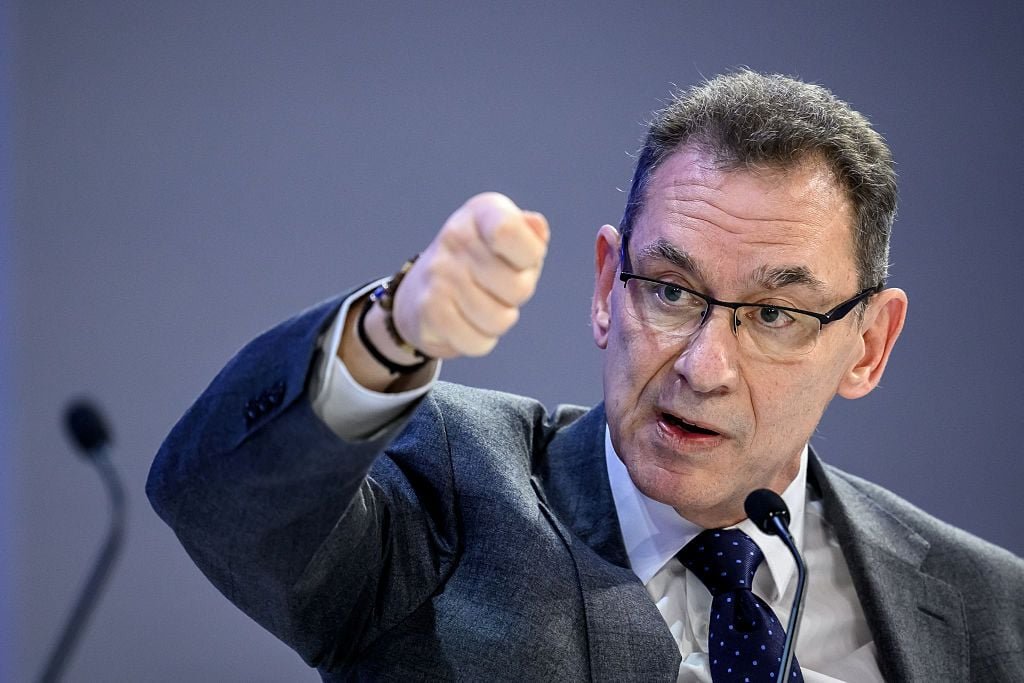
Pfizer CEO Dr. Albert Bourla, one of the most influential voices in the biopharmaceutical industry, has harshly criticized FDA Director Vinay Prasad, MD, and his work as director of the Center for Biologics Evaluation and Research (CBER), which regulates vaccines in the United States.
“We have a problem with the leadership at CBER,” Bourla said Monday at the TD Cowen Healthcare Conference. “I don’t think the current director is following the recommendations of the staff.”
The rebuke was in response to questions about Pfizer’s interactions with the FDA regarding the vaccine. The company is one of the world’s most prolific vaccine makers, generating more than $11 billion in sales from vaccinations last year.
Bourla added that they must be “differentiated” when talking about CBER leadership and the “career scientists” that Pfizer has interacted with for decades.
“We have a very productive professional collaboration with them,” Bourla said of the staff. “Most of them are well-known regulators, and when they publish something, regulators all over the world listen to them. So that hasn’t changed.”
Bourla added that the company has not reconsidered its vaccine strategy or adjusted its long-term investment plans based on recent decisions by Prasad or other regulators.
Last month, the FDA initially refused to review Moderna’s application for approval of its influenza vaccine, but approved it a week later after the company adjusted its submission. The Office for National Statistics report said the initial decision on Moderna’s application led Prasad to overturn the examiners’ signature on the rejection letter.
In December, the Centers for Disease Control and Prevention overhauled its vaccine schedule, removing seven childhood vaccinations from the universally recommended list, but providing little scientific basis for its decisions.
On Monday, Bourla characterized recent regulatory decisions as “an abnormal situation that will correct itself.”
“We’re not going to go back to the days before Pasteur discovered the rabies vaccine, right? So vaccines are going to be very important as a result,” Bourla added.
While most industry leaders have remained silent about U.S. health policy under the new administration of Donald Trump, Bourla has been an outspoken critic of Health and Human Services Secretary Robert F. Kennedy Jr., calling him “anti-science.”
In January, at a Wall Street Journal event during the World Economic Forum in Switzerland, Bourla said he had “very productive discussions about cancer treatment” with HHS leadership.
“When you start talking about vaccines, it’s like a different world. There’s a kind of religion there,” Bourla added.
