


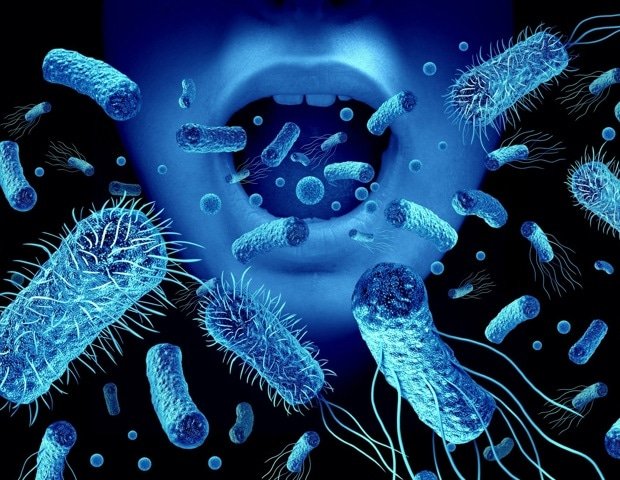
A multi-institutional team including researchers at Vanderbilt Health has discovered that intestinal pathogens can reshape the gut environment to help colonize themselves and cause disease.
Researchers have shown that enterotoxigenic Bacteroides fragilis (ETBF), which causes diarrhea and has been linked to colitis (inflammation of the colon) and colorectal cancer, uses the toxins it produces to reprogram the metabolism of intestinal cells and create conditions that support their growth. The study was published in the journal April 30th. cellpoints to new therapeutic strategies to disrupt the growth of pathogens like ETBF.
“Our findings suggest that disease-associated microorganisms not only respond to inflammation, but can also actively promote inflammation by reshaping host metabolism. This can help prevent or defeat diseases such as infectious diarrhea and colorectal cancer. “This opens up new possibilities for intervention, such as targeting metabolic interactions between host and microbes to disrupt them,” said Wenhan Zhu, Ph.D., assistant professor of pathology, microbiology, and immunology and lead author of the study.
Zhu has long been interested in how pathogens succeed in the competitive gut environment.
“The gut is one of the most microbial-dense environments in the body, and there is intense competition for nutrients, but certain microbes can still take hold and cause disease,” he said. “These microbes ultimately compete for nutrients, and processes such as inflammation and cancer may be a way to alter the environment to access those resources.”
Although the proportion of people who carry ETBF varies from study to study, ETBF may be a common member of the intestinal flora and is considered a classical anaerobe, a type of bacteria that requires hypoxic conditions (such as the large intestine) to survive. It produces toxins that interact with host cells in the intestine, causing inflammation and increasing oxygen and oxidative stress. This condition is usually harmful to anaerobes such as ETBF.
Zhu and his colleagues are studying how ETBF overcomes and exploits these conditions to gain insights into microbial physiology and host-microbe interactions, he said. In the current study, researchers showed in an animal model that:
- ETBF uses its toxins to reprogram the metabolism of intestinal epithelial cells.
- This metabolic change reduces oxygen consumption by host cells and increases oxygen availability in the intestine.
- The resulting environment supports the growth of ETBF, even though ETBF is traditionally considered an anaerobic bacterium.
- These changes also create conditions that promote disease-associated microbial communities associated with colorectal cancer.
“One of our most surprising findings is that classical anaerobic bacteria can benefit from, and even help create, an oxygen-rich environment,” Zhu said. ”This challenges the conventional view that anaerobic microorganisms simply cannot tolerate oxygen. ”
The researchers also discovered that ETBF reshapes the intestinal environment in unexpected ways, including promoting epithelial cell proliferation and manipulating immune signaling pathways and bile acid biology.
They continue to investigate how ETBF modifies the environment and successfully establishes itself and causes disease. How widely does this mechanism apply to other microorganisms and disease environments? and whether these interactions can be targeted therapeutically.
“Ultimately, we hope to identify strategies that disrupt the niches that promote these diseases before they lead to long-term pathology,” Zhu said.
Four researchers also contributed to the study and are co-first authors. Ryan Fansler. and Dr. Yifan Wu. All at Vanderbilt Health. and Dr. Alexandra Grothe of Northwestern University Feinberg School of Medicine. Also contributing significantly to this research was Madison Butler of Vanderbilt Health. Cynthia Sears, MD, Johns Hopkins University. and co-corresponding author Dr. Ashley Earle of the Broad Institute of MIT and Harvard University.
This research was supported by the National Institutes of Health (grant F31AI178950, R35GM147470, R01DK134692, R35GM150625, U19AI110818, U2CDK119886, OT2OD030544, U2CDK119889, P30CA068485, and P30DK058404); V Foundation; Colorectal Cancer Alliance; G. Harold & Leila Y. Mathers Foundation; Jane Coffin Childs Memorial Medical Research Fund;
sauce:
Vanderbilt University Medical Center
Reference magazines:
DOI: 10.1016/j.cell.2026.04.012
