


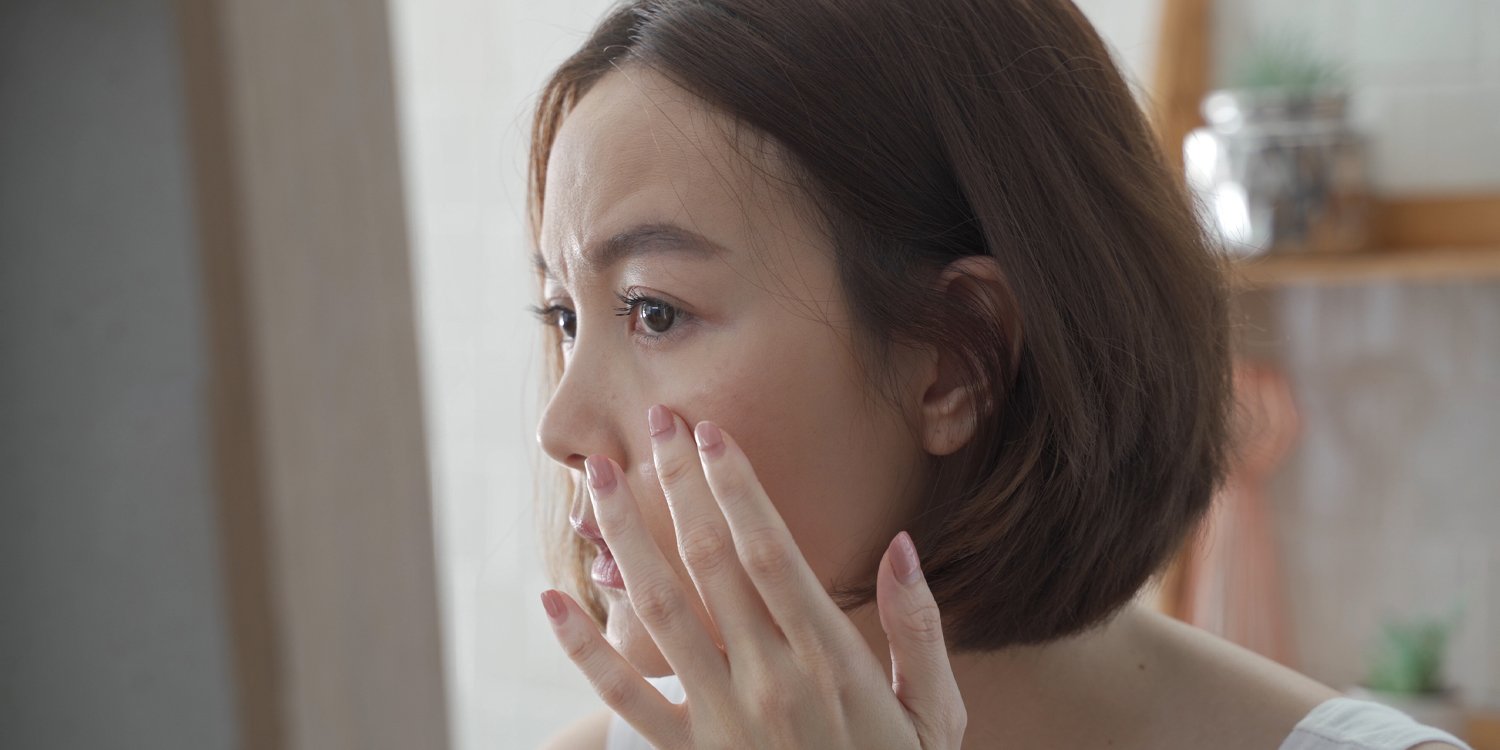
Recent research published in Journal of Dermatology and Cosmetic Technology This suggests a noteworthy link between mental health issues and the negative impact skin conditions have on daily life. This study provides evidence that higher levels of stress and depression tend to lead to greater anxiety, especially in women, and a greater burden of psychological and skin-related symptoms. The findings highlight the complex mechanisms by which the mind and skin interact, although the potential benefits of probiotics remain uncertain due to low intake rates among participants.
Mental health and skin health are deeply connected through a system known as the gut-skin-brain axis. This term refers to the complex bidirectional communication network that connects the gastrointestinal tract, skin, and central nervous system. Psychological stress can trigger a biological response in the brain that increases the release of stress hormones such as cortisol. High cortisol levels can compromise the skin’s protective barrier and worsen inflammatory skin conditions such as acne, eczema, and psoriasis.
At the same time, living with a visible and unpleasant skin condition can increase feelings of anxiety and depression. Diet is thought to play a major role in this network by influencing the bacterial balance of the digestive system. A healthy gut microbiome helps control inflammation and immune responses throughout the body. Improper diet can disrupt this microbial balance, which can increase vulnerability to both mental health problems and skin inflammation.
Probiotics are live microorganisms found in certain fermented foods and supplements that provide health benefits by supporting the balance of microorganisms in the body. The authors wanted to explore how habitual probiotic intake relates to quality of life related to mental well-being and skin conditions. Research to date has primarily focused on how probiotics affect the gut, but less is known about their broader effects on the skin and brain in the general population.
“Although the relationship between mental health and skin diseases is becoming increasingly recognized, the role of diet, and in particular probiotics, in this interaction is still poorly understood,” said study author Deborah Fernández Pinheiro, professor of biomedicine, pharmacology and nutrition at Brazil’s Alto Vale do Rio do Peixe University.
Pinheiro, who is also a researcher in the Biomedical Interdisciplinary Research Group, pointed to the need for more localized data. “One aspect that we think is particularly important is that our study was conducted in Brazil, where research on the skin-gut-brain axis remains limited,” she explained. “We wanted to investigate whether habitual probiotic intake is associated with mental health and dermatology-related quality of life in a Brazilian population, as well as contribute to a better understanding of the skin-gut-brain axis.”
Researchers recruited 305 adult participants from Brazil and conducted an online survey. The sample consisted primarily of women, representing approximately 72% of the group, and the average age of participants was approximately 28 years. The researchers collected responses using a combination of social media invitations and printed flyers with QR codes placed in dermatology and psychology clinics. Participants provided basic demographic information such as height and weight, which allowed the authors to calculate body mass index (BMI).
Approximately half of the sample was classified as normal weight, and the other half was classified as overweight or obese. Participants completed a series of specialized questionnaires to assess various aspects of their physical and mental health. To measure mental health, researchers used the Depression, Anxiety, and Stress Scale, a 21-item test that categorizes the severity of these emotional states. Participants also completed the validated Brazilian version of the Dermatology Life Quality Index, a questionnaire that asks how much skin problems interfere with daily life, interpersonal relationships, and work.
Finally, the study included a dietary section that tracked how often people consumed probiotic foods and commercial probiotic supplements such as kefir, kombucha, sauerkraut, curd, and miso. The data showed that the majority of participants suffered from psychological symptoms. For example, almost 24% of the sample reported extremely severe anxiety and 17% reported extremely severe depression. Women had significantly higher scores for anxiety, depression, and stress compared to men.
The authors also noted that these gender differences were fairly consistent, with women reporting a greater negative impact of skin conditions on their quality of life. This suggests that women may experience a greater burden of both psychological and dermatological distress. When looking at how different variables interact, scientists found strong positive correlations between mental health outcomes. This means that people who report high levels of stress tend to experience high levels of depression and anxiety.
Statistical analyzes designed to predict anxiety scores revealed that stress and depression were the only independent predictors of anxiety in this group. Variables such as weight, age, and gender did not significantly change or predict mental health outcomes in the final statistical model. Researchers also looked at the relationship between skin health and mental health. They found that dermatology-related quality of life scores had weak but significant correlations with anxiety, depression, and stress scores.
“Our study confirms that mental health and skin health are closely linked,” Pinheiro said. “People who experience anxiety, depression, or chronic stress may have a greater impact on their quality of life from skin conditions.”
Regarding the dietary aspect of the study, the association between probiotic intake and health outcomes was inconclusive. Only 19 percent of the sample reported taking probiotics weekly, with kefir and kombucha being the most common choices. Because such regular consumption was so rare among participants, statistical tests showed no significant association between probiotic intake and improved mental or skin health.
“Based on previous studies suggesting that the gut microbiome can influence the skin-brain axis, we initially expected to observe an association between probiotic intake and improved mental health or dermatological quality of life,” Pinheiro said. “Rather, the association was not statistically significant.”
“Although this was unexpected, we believe these findings are valuable because they highlight the complexity of this biological system and the importance of studying probiotic exposure more rigorously in future studies,” Pinheiro added. “In our sample, we found no evidence that regular intake of probiotics was associated with improvements in mental health or skin-related quality of life. This does not necessarily mean that probiotics are ineffective. Rather, most participants reported very low intake of probiotics, making it difficult to detect any potential benefits.”
It is important to interpret these results with several limitations in mind. Because this study relied on an online survey and voluntary participation, the sample may not accurately represent the general population. People who are already interested in health or who have experienced skin or mental health issues may be more likely to volunteer for the study. This type of self-selection can skew the data and limit the extent to which conclusions can be applied to other groups.
The study’s cross-sectional design also precludes the authors from establishing cause-and-effect relationships. Because the data captures only a fraction of a second, it’s impossible to know whether the skin condition caused the mental health problem, or whether mental distress exacerbated the skin problem. Although this correlation provides evidence that these symptoms are related, the exact biological mechanism remains unidentified.
Another notable limitation is the low rate of probiotic intake among participants. Pinheiro cautioned against jumping to conclusions about the benefits of probiotics based solely on this study.
“The most important point is that our findings should not be interpreted as evidence that probiotics don’t work,” Pinheiro explained. “Our study was observational and reflected the participants’ usual dietary habits. Because probiotic intake was relatively infrequent and self-reported, we were assessing naturally occurring intake rather than a controlled probiotic intervention.”
Future research would benefit from the use of controlled clinical trials in which participants are randomly assigned to take specific doses of probiotics over an extended period of time. “Randomized clinical trials with standardized doses of probiotics are still needed to determine whether probiotics can influence the skin-gut-brain axis,” Pinheiro noted.
Incorporating biological tests such as measuring stress hormones and inflammatory markers in the blood could provide physical evidence of how these systems interact. Expanding dietary assessments to include more detailed tracking of food intake may also help provide a deeper understanding of the role of nutrition in maintaining mental and skin health.
“Our next step is to conduct intervention studies that evaluate specific probiotic strains, longer supplementation periods, and biological markers such as inflammatory cytokines, cortisol, and gut microbiome composition,” Pinheiro said. “We hope this study will help elucidate the mechanisms linking nutrition, mental health and skin health.”
She hopes that expanding this research will ultimately lead to a better understanding of overall human health. “We hope that our findings will encourage further research in different populations and contribute to a more comprehensive understanding of how lifestyle, nutrition and mental health interact,” Pinheiro added.
The study, “Exploring the bidirectional skin-brain axis: mental health, dermatology-related quality of life, and the role of probiotics,” was authored by Pollyanna de Mello, Deborah Fernández Pineiro, Emilene Ferreira dos Santos, Daniele Gonçalves Vieira, Caroline Kruger Carvalho Hein, and Vania Schmidt.
