


A data center developer in Pennsylvania plans to rely on at least seven new natural gas-fired power plants that will emit climate-warming gases equivalent to driving 14 million cars each year, according to a new report.
Together, these power plants will emit the equivalent of about 68 million metric tons of carbon dioxide a year, part of a national trend that is leading to significant increases in greenhouse gas emissions in a global effort to slow climate change, according to a report by the advocacy group Conservation Project. This increase means Pennsylvania’s emissions will increase by 24 percent as of 2022.
The power plants planned in Pennsylvania and elsewhere in the U.S. are so-called “behind-the-meter” power plants that feed power directly to data centers rather than the grid, which would then have to draw energy along with other users such as homes and businesses. EIP’s report, entitled “The Power Behind AI,” focused on large-scale power plants capable of generating 100 megawatts or more. The power plants planned for Pennsylvania will collectively generate about 14 gigawatts of electricity.
The report is the latest to warn that greenhouse gas emissions nationwide will skyrocket in response to the industry’s huge new demand for electricity, as data center plans proliferate across the country and affected communities argue that the rush will harm the environment and public health. Natural gas-rich Pennsylvania has attracted significant interest from high-tech companies looking to build near abundant fuel sources, even though some residents are skeptical of such plans due to the state’s legacy of fossil fuel extraction.
“These gas power plants pose serious risks not only to our climate, but also to the health and well-being of nearby communities,” the 44-page report states. “Investments in artificial intelligence are driving massive construction of data centers and dirty gas power plants across the United States.”
Aaron Tinjam, vice president of energy for the Data Center Coalition, an industry group, declined to confirm whether Pennsylvania’s seven power plants would emit 68 million tons of greenhouse gases a year and did not answer questions about whether the proposed plants would harm the health and well-being of nearby communities, as the report alleges. But he said the industry was making “significant investments” in clean energy and “next generation” technologies.
Citing research from S&P Global, Tinjam said data centers will account for half of contracted wind and solar capacity in 2024.
“While grid planning and management is ultimately the responsibility of utilities, grid operators, and regulators, this coalition is committed to being a committed partner to help advance solutions that promote affordability, reliability, and modern economic growth for all customers,” he said.
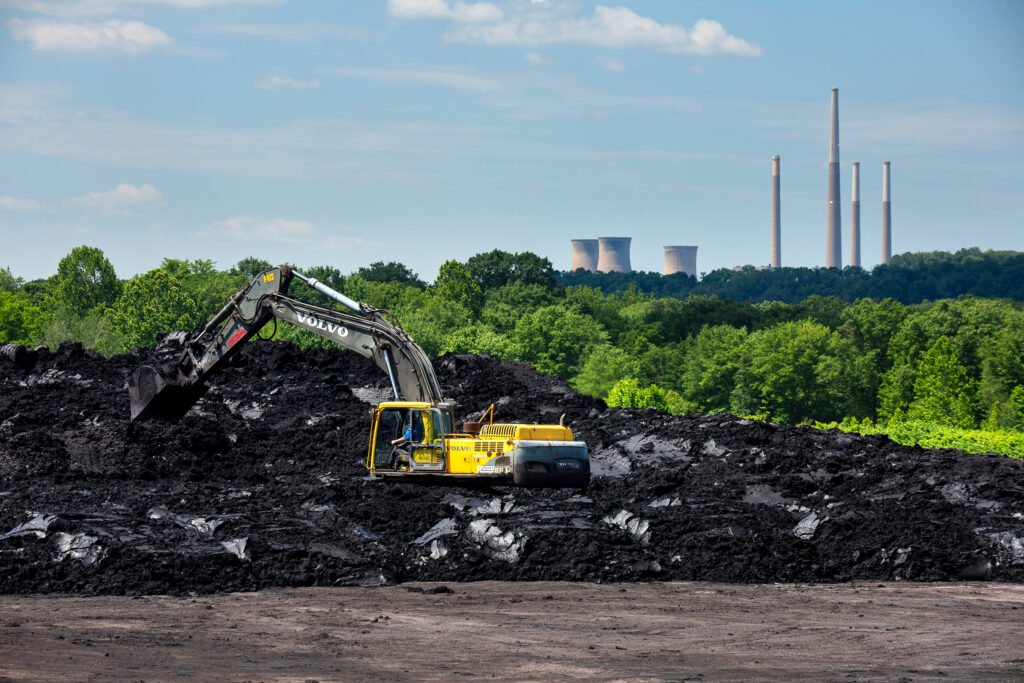
The largest off-the-meter power plant in Pennsylvania examined in the report is the Homer City Generating Station, a former coal-fired power plant east of Pittsburgh in Indiana County that would emit more than 17.5 million tons of CO2 equivalent annually. If fully converted to natural gas, it would generate up to 4.7GW of electricity, making it one of the largest generators in the country. Homer City closed in 2023 as a coal-fired power plant.
Another power plant in Beaver County’s Shippingport will generate less electricity than the Homer plant, at 3.6 million tons, but will emit even more greenhouse gases, at 21.1 million tons a year, the report said.
According to Griffin Byrd, the report’s lead author, Pennsylvania’s seven factories combined add as much greenhouse gas as more than twice the number of cars and trucks on Pennsylvania roads.
Pennsylvania’s appeal to data center developers is further enhanced by its location atop the Marcellus Shale, one of the world’s largest natural gas reserves. The state is the second largest gas producer in the United States after Texas.
At least 74 gas-fired power plants, almost all new, are planned nationwide, and will generate 662 million tons of greenhouse gases to fuel the data center industry, according to the report. This would be equivalent to Australia’s annual emissions, or an additional 140 million cars and trucks on the road. In total, the power plants identified in this study would generate three times as much electricity as California uses.
This story is funded by readers like you.
Our nonprofit newsroom provides free advertising for our award-winning climate coverage. We rely on donations from readers like you to continue our work. Donate now to support our work.
donate now
Almost half of the factories covered in the report are located in Texas. Another 20 will be built in the Ohio River Valley, which straddles Pennsylvania, Ohio and West Virginia.
Byrd said both the national and statewide estimates likely underestimate the problem because the study only looked at large plants within the meter. According to the independent website Data Center Proposal Tracker, there are 66 data center projects proposed, approved, under construction or in some preparatory activity in Pennsylvania. That could include behind-the-meter power plants that generate less than 100 MW and were not captured in the EIP study, Bird said.
Alex Bomstein, executive director of the Pennsylvania-based nonprofit Clean Air Council, said the proposed Homer City plant, if fully built, would be the state’s largest single source of pollution.
Bomstein said 250 new wells would need to be drilled about every five years for the fracked gas needed to run the power plant, increasing the potential for aquifer contamination and risks to public health.
“As long as these power plants remain open, we will continue to introduce 250 new toxic substances into nearby communities in Pennsylvania, Ohio, and West Virginia,” Bomstein said at a press conference held to release the EIP report.
He accused the industry and Pennsylvania Gov. Josh Shapiro’s administration of pushing forward with data centers in the face of community opposition. Shapiro said if data center developers want to be granted aid from the state, they must provide their own power and be transparent with local communities about their plans.
“What does Indiana County get out of this? And what does America get out of this?” he asked. “The people don’t want AI data centers, and the people don’t want AI data centers. In this era of bipartisanship in America, one of the things that unites us is our opposition to these big data centers,” Bomstein said.
The report also found that data centers and their dedicated power plants are often proposed in low-income areas where public health and environmental quality are already compromised.
“Adding more air pollutants and particulate matter from these factories could further exacerbate health disparities,” said Jen Duggan, EIP’s executive director. He said nearly 90% of power plants are planned in counties where life expectancy is below the national average.
To reduce the possibility of unwanted data centers and their power plants, communities should be able to approve or reject power plants on their own terms, Duggan said.
The report argues that when data centers are built, they should be powered by wind or solar energy backed up by batteries, rather than natural gas or coal. “Gas costs a lot of money every year, and eventually you run out of gas and you have to go solar anyway. Even in Pennsylvania, we don’t have an infinite supply of gas,” Bomstein said.
Duggan agreed. “It makes no sense for future technologies to be powered by the dirty fossil fuels of the past,” she says.
About this story
As you may have noticed, this article, like all news we publish, is free to read. That’s because Inside Climate News is a 501c3 nonprofit organization. We don’t charge subscription fees, keep our news behind paywalls, or fill our website with ads. We provide climate and environmental news free to you and anyone who wants it.
That’s not all. We also share our news for free with dozens of other news organizations across the country. Many of them cannot afford to do their own environmental journalism. We’ve established bureaus across the country to report on local news, partner with local newsrooms and co-publish stories to ensure this important work is shared as widely as possible.
The two of us started ICN in 2007. Six years later, we won the Pulitzer Prize for national reporting and now run the nation’s oldest and largest dedicated climate newsroom. We tell the story in its entirety. We hold polluters accountable. We expose environmental injustice. We debunk misinformation. We explore solutions and inspire action.
Donations from readers like you fund all aspects of our work. If you haven’t already, will you support our ongoing work, our coverage of the biggest crises facing our planet, and help us reach more readers in more places?
Please make a tax-deductible donation. Any of those things make a difference.
thank you,
