

Close Menu

    Subscribe to Updates

    Get the latest creative news from FooBar about art, design and business.

    What's Hot

    Navigating 2026 Pharma Trends: What Drug Discovery Leaders Need to Know Now

    August 31, 2026

    Navigating 2025-2030 Dietary Guidelines for Metabolic Health Challenges

    August 30, 2026

    Struggling to Track Rapid Medical Research Advances? Key 2025 Trial Outcomes for Your Practice

    August 28, 2026
    Facebook X (Twitter) Instagram
    Facebook X (Twitter) Instagram
    Health Magazine
    • Home
    • Environmental Health
    • Health Technology
    • Medical Research
    • Mental Health
    • Nutrition Science
    • Pharma
    • Public Health
    • Discover
      • Daily Health Tips
      • Financial Health & Stability
      • Holistic Health & Wellness
      • Mental Health
      • Nutrition & Dietary Trends
      • Professional & Personal Growth
    • Our Mission
    Health Magazine
    Home » News » New peptide causes domino effect to suppress bladder cancer
    Discover

    New peptide causes domino effect to suppress bladder cancer

    healthadminBy healthadminMay 25, 2026No Comments4 Mins Read
    New peptide causes domino effect to suppress bladder cancer
    Share
    Facebook Twitter Reddit Telegram Pinterest Email


    background

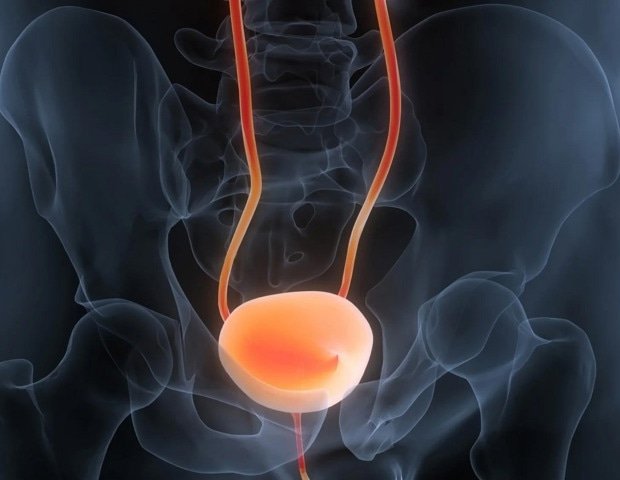
    Recently, a research team led by Professor Dahong Zhang and Professor Qi Zhang from the Department of Urology, Institute of Urology, and Translational Medicine Center of Zhejiang Provincial People’s Hospital discovered that polyarginine peptide R11, which targets bladder tumors, can directly bind to actin, destabilize G-actin tetramers, and cause cascade disassembly of G-actin tetramers. actin-plectin-vimentin/ITGβ4 axis (referred to as the “cytoskeletal domino effect”). This significantly impairs the migratory ability of bladder cancer (BCa) cells and persistently suppresses metastasis (Figure 1). This study further revealed that presenting R11 in the form of nanoscale multivalent aggregates amplified its actin-disrupting and anti-metastatic effects. This strategy is naturally compatible with local delivery routes such as bladder instillation and aerosol inhalation and shows clear clinical application potential.

    Research progress

    The team of Professors Dahong Zhang and Qi Zhang proposed and validated the use of polyarginine peptide R11 to target bladder tumors as a new strategy to “precisely control actin”. They found that the domino effect induced by R11 could effectively suppress BCa metastasis. Key highlights of the study include:

    1. R11 selectively enters tumor cells, directly interacts with actin, and disrupts the stability of G-actin tetramers.
    Through molecular dynamics simulations and microscale thermophoretic analysis, we found that highly positively charged R11 forms hydrogen bonds and salt bridges with negatively charged actin and is embedded in the gap of G-actin tetramers. This interaction blocks normal G-actin interactions and polymerization, disrupting the formation and maintenance of the F-actin network. A significant decrease in the intracellular F/G-actin ratio suggests a severe imbalance in actin dynamics.

    2. R11 causes a “cytoskeletal domino effect” – actin → plectin → vimentin / ITGβ4 cascade breakdown:
    Plectin is a hub protein that links actin with intermediate filaments (vimentin) and integrins (ITGβ4). When R11 disrupts actin-plectin binding, the interaction between plectin and vimentin/ITGβ4 is weakened or abolished, leading to loss of global cytoskeletal polarity and mechanical connectivity. This greatly reduces the possibility of cell migration and metastasis. The authors aptly refer to this process as the “cytoskeletal domino effect.”

    3. Multivalent aggregates of nanoparticles significantly amplify anti-metastatic potential (engineered amplification strategy):
    The authors immobilized R11 on PEG-modified gold nanoparticles (Au-PEG-R11) and compared nanoparticles of different sizes/covering densities. The results showed that multivalency and high density loading (e.g., 50 nm Au-PEG-R11) significantly enhanced the interference with actin and inhibition of metastasis. This indicates that by using nanoparticle engineering strategies (such as multivalency and dense packing), molecular-scale interactions can be amplified and translated into cellular-level structural and functional changes, thereby improving therapeutic efficacy.

    Future outlook

    R11 is not only an ideal functional ligand for surface functionalization of bladder instillation nanodrugs, but also a “self-therapeutic” molecule. This study proposes and validates a complete anti-metastasis strategy from mechanism to engineering. R11 directly interferes with actin, causing cytoskeletal disruption and preventing tumor cell migration and colonization at distant sites. Nanoscale multivalent assemblies further amplify this effect and exhibit excellent engineering plasticity and drug potential. Based on these findings, future clinical translation directions may focus on the following aspects:

    1. Prioritize localized delivery:
    R11 originally has the ability to take up bladder tumors. Bladder instillation and aerosol inhalation (for BCa lung metastases) have become the preferred clinical administration routes as they can achieve high local concentrations while minimizing systemic exposure and toxicity.

    2. Optimization of nanoparticle formulation to increase efficacy and persistence:
    Multivalent nanoparticle platforms such as Au-PEG-R11 have shown amplifying effects. Further formulation optimization (e.g., biodegradable carriers, PEG density control, controlled release) may improve tumor targeting and safety.

    3. Combination therapy strategy:
    R11 primarily targets migration/invasion machinery and alters cell adhesion/ECM dynamics and tumor microenvironment. In combination with chemotherapy, radiotherapy, or immune checkpoint inhibitors, it may be possible to synergistically suppress both the primary tumor and metastases.

    4. Immunocompatibility and long-term safety evaluation are essential.
    Although local delivery and nanoparticle encapsulation reduce systemic toxicity, the effects of R11 and its carriers on immune activation, immune tolerance, and long-term tissue toxicity need to be systematically evaluated to ensure a safe clinical route.

    sauce:

    Science and Technology Review Publishing

    Reference magazines:

    Liu, Z. Others. (2026). Interaction between polyarginine peptide R11 and actin induces a domino effect on cytoskeletal remodeling and inhibits bladder cancer metastasis. the study. DOI: 10.34133/research.1109. https://spj.science.org/doi/10.34133/research.1109


    Source link

    Visited 17 times, 1 visit(s) today
    Share. Facebook Twitter Pinterest LinkedIn Telegram Reddit Email
    Previous ArticleOutdoor running is more effective than supplements for winter vitamin D deficiency
    Next Article A common heart drug taken by millions of people turns out to be useless and possibly dangerous
    healthadmin

    Related Posts

    Texas A&M researchers build AI tool for tuberculosis drug discovery

    July 30, 2026

    New ultrasound technology breaks blood-brain barrier to treat gliomas

    July 30, 2026

    Omalizumab wins multi-allergen oral immunotherapy in multi-food allergy trial

    July 30, 2026

    MAGFLO™ NGS beads: cost-effective nucleic acid purification

    July 30, 2026

    Qureight completes $20 million Series B funding

    July 30, 2026

    Cigarette smoke extract stimulates airway cells and increases nanoplastic damage

    July 30, 2026
    Add A Comment

    Comments are closed.

    Categories

    • Daily Health Tips
    • Discover
    • Environmental Health
    • Exercise & Fitness
    • Featured
    • Featured Videos
    • Financial Health & Stability
    • Fitness
    • Fitness Updates
    • Health
    • Health Technology
    • Healthy Aging
    • Healthy Living
    • Holistic Healing
    • Holistic Health & Wellness
    • Medical Research
    • Medical Research & Insights
    • Mental Health
    • Mental Wellness
    • Natural Remedies
    • New Workouts
    • Nutrition
    • Nutrition & Dietary Trends
    • Nutrition & Superfoods
    • Nutrition Science
    • Pharma
    • Preventive Healthcare
    • Professional & Personal Growth
    • Public Health
    • Public Health & Awareness
    • Selected
    • Sleep & Recovery
    • Top Programs
    • Weight Management
    • Workouts
    Popular Posts
    • 1773313737_bacteria_-_Sebastian_Kaulitzki_46826fb7971649bfaca04a9b4cef3309-620x480.jpgHow Sino Biological ProPure™ redefines ultra-low… March 12, 2026
    • pexels-david-bartus-442116The food industry needs to act now to cut greenhouse… January 2, 2022
    • 1773729862_TagImage-3347-458389964760995353448-620x480.jpgDespite safety concerns, parents underestimate the… March 17, 2026
    • 1774403998_image_28620e4b6b0047f7ab9154b41d739db1-620x480.jpgGait pattern helps distinguish between Lewy body… March 24, 2026
    • 1773209206_futuristic_techno_design_on_background_of_supercomputer_data_center_-_Image_-_Timofeev_Vladimir_M1_4.jpegMulti-agent AI systems outperform single models… March 11, 2026
    • Leukemia-620x480.jpgBiomimetic platform powers CAR T therapy for… March 9, 2026

    Demo
    Stay In Touch
    • Facebook
    • Twitter
    • Pinterest
    • Instagram
    • YouTube
    • Vimeo
    Don't Miss

    Navigating 2026 Pharma Trends: What Drug Discovery Leaders Need to Know Now

    By healthadminAugust 31, 2026

    Explore key 2026 biopharma trends in AI-driven discovery, regulatory shifts, manufacturing, and FDA approvals for pharmacologists and executives.

    Navigating 2025-2030 Dietary Guidelines for Metabolic Health Challenges

    August 30, 2026

    Struggling to Track Rapid Medical Research Advances? Key 2025 Trial Outcomes for Your Practice

    August 28, 2026

    The Future of Digital Health: Telemedicine, Wearables, and AI Diagnostics

    August 27, 2026

    Subscribe to Updates

    Get the latest creative news from SmartMag about art & design.

    HealthxMagazine
    HealthxMagazine

    At HealthX Magazine, we are dedicated to empowering entrepreneurs, doctors, chiropractors, healthcare professionals, personal trainers, executives, thought leaders, and anyone striving for optimal health.

    Our Picks

    The Future of Digital Health: Telemedicine, Wearables, and AI Diagnostics

    August 27, 2026

    Why Health Tech Founders and Engineers Face Urgent Pressure in 2026

    August 26, 2026

    Navigating the Flood of 2025-2026 Clinical Trial Data

    August 24, 2026
    New Comments
      Facebook X (Twitter) Instagram Pinterest
      • Home
      • Privacy Policy
      • Our Mission
      © 2026 ThemeSphere. Designed by ThemeSphere.

      Type above and press Enter to search. Press Esc to cancel.