


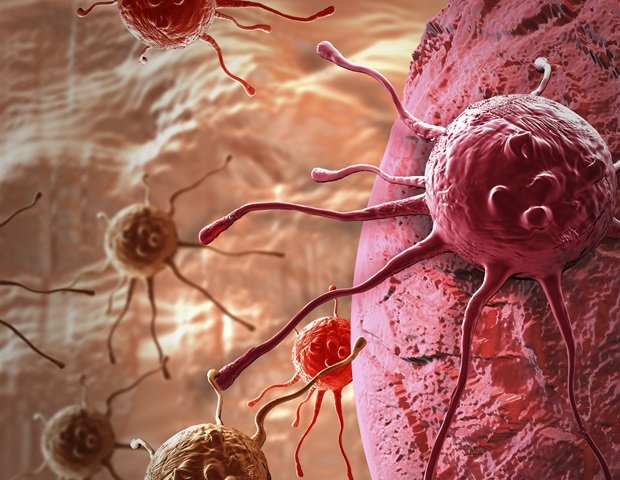
In a paper published in cella USC stem cell-led team reports a new method to generate a renewable and scalable supply of progenitor cells that give rise to macrophages. These immune cells help drive the body’s response to pathogens and hold strong promise as the basis for immunotherapy against cancer and other diseases.
The paper demonstrates that precursor cells known as granulocyte-monocyte progenitors (GMPs), which give rise to macrophages and other immune cells, can be grown extensively in the lab and manipulated to target specific cancer markers and help stimulate a broader immune response.
This study establishes a scalable and operable GMP platform for cellular immunotherapy and introduces a concept that we believe has the potential to have broad impact on both cancer immunotherapy and stem cell biology. ”
Qi-Long Ying, MD, PhD, corresponding author of the paper and professor of stem cell biology and regenerative medicine at the Keck School of Medicine of USC
One of these broader implications is that self-renewal, a characteristic of stem cells rather than progenitor cells, can be maintained within GMPs that are already involved in the generation of macrophages and other closely related immune cells.
“It is commonly believed that long-term self-renewal in the blood system is primarily a property of hematopoietic stem cells, which can generate all types of blood and immune cells,” Yin said. “We found that under the right conditions, GMP can also self-replicate and divide extensively while maintaining its identity and ability to produce functional immune cells. This provides a scalable starting point for designing cell therapies for cancer, infectious diseases, and potentially many other conditions.”
Direct access to the source
Macrophages are attractive for cancer immunotherapy because they are naturally adapted to infiltrate tumors, engulf cancer cells, and help modulate immune responses. Unlike T-cell therapies, which have had the greatest success against blood cancers, macrophage-based approaches may be particularly useful against solid tumors.
Unfortunately, mature macrophages are difficult to produce for immunotherapy because they are difficult to grow in large numbers in vitro, difficult to genetically modify, and easily damaged during freezing and storage. It also tends to accumulate in organs such as the lungs and liver, rather than being widely distributed throughout the body.
So instead of working with mature macrophages, first author Shi Yue, MD, PhD, of the Ying Lab, and colleagues focused on their upstream ancestor, GMP.
Scientists have been able to grow and expand GMPs over time in the laboratory by using a defined chemical cocktail that prevents them from differentiating into more mature immune cell types.
Even after long-term growth in the laboratory, GMP retained its cellular and molecular identity, as well as the ability to generate functional macrophages and other immune cell types.
Colleagues in the lab of Ravi Majeti, M.D., Ph.D., at Stanford University, also independently recreated GMP long-term maintenance and genetic engineering to help validate the platform’s robustness for future cell therapy applications.
“This method for expanding and manipulating GMP, like expanding and manipulating T cells, opens the door to numerous translational applications,” said Majetti, director of Stanford University’s Institute for Stem Cell Biology and Regenerative Medicine. “We have already demonstrated that these cells can be manipulated to drive multiple powerful functions, and there is much more to explore.”
Development of GMP immunotherapy
Not only can GMP be maintained for long periods of time in the laboratory, but it can also be genetically engineered to function as an immunotherapy.
The research team engineered GMP to contain chimeric antigen receptors (CARs) that allow immune cells to recognize specific markers on cancer cells. They also engineered the progenitor cells to transmit additional signals that help them coordinate with other nearby immune cells, activate tumor-fighting T cells, and amplify the body’s natural defenses. This added signal works even when donor and recipient cells are immunologically mismatched, allowing the creation of off-the-shelf treatments, which can be pre-manufactured from donor cells and administered to many patients, rather than individually building treatments from each patient’s own cells.
After culturing and manipulating GMP in mice and humans, the research team tested its potential as an immunotherapy in mice. When mice were injected with GMP, it engrafted in the bone marrow and other hematopoietic niches, where it generated a supply of genetically engineered macrophages and other immune cells. GMP continues to replenish its supply from the bone marrow, thereby avoiding the rapid clearance that has limited mature macrophage therapy, including in recent clinical trials.
In mice with blood cancers and solid tumors, GMP engineered with a CAR slowed disease progression, but GMP engineered with both a CAR and an immune activation signal provided an even greater benefit.
The researchers also demonstrated potential applications beyond cancer. In mice with an inherited immune deficiency known as chronic granulomatosis, GMP restored their ability to fight bacterial infections.
“Our study suggests that the future of immunotherapy may depend not only on the design of better CAR receptors, but also on the selection of the appropriate developmental stage of the cells,” said Dr. Yin.
sauce:
Keck School of Medicine, University of Southern California
Reference magazines:
Yue, S. others. (2026). Granulocyte-monocyte progenitor cell expansion and CAR engineering for cellular immunotherapy. cell. DOI: 10.1016/j.cell.2026.05.043. https://www.cell.com/cell/fulltext/S0092-8674(26)00643-4
