


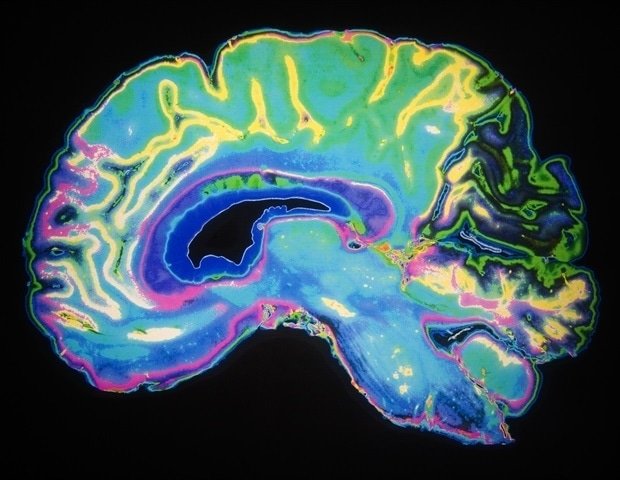
Scientists have made a major breakthrough in developmental neuroscience, creating the first detailed atlas of how the mouse brain’s vascular network grows after birth. Their research is published in the journal Cell.
The study was co-led by Alexandre Dubrac, a researcher at the Université Sainte-Justine Azrieli Research Center and professor at the University of Montreal, and was conducted in close collaboration with the lab of Nicolas Regnier at the Paris Brain Institute.
This reveals that blood vessels in the brain do not simply develop in parallel with neurons.
Instead, its growth follows a dynamic, multistep trajectory that changes across brain regions, is closely linked to the maturation of neural circuits, and gives blood vessels an active role in the construction of the postnatal brain.
“We knew that neurons undergo significant changes after birth, but we had little understanding of how blood vessels adapt to these changes,” said Mathilde Bisou, co-first author of the study and a doctoral student in Dublac’s lab.
“This atlas finally provides a comprehensive view of this essential power relationship.”
An important but still mysterious network
Although only a small fraction of your body weight, the brain alone uses about 20 percent of the body’s available oxygen and energy. Meeting this high demand requires a dense and finely organized network of blood vessels responsible for transporting oxygen and nutrients to neurons.
At birth, this vascular network is still immature. However, it is precisely after birth that the brain undergoes major changes. The brain grows rapidly, neural circuits become sophisticated, and certain areas become specialized based on sensory experience and environmental input.
Until now, researchers had very limited tools to track how blood vessels adapt to these changes over time and across the brain.
“We had a very detailed map of the adult brain, but we had much less information about how the vascular network is established after birth,” Dubrac says. “It was like trying to understand how a city works without access to a road map.”
To address this gap, Renier’s team developed a three-dimensional atlas based on a mouse model that allows them to track the development of vascular networks from birth to adulthood with unprecedented spatiotemporal precision.
Dubrac’s team generated and integrated spatiotemporal transcriptomic data, allowing them to link vascular structures to dynamic molecular programs.
In this study, we combine these complementary disciplines to reconstruct the entire brain vascular network and structurally and molecularly analyze its evolution over time.
Three main stages of development
One of the main contributions of this study is the identification of three sequential stages in postnatal vascular development.
The first stage corresponds to coordinated growth, during which the vascular network and brain size increase relatively proportionally. This stage ensures adequate baseline perfusion during the first few days of life, comparable to the last months of human fetal development.
The second phase marks major changes. During this period, blood vessels grow faster than the brain itself, leading to a significant densification of the vascular network. This stage is thought to correspond to human infancy and school age, and coincides with the so-called “critical period” of brain development, when neural circuits are formed, refined, and specialized, especially in response to sensory activity.
Finally, the third stage corresponds to a period of stabilization and refinement of the vascular network, which may be associated with puberty. At this stage, the vascular structures reach a more mature tissue while retaining some remodeling ability.
Vascularization is not uniform
This study shows that the development of vascular networks is not uniform throughout the brain.
These differences are explained not only by a general increase in neural activity, but also by the fact that specific brain regions emit specific signals that directly influence whether blood vessel growth continues or stops.
By cross-referencing blood vessel density maps with gene expression profiles, the researchers discovered that these signals act as true guiding signals for the blood vessel network, indicating where and to what extent it should continue to develop.
When these signaling pathways are disrupted, blood vessels become deguided, disorganized, and grow abnormally.
These findings demonstrate that vascular networks do not simply function passively. Accompanying brain development. According to scientists, it depends closely on communication with neurons.
This interaction is particularly important during the second stage of postnatal development. This is a period when neuronal activity is enhanced and tight coordination between the two systems is crucial for the fine organization of the brain.
Investigation of childhood disorders and diseases
Beyond its fundamental contribution, the researchers believe this atlas provides an important starting point for studying a variety of disorders, including autism, and certain cerebrovascular diseases that begin or develop in childhood.
“Having a reference map of normal development will allow us to compare what happens when this process is disrupted,” Dubrac said.
“We will now be able to better understand whether and how the mismatch between neuronal development and angiogenesis contributes to the vulnerability of specific brain regions.”
He argued that the developing brain should now be thought of as a deep neurovascular system, in which blood vessels play as active a role in brain health as the neurons themselves.
sauce:
Reference magazines:
https://www.cell.com/cell/fulltext/S0092-8674(26)00280-1
