


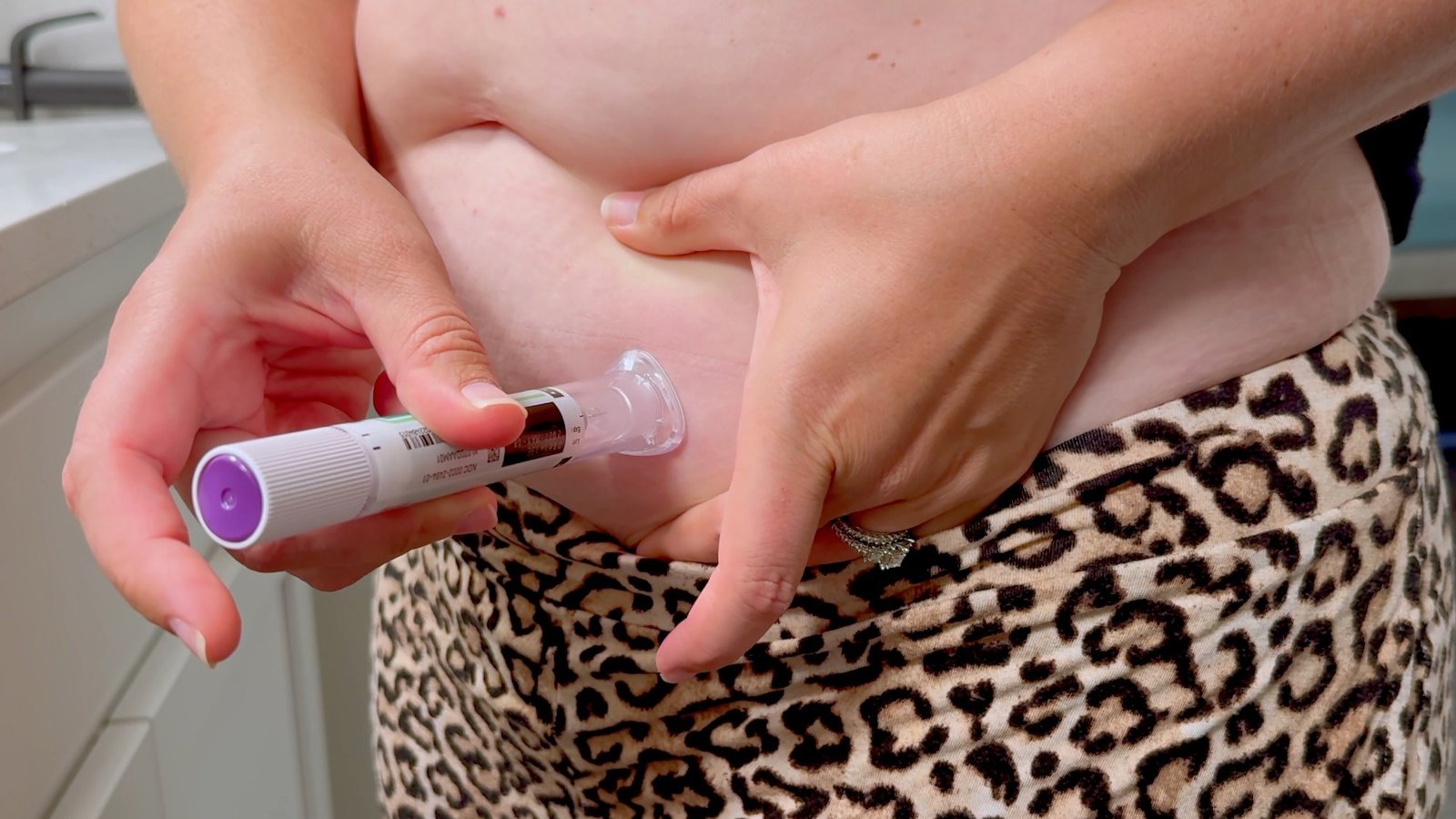
A large-scale modeling analysis shows that discontinuing a popular GLP-1 weight loss drug can reverse many of its effects within a year, raising questions about how long patients need to remain on treatment to maintain meaningful weight loss.
 Research: Trajectories of weight recovery after discontinuation of GLP-1 receptor agonists: Systematic review and nonlinear meta-regression. Image credit: Matt Fowler KC/Shutterstock.com
Glucagon-like peptide-1 receptor agonists (GLP-1RA) can significantly reduce body weight in obese individuals. However, a new study published in the journal e-clinical medicine Most people report regaining about 60 percent of the weight they lost within a year of stopping treatment.
Increased use of GLP-1 drugs highlights long-term weight problems
Currently, more than 1 billion people worldwide suffer from obesity, which increases the likelihood of adverse outcomes such as cardiometabolic disease. Weight loss of 5% to 10% usually improves these chances, but for people who are severely obese (BMI ≥ 35 kg/m²), weight loss of 15% to 20% is a more meaningful goal.
In reality, this degree of weight loss is difficult to achieve through lifestyle modifications, primarily dietary changes and regular moderate physical activity, which are considered to be the cornerstone of weight management.
GLP-1RA has revolutionized the field of weight loss therapy. Weight savings typically occur between 15% and 20%. However, due to cost and negative effects, approximately half of users stop using it within a year. This is related to weight rebound.
No large studies have yet directly tracked weight gain for more than 1 year after discontinuation. Without such data, treatment guidelines may not be optimal for the individual user. For example, the UK’s National Institute for Health and Care Excellence (NICE) advises using the GLP-1RA semaglutide for up to two years for weight loss. This raises the question whether some patients may require longer treatment to maintain weight loss.
Given the increasing popularity and high discontinuation rates of these drugs for weight loss, there is a need to address the risk of weight gain, perhaps through individualized dose-tapering strategies.
In the current study, we used a systematic review and nonlinear meta-regression modeling approach to estimate weight loss trajectories beyond the last reported post-drug withdrawal follow-up time point. The authors claim this is “the most comprehensive collection of evidence to date on weight outcomes after GLP-1RA.”
Weight recovery after GLP-1 discontinuation
This study searched multiple databases for randomized controlled trials (RCTs), nonrandomized intervention studies, and observational studies examining weight trends after GLP-1RA discontinuation.
The time point at which weight gain was reported varied widely between studies. For this reason, the researchers used available tracking data from the included studies to model weight rebound on a continuous trajectory.
Previous studies have shown a nearly exponential shape of the weight recovery curve, with rapid weight regain in the early stages, followed by a gradual slope that reaches a new steady state over time. In addition to examining the exponential change in body weight after GLP-1RA discontinuation, the researchers also examined reported changes in glycated hemoglobin (HbA1c) levels and systolic blood pressure.
Model predicts most of the weight lost will be regained within 1 year
The authors searched for 48 relevant studies that included participants who were overweight or obese. These included GLP-1RA treatment over a period of 10 to 104 weeks and a follow-up period after discontinuation. 4 weeks up to 2 weeks year. Drugs used included liraglutide, semaglutide, tirzepatide, and other GLP-1RAs.
However, the nonlinear meta-regression that generated the primary estimate of weight gain included six randomized controlled trials involving 3,236 participants.
Results showed that discontinuing GLP-1RA resulted in weight rebound with a predictable deceleration trajectory.
The model predicted a rapid recovery of weight immediately after discontinuation, followed by weight loss over the next few months, gradually approaching a plateau. One year after stopping the drug, the patient had regained 60 percent of the weight lost. This represents 80% of the total weight you are expected to gain back.
Overall, the model estimated that weight regain stabilized at approximately 75% of the total body weight lost during treatment. Patients regained half their weight approximately every 23 weeks, with nearly similar modeled trajectories across different GLP-1RAs. Notably, even after the drug was discontinued, some weight loss effects persisted over time, albeit much weaker than if treatment was continued. Therefore, the authors suggest that continued treatment may be necessary for sustained weight loss in some patients.
This study suggests that although weight is regained, approximately 25% of weight loss does not occur rapidly over time. Assuming an initial loss of 15% to 20% in baseline weight, this model suggests that 4% to 5% of your remaining body weight will be lost over time. This is better than placebo, but slightly below the commonly cited 5% threshold that is considered clinically meaningful for people with a BMI less than 35 kg/m2, and well below the large reductions recommended for severely obese people.
HbA1c decreased by 0.5 to 1.5 percentage points during treatment, but half of the decrease was reversed by 8 to 12 weeks after discontinuation. Despite this increase, HbA1c remained mostly below its initial value for 1 year. Similar trends were observed for systolic blood pressure, but the authors note that these analyzes were exploratory and based on limited and inconsistently reported data.
Three studies did not show weight gain after treatment-induced weight loss, but each used different strategies and reported different results.
One study used a dose-escalation approach, allowing participants to gradually reduce their GLP-1RA dose and, in some cases, completely stop the drug without gaining average body weight. However, the report did not reveal how many participants stopped treatment altogether versus those who simply reduced the dose while continuing treatment.
In another study, researchers reported that weight loss was maintained when participants were given a low-carbohydrate diet after discontinuing medication.
The third study did not report overall weight gain, but did not show individual weight results, limiting interpretation of the results.
Separately, another study suggested that longer duration of GLP-1RA treatment may help maintain weight loss after discontinuation, but this hypothesis has not yet been tested.
Most of the studies had a moderate risk of bias, limiting the validity of the conclusions. Additionally, the data used in this model spanned no more than 52 weeks, so extrapolation was necessary. Future studies should use longer follow-up periods to validate the model estimates.
The researchers only included studies that reported an average weight loss of 3 kg with GLP-1RA treatment to ensure they captured significant weight regain after discontinuation. This excludes subgroups in which weight loss is less severe but still clinically relevant.
Residual confounding may be due to other drugs or weight reduction strategies used in conjunction with these drugs. We were not able to adjust for these because most studies were poorly reported.
Long-term treatment strategies may be required to maintain weight loss
These considerations highlight the importance of a flexible and individualized approach to weight management when using GLP-1RAs.
To maintain effective weight loss, these drugs may need to be used long-term or discontinued using tailored strategies. This is especially important as new, more powerful drugs for obesity management are on the horizon.
Click here to download your PDF copy.
