


Mass spectrometry is a widely used technique that helps scientists determine what molecules are present in a sample and how much of each molecule is present. However, most current instruments examine molecules one at a time or in very small groups. This approach is time-consuming, expensive, and can miss rare but important molecules hidden among abundant molecules.
More advanced versions of this technology could eventually allow researchers to capture the complete molecular makeup of a single cell, monitor thousands of chemical reactions simultaneously, and speed up processes such as drug discovery.
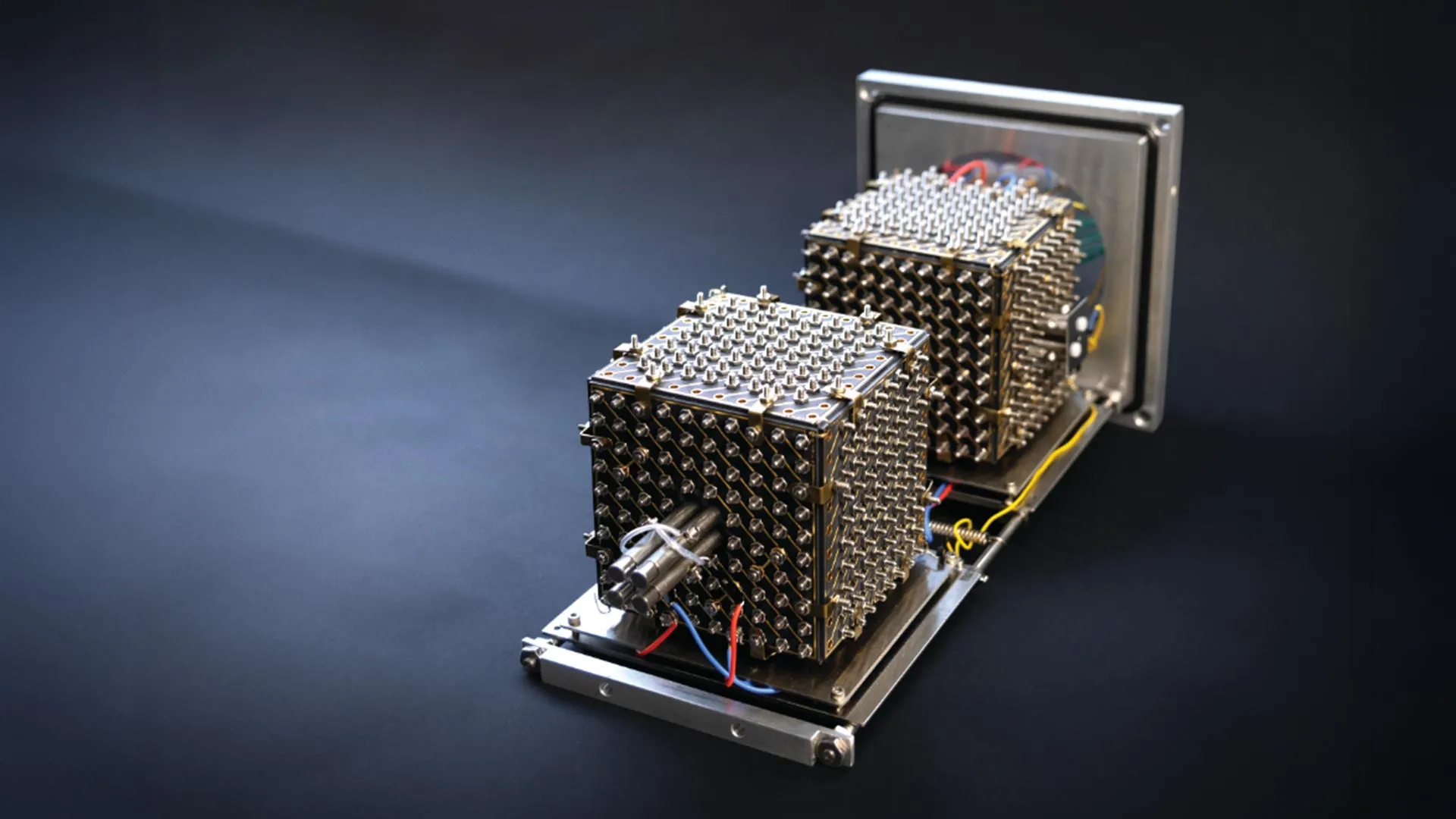
A new study describes early steps toward that goal. The researchers developed a prototype called MultiQ-IT that can process large numbers of molecules simultaneously. This research provides a framework for building faster and more sensitive instruments, potentially enabling changes similar to those seen in genomics and computing.
“What revolutionized DNA sequencing was not a change in the underlying chemistry; it remains fundamentally unchanged,” says Brian T. Chait of Rockefeller’s Mass Spectrometry and Gas Ion Chemistry Laboratory. “It’s the ability to run so many chemical reactions in parallel that has taken genome sequencing from a multibillion-dollar effort to a cost of about $100. The same thing happened with computing with GPUs, and that’s what we’re trying to do with mass spectrometry.”
Bottlenecks in modern mass spectrometry
Mass spectrometry dates back to around 1913 and has become one of the most important analytical methods in biology. It works by ionizing the molecule, giving it a charge and measuring its mass-to-charge ratio to identify and quantify the molecule. Despite their capabilities, most systems still operate sequentially, analyzing only one or a few ions at a time. This limits the ability to detect rare molecules in complex biological samples.
“This is an amazing technology. You can do incredible analytical things with it that you can’t even imagine,” Chait says. “But I always felt a little frustrated by its limitations. I knew in my heart it could be better.”
Improving this limitation could have a major impact on fields such as single-cell proteomics and metabolomics, which aim to measure all proteins or metabolites within a single cell. Unlike DNA, these molecules cannot be copied or amplified, and some molecules may be millions of times smaller than others. Although mass spectrometry is already used in these fields, current sensitivity is often insufficient when trying to detect weak signals in the midst of overwhelming background noise.
To address this challenge, Chait and his team believed the solution was “massive parallelism,” a concept that had previously transformed computing and DNA sequencing. In computing, performance has been greatly improved by breaking large problems into many smaller tasks and processing them simultaneously on a graphics processing unit (GPU). DNA sequencing has followed a similar path, allowing millions of reactions to be analyzed at once at a much lower cost.
“It was a very obvious idea,” says Andrew Kurczynski, a senior researcher in the lab. “But it wasn’t clear how to do that with mass spectrometry.”
Cell-inspired parallel approach
The concept behind MultiQ-IT arose from long-term research into how molecules enter and exit the cell nucleus through a structure known as the nuclear pore complex. These structures spread traffic over many small openings rather than forcing everything through a single path. Researchers wondered if mass spectrometry could be redesigned to work in a similar way.
The result is a newly designed ion trap chamber intended to replace the main part of a traditional mass spectrometer. This cubic-shaped device contains hundreds of tiny electrically controlled openings. Inside the chamber, the ions collide with gas molecules, slowing them down and moving randomly. This allows the system to sort, hold, and orient multiple groups of ions simultaneously, rather than processing them sequentially.
The team scaled the design from just six openings to more than 1,000 to test how effectively ions could be managed and separated. They showed that a single ion inflow stream can be split into multiple parallel streams for simultaneous analysis.
Process billions of molecules at once
The prototype showed impressive performance. A version with 486 ports can hold up to 10 billion charges at once. This is about 1,000 times faster than traditional ion traps.
The system also improves detection by allowing common background molecules to escape while keeping rarer and more informative background molecules inside. This increased the signal-to-noise ratio by as much as 100-fold, allowing the detection of previously undetectable proteins. To achieve this, the researchers applied a small voltage barrier at the exit of the trap. Monovalent ions may escape, but multiply charged ions, which are often biologically important, remain trapped.
A larger design with 1,134 ports required only 39 open ports to reach half of the system’s maximum filtration efficiency. This is similar to how cells use a limited number of nuclear pores to manage the movement of molecules. The researchers also found that distributing ions across many channels alleviated the strong electrical repulsion that occurs when many similarly charged particles are packed into a small space.
This increased sensitivity may improve the detection of low abundance cross-linked peptides, which is valuable for mapping the structure of large protein complexes. “It’s possible that the least abundant ones are more important than the more abundant ones,” Kruczynski said.
Blueprint for future equipment
At this stage, MultiQ-IT is not yet a finished commercial product, but rather a proof of concept of what can be achieved. The researchers believe this is a basic design that could eventually be developed into a practical tool for clinical and laboratory use.
“There have been many developments between the discovery of the reaction to sequence DNA and modern genomics, and it took decades between the creation of the first transistor and the arrival of a billion transistors on a chip,” Chait says. “In both cases, someone had to prove it was possible first, and then the industry took over. I think we’ve shown one way that mass spectrometry can be done more efficiently.”
