


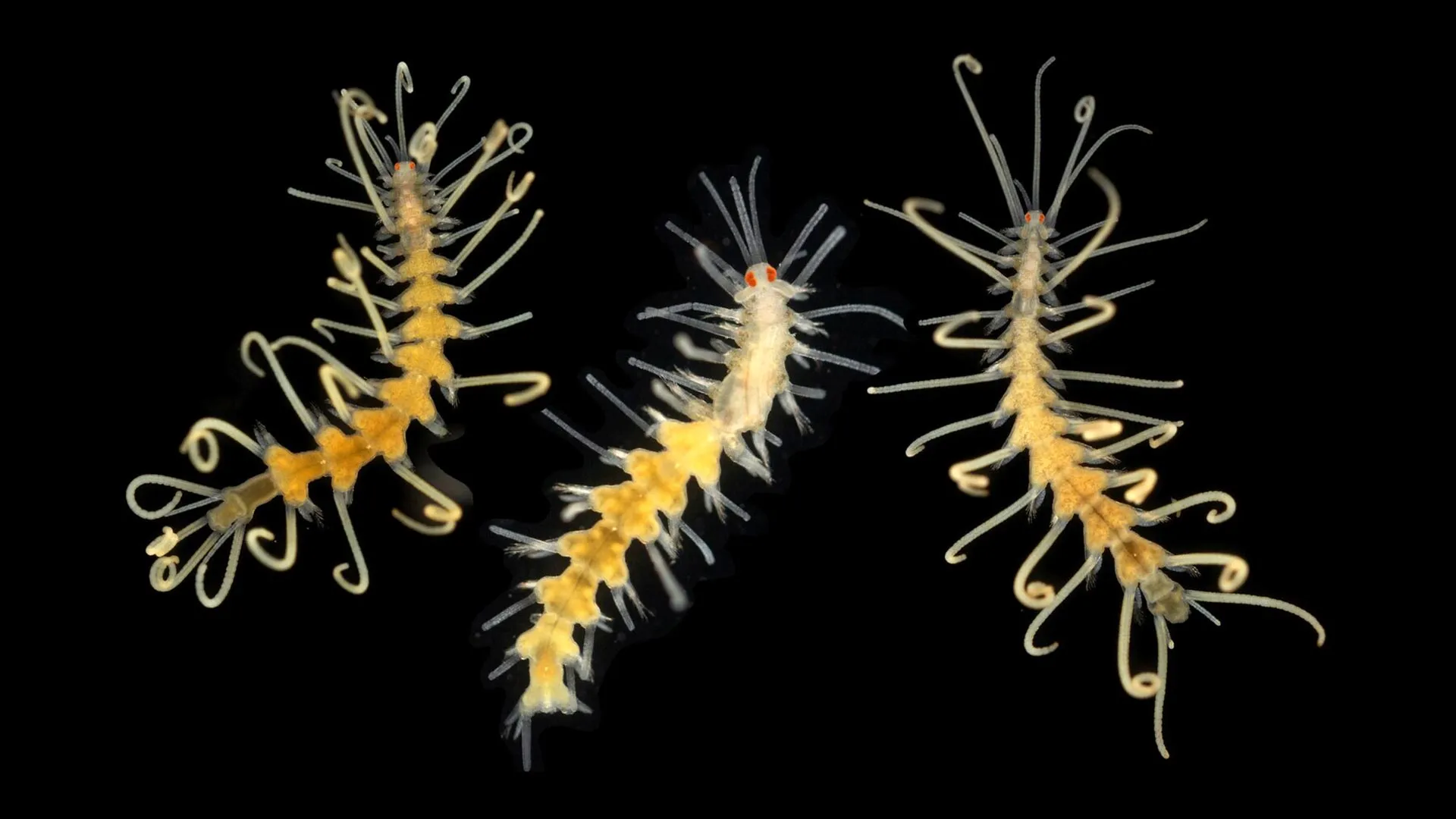
Species around the world are becoming extinct at an accelerating rate due to climate change, habitat destruction, and the impact of invasive species. Many little-known groups, including marine worms, are particularly at risk, and some are facing extinction before scientists can identify them.
To address this gap, researchers from the University of Göttingen, the Leibniz Institute for the Analysis of Biodiversity and Change (LIB), and the Senckenberg Society for Nature Research are launching a major effort to document Europe’s “marine annelids” (segmented sea worms) and make the data openly available. The initiative aims to accelerate the discovery of new species and deepen global understanding of biodiversity by building comprehensive and accessible datasets. The project “EuroWorm: Accelerating global marine annelid biodiversity research with open genome data of European species” is led by LIB and funded by the Leibniz Society.
Mapping hidden ocean biodiversity with genomics
Marine annelids are found in nearly all marine environments, mixing sediment, recycling nutrients, informing pollution levels, and supporting marine food webs. The research team plans to collect samples from locations in Europe where many of the species were first described.
The collected specimens will be identified by morphology, structure, and shape, photographed at high resolution, and analyzed using advanced genomic tools and other cutting-edge technologies. The goal is to collect a detailed genome catalog of European marine annelids, reveal how different groups are related on the evolutionary tree, and investigate how their physical characteristics, reproduction, and lifestyle have evolved over time.
Accelerating global species discovery with open data
The collected nematodes, together with their images and genetic data, will be added to the LIB collections of the Natural History Museum Hamburg and the Natural History Museum Senckenberg. Scientists around the world, especially in the Global South, will be able to access these resources and request specimens for further research through institutional portals and platforms such as GBIF.
“By comparing European species data, we hope to accelerate the discovery of new species and biodiversity research around the world, and counter the ‘silent extinction’ of marine species,” explains LIB project leader Dr. Jenna Moore. The initiative also aims to strengthen the role of natural history museums as modern research centers equipped with cutting-edge tools.
Museum collections and DNA reveal hidden species
Three researchers from the Animal Evolution and Biodiversity Research Group at the University of Göttingen are contributing to the project. Dr. María Teresa Aguado Molina said: “Such collections are scientific time capsules. Historical collections, combined with modern genomics, are unlocking hidden biodiversity at an unprecedented pace. The Euroworm shows that the most advanced discoveries begin with specimens collected decades ago.”
Professor Christoph Breidorn emphasized that Göttingen’s long-standing focus on the evolution of annelids means that “we are all the more pleased to be able to pursue these questions further as part of a project funded by the Leibniz Society.”
Collaboration to define future research
EuroWorm brings together expertise from multiple institutions to create a strong foundation for large-scale biodiversity research. Dr. Konrad Helm said: “A comprehensive, interdisciplinary approach provides an excellent basis for thoroughly documenting marine annelid diversity and at the same time concretely defining future research priorities.”
