

Close Menu

    Subscribe to Updates

    Get the latest creative news from FooBar about art, design and business.

    What's Hot

    Probiotic metabolites found to suppress melanoma tumor growth in mice

    June 30, 2026

    New anti-lipid antibodies may improve diagnosis of Lyme disease

    June 30, 2026

    Scientists reverse autism-like symptoms in mice by restoring shortened nerve cell structures

    June 30, 2026
    Facebook X (Twitter) Instagram
    Facebook X (Twitter) Instagram
    Health Magazine
    • Home
    • Environmental Health
    • Health Technology
    • Medical Research
    • Mental Health
    • Nutrition Science
    • Pharma
    • Public Health
    • Discover
      • Daily Health Tips
      • Financial Health & Stability
      • Holistic Health & Wellness
      • Mental Health
      • Nutrition & Dietary Trends
      • Professional & Personal Growth
    • Our Mission
    Health Magazine
    Home » News » Machine learning study identifies different subtypes of Parkinson’s disease
    Discover

    Machine learning study identifies different subtypes of Parkinson’s disease

    healthadminBy healthadminMay 5, 2026No Comments4 Mins Read
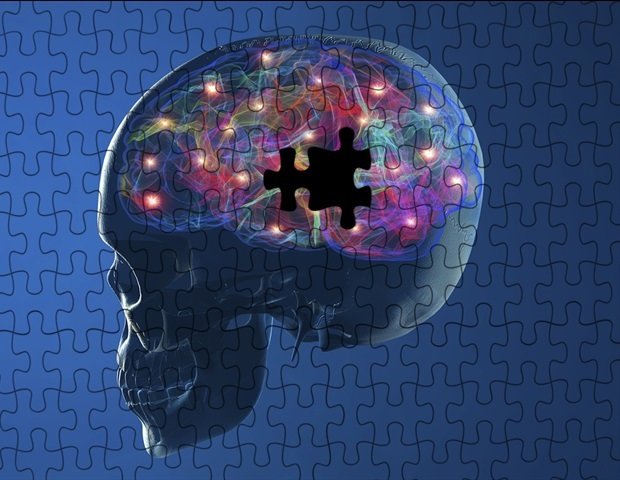
    Machine learning study identifies different subtypes of Parkinson’s disease
    Share
    Facebook Twitter Reddit Telegram Pinterest Email


    A new study led by researchers at VIB and KU Leuven shows that Parkinson’s disease can be divided into different subtypes, helping to explain why no single treatment is effective for all patients. Using machine learning analysis, the team identified two main groups and five subgroups of the disease, marking an important step toward more personalized treatment. The results of this research have recently nature communications.

    “We have discovered two major subgroups that can be divided into five smaller groups of parkinsonism,” says Professor Patrick Verstreken (VIB-KU Leuven Neuroscience Center).

    Parkinson’s disease affects millions of people worldwide and is traditionally defined by clinical symptoms such as movement difficulties and progressive neurological decline. However, despite being classified as a single disease, Parkinson’s disease can be caused by mutations in many different genes, and the underlying biological mechanisms are diverse. This complexity poses challenges to the development of effective treatments, as treatments targeting one pathway may not be effective in all patients.

    New research reveals that these genetically distinct forms of Parkinson’s disease can be classified into distinct molecular subtypes, highlighting the need to rethink the disease as a collection of related symptoms and open the door to more targeted therapeutic approaches.

    “When clinicians and patients look at this disease, they see the clinical symptoms, and that’s what people associate with Parkinson’s disease,” says Verstrieken. “But if you look under the hood at the molecular level, you find that they fall into subcategories. And this is important because there is essentially no single drug that targets the different molecular dysfunctions in all Parkinson’s diseases.”

    Rather than starting with assumptions about how different genetic mutations affect the disease, the researchers monitored the behavior of fruit fly models with mutations in Parkinson’s disease-related genes over time and used unbiased computational and machine learning-based methods to identify patterns. By letting the data guide their analysis, the team was able to uncover natural groupings of diseases in these animals that traditional hypothesis-based methods could not reveal.

    “We went into the study without any preconceptions about how a particular mutation would affect an animal model. We simply took animals with mutations in one of 24 different disease-causing genes and monitored their behavior over time,” added Dr. Natalie Kemp, lead author of the study.

    Taken together, this unbiased strategy reveals previously hidden structures within Parkinson’s disease, showing that different genotypes naturally cluster into distinct subtypes.

    By moving away from assumptions and allowing patterns to emerge directly from the data, this study provided a powerful framework for understanding the biological diversity of disease and guiding future research toward more precise interventions. This is also an excellent example of how machine learning can uncover otherwise undetectable features of disease biology, revealing hidden structures and clinically meaningful variations not apparent with traditional approaches.

    “We know that there are different types of Parkinson’s disease,” says Verstrieken. “Having these subcategories allows us to look at groups of patients with specific mutations, search for specific biomarkers, and develop drugs tailored to each group.”

    Researchers were able to cure the Parkinson’s disease phenotype in animal models by testing compounds in different subgroups. They also observed that different subgroups responded differently to different compounds.

    “When we took the first compound that cured subgroup A and tested it on subgroup B, it didn’t save the latter. Our study shows that we can create subgroup-specific drugs that have a positive effect and are actually specific for that subgroup,” Verstrieken explains.

    And this unbiased strategy could be adopted for other diseases caused by mutations in multiple genes.

    “The same principle can be applied to other types of diseases. Diseases caused by mutations in a variety of different genes or environmental factors could potentially be classified according to this principle,” concludes Verstreken.

    sauce:

    Flemish Institute of Biotechnology

    Reference magazines:

    Kemp, N. others. (2026). Behavioral screening defines molecular parkinsonism-associated subgroups in Drosophila. Nature Communications. DOI: 10.1038/s41467-026-70303-8. https://www.nature.com/articles/s41467-026-70303-8


    Source link

    Visited 16 times, 1 visit(s) today
    Share. Facebook Twitter Pinterest LinkedIn Telegram Reddit Email
    Previous ArticleGADD45B promotes apoptosis in intestinal injury through DNA demethylation
    Next Article Overcoming Healthcare Access Barriers: The Promise of Digital Health Innovations
    healthadmin

    Related Posts

    Probiotic metabolites found to suppress melanoma tumor growth in mice

    June 30, 2026

    New anti-lipid antibodies may improve diagnosis of Lyme disease

    June 30, 2026

    Review assesses effectiveness of creatine as add-on therapy for depression

    June 30, 2026

    New diagnostic tool bypasses blood-brain barrier to detect autism early

    June 30, 2026

    Researchers map structural changes in viruses during dehydration process

    June 30, 2026

    Niigata University study updates Alzheimer’s disease risk for APOE-e4 homozygotes

    June 30, 2026
    Add A Comment

    Comments are closed.

    Categories

    • Daily Health Tips
    • Discover
    • Environmental Health
    • Exercise & Fitness
    • Featured
    • Featured Videos
    • Financial Health & Stability
    • Fitness
    • Fitness Updates
    • Health
    • Health Technology
    • Healthy Aging
    • Healthy Living
    • Holistic Healing
    • Holistic Health & Wellness
    • Medical Research
    • Medical Research & Insights
    • Mental Health
    • Mental Wellness
    • Natural Remedies
    • New Workouts
    • Nutrition
    • Nutrition & Dietary Trends
    • Nutrition & Superfoods
    • Nutrition Science
    • Pharma
    • Preventive Healthcare
    • Professional & Personal Growth
    • Public Health
    • Public Health & Awareness
    • Selected
    • Sleep & Recovery
    • Top Programs
    • Weight Management
    • Workouts
    Popular Posts
    • 1773313737_bacteria_-_Sebastian_Kaulitzki_46826fb7971649bfaca04a9b4cef3309-620x480.jpgHow Sino Biological ProPure™ redefines ultra-low… March 12, 2026
    • pexels-david-bartus-442116The food industry needs to act now to cut greenhouse… January 2, 2022
    • 1773729862_TagImage-3347-458389964760995353448-620x480.jpgDespite safety concerns, parents underestimate the… March 17, 2026
    • 1773209206_futuristic_techno_design_on_background_of_supercomputer_data_center_-_Image_-_Timofeev_Vladimir_M1_4.jpegMulti-agent AI systems outperform single models… March 11, 2026
    • 1774403998_image_28620e4b6b0047f7ab9154b41d739db1-620x480.jpgGait pattern helps distinguish between Lewy body… March 24, 2026
    • Leukemia-620x480.jpgBiomimetic platform powers CAR T therapy for… March 9, 2026

    Demo
    Stay In Touch
    • Facebook
    • Twitter
    • Pinterest
    • Instagram
    • YouTube
    • Vimeo
    Don't Miss

    Probiotic metabolites found to suppress melanoma tumor growth in mice

    By healthadminJune 30, 2026

    Immune checkpoint inhibitors such as anti-PD-1 have revolutionized melanoma treatment, but more than half of…

    New anti-lipid antibodies may improve diagnosis of Lyme disease

    June 30, 2026

    Scientists reverse autism-like symptoms in mice by restoring shortened nerve cell structures

    June 30, 2026

    Navigating the Top Clinical Trial Challenges in 2026

    June 30, 2026

    Subscribe to Updates

    Get the latest creative news from SmartMag about art & design.

    HealthxMagazine
    HealthxMagazine

    At HealthX Magazine, we are dedicated to empowering entrepreneurs, doctors, chiropractors, healthcare professionals, personal trainers, executives, thought leaders, and anyone striving for optimal health.

    Our Picks

    Navigating the Top Clinical Trial Challenges in 2026

    June 30, 2026

    Common influenza drugs can be expected to prevent cognitive decline

    June 30, 2026

    Experiment reveals psychological cost of insulting political rhetoric

    June 30, 2026
    New Comments
      Facebook X (Twitter) Instagram Pinterest
      • Home
      • Privacy Policy
      • Our Mission
      © 2026 ThemeSphere. Designed by ThemeSphere.

      Type above and press Enter to search. Press Esc to cancel.