


Getting more regular sleep each night is associated with higher levels of Alzheimer’s disease-related proteins in the blood, even when other health factors are taken into account, suggests a new study from UT Health San Antonio, an academic health center at the University of Texas at San Antonio.
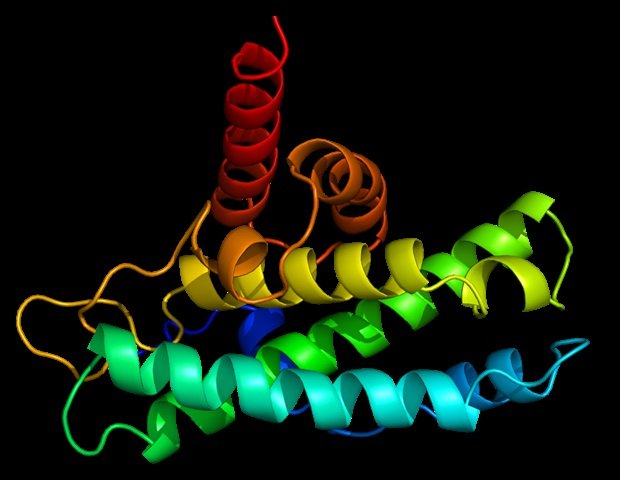
Modeling on a sample of 2,410 study participants found an association between sleep duration and phosphorylated tau-181 (p-tau181). Phosphorylated tau181 (p-tau181) is a hallmark of Alzheimer’s disease and is a modified form of the tau protein that can now be detected in the blood.
Regular sleep duration starting at 8.5 to 9 hours each night was associated with increased p-tau181 levels, with the most rapid increase after 10 hours, suggesting that longer sleep periods may reflect early neurodegenerative processes.
Many people are concerned about whether their sleep habits are affecting their brain health. This is a snapshot in time rather than a long-term study, so we can’t say that long sleep causes Alzheimer’s disease, but the findings suggest it may be worth monitoring and that more sleep isn’t necessarily better for brain health. ”
Vanessa M. Young, PhD, MS, Postdoctoral Researcher, Glenn Biggs Alzheimer’s and Neurodegenerative Disease Research Institute, UT Health San Antonio
Young, who is also a trainee at the Sam and Ann Barshop Institute for Longevity and Aging Research at UT Health San Antonio under a National Institutes of Health National Research Service Award (T32) grant, is the lead author and corresponding author of the study, titled “Nonlinear Association of Sleep Duration and Plasma P-Tau181 in the Framingham Heart Study,” published May 19. Alzheimer’s Disease and Dementia, Journal of the Alzheimer’s Association.
She is a graduate of the Translational Science PhD program in the UT Health San Antonio School of Biomedical Sciences and is mentored by Founding Director Sudha Seshadri, MD, at the Biggs Institute.
The mean age of study participants in the Framingham Heart Study (an ongoing community-based cohort study of residents of Framingham, Massachusetts, under the direction of the National Heart, Lung, and Blood Institute of the National Institutes of Health) was 70 years ± 8.45 years, and 55.2% were female.
This study follows a similar study in 2025 that found that sleeping more than nine hours a night was associated with poorer cognitive performance, especially in people with depression. A new study involving some of the same researchers went further, accounting for multiple health factors and examining blood-based biomarkers implicated in Alzheimer’s disease and neurodegeneration in relation to participants’ self-reported sleep duration.
Advantages and disadvantages
Both short and long sleep duration are associated with Alzheimer’s disease risk, but the nature of the “nonlinear” association between sleep amount and blood-based biomarkers of Alzheimer’s disease and neurodegeneration has not been well studied. Nonlinear in this case means that the relationship between sleep and biomarkers is not linear, but changes in strength depending on sleep duration.
The study points out that 57 million people worldwide are affected by dementia, of which Alzheimer’s disease accounts for 60-70%. Despite recent advances in disease-modifying therapies, Alzheimer’s disease remains a medical and societal challenge.
Therefore, identifying modifiable risk factors that may enable the diagnosis, prevention, or delay of disease onset is an important research priority. Although sleep shows promise as a modifiable risk factor associated with this disease, existing evidence remains limited and inconclusive.
Although clinical studies measure Alzheimer’s disease biomarkers as proxies for Alzheimer’s brain pathology, the recent expansion of readily available plasma biomarkers has paved the way for a more thorough examination of the relationship between sleep and Alzheimer’s disease.
Researchers at the Biggs Institute recognized that leveraging the large, well-characterized Framingham Heart Study cohort provided an opportunity to address the gap by simultaneously analyzing up to four blood-based biomarkers using flexible modeling approaches and systematic covariate evaluation.
They used nonlinear modeling. Nonlinear modeling uses curves, exponential functions, and logarithms to map complex relationships in data, unlike linear models that assume a constant linear rate of change. For example, in a scatter plot of dots representing values on the horizontal and vertical axes, the nonlinear points form a curved pattern. This means that the strength and direction of the relationship changes across the data range.
Specifically, the scientists used restricted cubic splines (RCS), a common technique used in regression analysis to model nonlinear relationships between continuous predictor variables (factors that influence an outcome) and a target variable (the outcome).
After adjusting for factors such as age, gender, sleep apnea, depression, kidney function, and apolipoprotein E ε4 genotype, a common genetic variant associated with an increased risk of developing late-onset Alzheimer’s disease and cardiovascular disease, the RCS found a strong non-linear correlation between sleep duration and p-tau181, with levels increasing after 8.5 hours.
Young, who previously led a systematic review of sleep duration and body fluid biomarkers of Alzheimer’s disease, said a nonlinear approach was essential to clarifying this finding.
“If you take curved data and force it into a straight line, you completely miss the story,” she says. “We knew from existing literature that the relationship between sleep and these biomarkers was likely not simple, and that’s exactly what we found.”
Results were not the same for all biomarkers tested. The researchers also looked at three other proteins in the blood that are associated with brain cell damage and neurodegeneration. For these people, the association with sleep disappeared once kidney function was taken into account. Only p-tau181 maintained it, suggesting that the association between prolonged sleep and this particular protein may be specific to Alzheimer’s disease-related processes, but further research is needed.
The researchers concluded that their findings “identify prolonged sleep as a potential behavioral marker of elevated p-tau181, with implications for risk assessment that warrant prospective validation.”
“In layman’s terms, if you find yourself sleeping more than nine to 10 hours a day, it might be worth mentioning it to your doctor as a useful conversation starter about sleep quality and overall brain health,” Young suggests.
Other authors of this study participate in the Framingham Heart Study. Sacre Coeur Cathedral in Montreal, Montreal. University of Montreal; Monash University, Australia. International University of Catalonia (UIC), Barcelona; National Institute of Health Carlos III, Madrid. University of Texas at Austin. and Boston University.
sauce:
University of Texas San Antonio Health Science Center
Reference magazines:
Young, V.M.et al. (2026). Nonlinear association between sleep duration and plasma p-tau181 in the Framingham Heart Study. Alzheimer’s disease and dementia. DOI: 10.1002/alz.71499. https://alz-journals.onlinelibrary.wiley.com/doi/10.1002/alz.71499
