


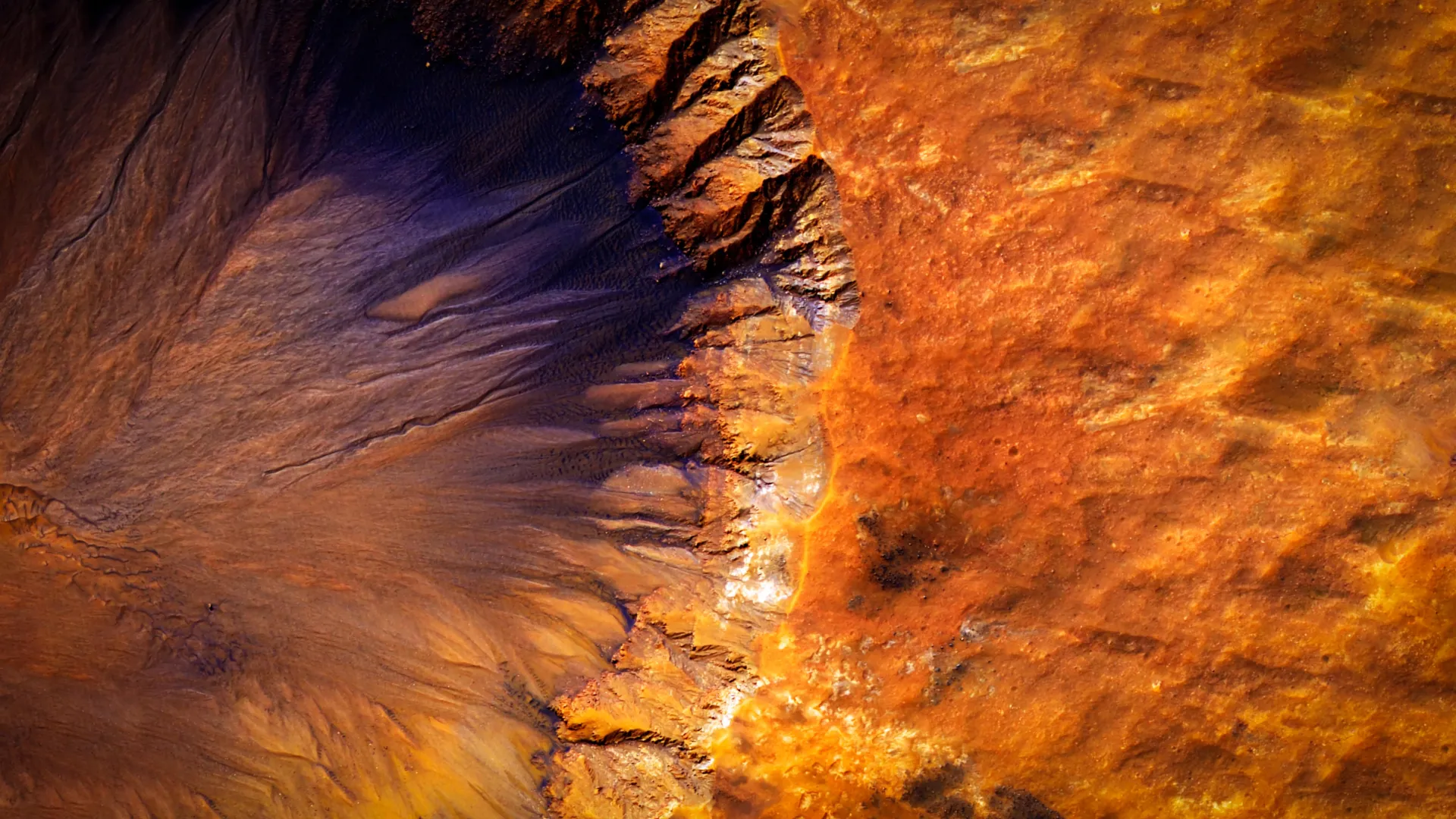
Mars is a harsh and unforgiving world. Life that may have existed there in the past, or that may exist now or in the future, must withstand intense environmental stress. Two major threats stand out. One is the powerful shock wave created when a meteorite hits the planet’s surface. Another is the presence of perchlorate in the soil. These are highly reactive salts that can interfere with essential biological processes by interfering with molecular structures such as hydrogen bonds and hydrophobic interactions, both of which are important for maintaining the stability of proteins and other cellular components.
To better understand whether life can survive such conditions, scientists are looking at simple organisms on Earth.
Why scientists study yeast to understand survival
In a recent study, Purusharth I. Rajguru and colleagues used Saccharomyces cerevisiae, a type of yeast commonly used in research, to investigate how life responds to stress like the one on Mars. This organism has been widely studied because it shares many fundamental biological characteristics with more complex life forms, including humans. Previous experiments have sent it into space, making it a useful model for studying extraterrestrial survival.
When cells are stressed, such as by exposure to extreme environments or chemicals, they activate defense responses. One important response involves the formation of ribonucleoprotein (RNP) condensates. These are temporary structures made of RNA and proteins that help protect genetic material and regulate how cells respond to stress. When conditions improve, these structures break apart and normal cellular activity resumes.
The two major types of RNP condensates are stress granules and P-bodies. Both are responsible for managing RNA, which carries instructions for making proteins.
Simulation of shock waves and toxic soil on Mars
To recreate conditions on Mars in the lab, the researchers used a special device called the High Intensity Shock Tube for Astrochemistry (HISTA) at the Institute of Physics in Ahmedabad, India. This setup made it possible to generate shock waves similar to those produced by meteorite impacts on Mars.
The research team exposed yeast cells to shock waves reaching 5.6 times the speed of sound. They also tested the effects of perchlorate using 100 mM sodium perchlorate salt (NaClO4), a concentration comparable to that measured in Martian soil.
Yeast survival under extreme stress
Despite these harsh conditions, the yeast cells managed to survive. Their growth was slowed, but they remained viable after exposure to shock waves, perchlorate, and even a combination of both stressors.
In response to these challenges, yeast activated defense systems. Shock waves cause the formation of both stress granules and P-bodies, whereas perchlorate causes the formation of only P-bodies. This suggests that different types of stress may activate slightly different cellular responses.
Importantly, yeast cells genetically modified to be unable to form these RNP condensates struggled to survive under the same conditions. This highlights how important these protective structures are to withstand extreme environments.
What’s happening inside cells in Mars-like environments?
To find out more, the researchers looked at the yeast transcriptome, the complete set of RNA molecules produced by the cell. This analysis revealed that specific RNA transcripts were disrupted by Mars-like conditions, demonstrating how deeply these stresses affect cellular function.
Nevertheless, the ability to form RNP condensates appears to help stabilize key processes and improve survival.
What this means for life beyond Earth
These findings suggest that simple life forms may be more resilient than previously thought. This study highlights the importance of yeast as a model organism and points to RNP condensation as an important survival mechanism.
Understanding how cells respond to extreme conditions like those on Mars will allow scientists to better assess the possibility of life beyond Earth.
