


Killer whales are one of the ocean’s most intelligent and feared predators. They have been seen hunting a wide variety of animals, including whales larger than themselves, and rely on a remarkable range of coordinated hunting methods. Now, researchers in the Gulf of California have recorded behavior that has never been formally reported before.
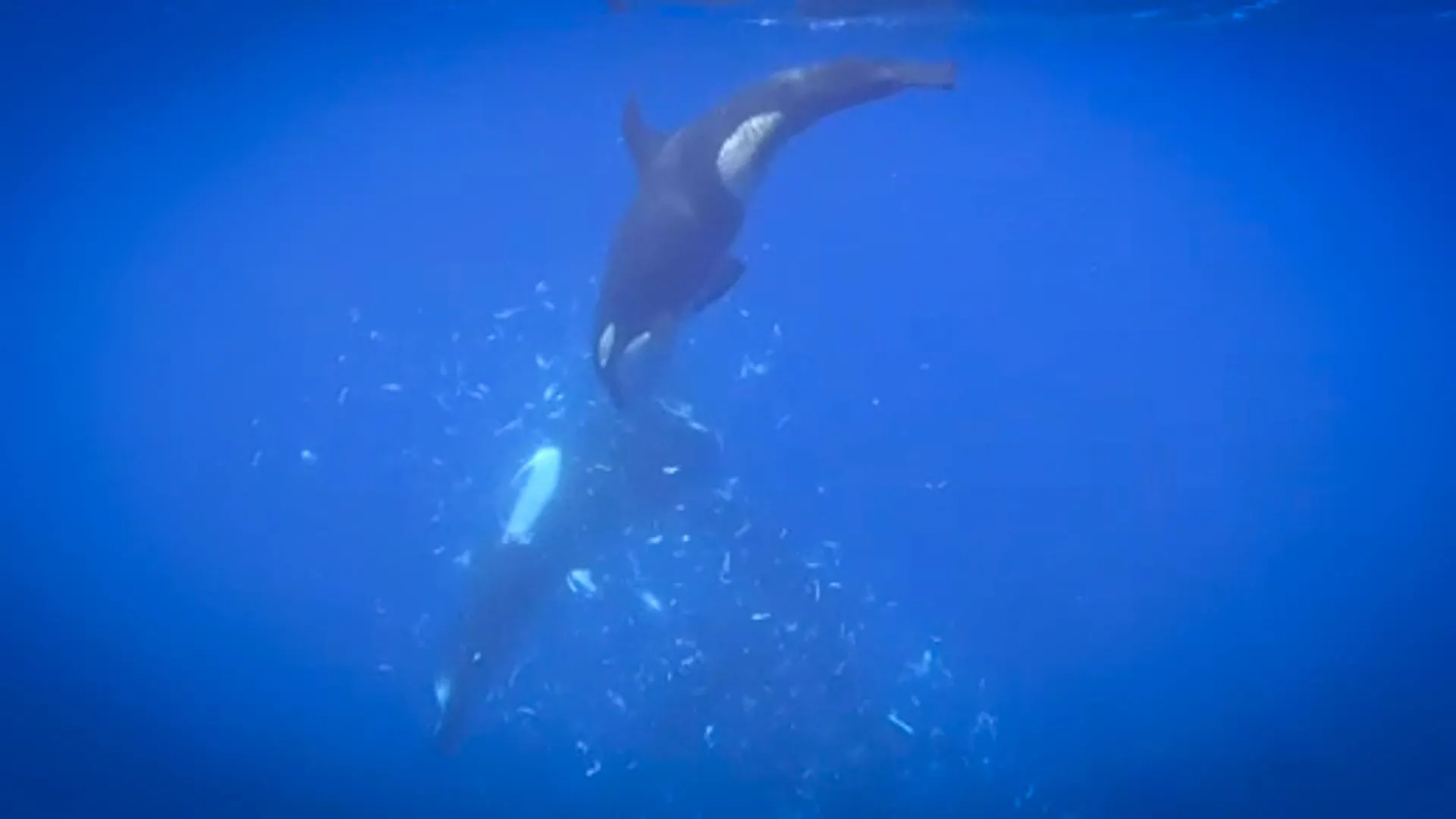
“We record one killer whale grabbing a sunfish and letting go just before another killer whale slams into it at high speed, causing the tissue to shatter into thousands of pieces,” said Dr. Kathryn Ayers, lead author of the Frontiers in Ethology paper and a scientist at Beneath The Waves, a nonprofit organization promoting ocean health. “We think this may help the young orcas to feed more easily, or just for fun. Orcas are known to play with their food.”
Killer whales crush sunfish at high speed
Sunfish can grow over 3 meters long and weigh up to 2,000 kg. They move through different levels of the ocean, but often rise to the surface to rest, regulate their body temperature, and remove parasites. That behavior exposes them to predators.
In the Gulf of California, sunfish are one of the animals most frequently hunted and eaten by killer whales. The newly reported behavior was recorded during two separate events that occurred more than a year apart.
In July 2024, Ayers witnessed a pod of killer whales, including young ones, handling a dead sunfish they had already killed. The female grabbed the fish tightly with her large caudal fin, and the male sped up and charged toward the fish.
The female released the sunfish just before the male attacked it. The force of the impact shattered the fish’s tissue, sending pieces floating into the water. The juveniles then ate small pieces, and the adults ate the rest of the carcass, but left behind scattered pieces. (See link to video at the end of the article.)
The second incident was filmed by Hector Franz in September 2025. It followed the same sequence of grabbing, releasing, ramming, and feeding.
Newly documented food processing strategies
The violent impact caused much of the prey’s tissue to disintegrate. Researchers say ramming has never been previously documented as a predation strategy in killer whales.
In both cases, the animals appeared to cooperate. One orca held the carcass firmly, allowing the other to attack it with more precision. Because the sunfish was already dead, researchers believe the impact was used to dispose of the prey rather than kill it.
Sunfish have a gelatinous outer layer known as a capsule, and both this layer and the skin contain a unique microbiome. When the tissue is destroyed, the microbial taxa living within it spread into the surrounding water, changing its nutritional composition.
This fragmentation may increase contact between the sunfish and killer whale microbiomes. Researchers suggest that such exposure may provide nutritional benefits and other benefits, including immunomodulatory potential.
Smaller pieces for young killer whales
This behavior may also represent parental investment. Breaking up carcasses into smaller pieces makes it easier for calves and young to feed, which is consistent with other known killer whale behavior.
“Orcas often tear up their prey and share it with other members of the pod, including calves and juveniles,” Ayers said.
But feeding may not have been the only purpose. This interaction may have had a social role, or the killer whales may simply have been playing around.
Clues about sunfish
This observation may also reveal something unusual about the sharp-tailed sunfish. So far, this type of tissue fragmentation has only been recorded in that species.
Researchers suggest that the sharp-tailed sunfish’s tissues may respond in unique ways to powerful impacts. Other large sunfish species may not decompose as easily under similar conditions.
Scientists do not know whether the same killer whale participated in both events. We need higher quality footage that can be used to identify individual animals, especially clear images of dorsal fins and eye patches.
“It’s important to collect the best photographic evidence possible. New techniques are still being discovered about how killer whales hunt and process their prey,” Ayers concluded. “They are one of the world’s most iconic marine predators, yet they continue to amaze us.”
