


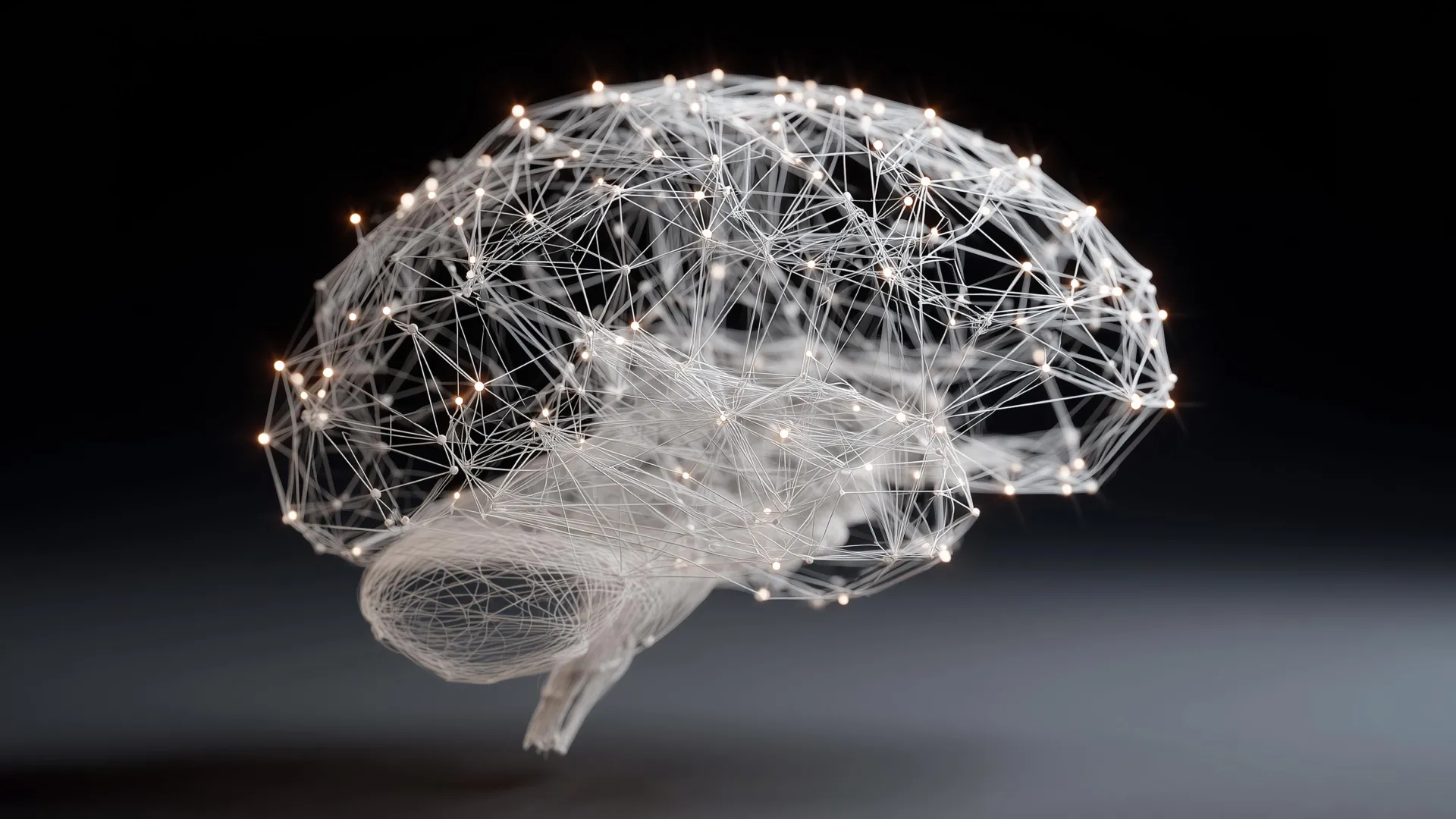
Modern neuroscience often describes the brain as a collection of specialized systems. Functions such as attention, perception, memory, language, and reasoning are each associated with specific brain networks, and scientists have typically studied these systems separately.
This approach has led to significant advances. However, a central feature of human thinking – how all these separate systems come together to form a single unified mind – is not fully explained.
Researchers at the University of Notre Dame decided to address this question. They used advanced neuroimaging to examine how the brain is organized as a whole and how that organization produces intelligence.
“Neuroscience has been very successful in explaining what particular networks do, but less successful in explaining how a single coherent mind emerges from their interactions,” says Aaron Barbey, the Andrew J. McKenna Family Professor of Psychology in the University of Notre Dame’s Department of Psychology.
Cognitive abilities related to general intelligence
Psychologists have long observed that skills such as attention, memory, perception, and language tend to be related. People who perform well in one area often perform well in other areas as well. This pattern is known as “general intelligence.” It influences how effectively individuals learn, problem solve, and adapt in all academic, professional, social, and health settings.
For more than a century, this pattern has suggested that human cognition is integrated at a deep level. What scientists lack is a clear explanation of why that unity exists.
“The problem of intelligence is not a problem of localization of function,” says Barbey, who is also director of Notre Dame’s Center for Human Neuroimaging and the Institute for Decision Neuroscience. “Modern research often asks where general intelligence originates in the brain, primarily focusing on networks of specific regions within the frontal and parietal cortices. But a more fundamental question is how intelligence emerges from the principles that govern overall brain function: how distributed networks communicate and collectively process information.”
To explore this broader picture, Barbey and his team, including first author and University of Notre Dame graduate student Ramsey Wilcox, tested a framework known as network neuroscience theory. Their discovery is nature communications.
Explaining network neuroscience theory
According to researchers, general intelligence is not a specific ability or mental strategy. Rather, it reflects a pattern in which many cognitive skills are positively associated. They propose that this pattern is due to how efficiently the brain’s networks are constructed and how well they work together.
To evaluate this idea, the team analyzed brain imaging and cognitive performance data from 831 adults from the Human Connectome Project. They also surveyed an independent group of 145 adults in the INSIGHT study, which was funded by the Intelligence Advanced Research Projects Activity’s SHARP program. By combining measurements of brain structure and brain function, researchers created a detailed picture of large-scale brain organization.
Network neuroscience theory views intelligence as a property of the brain as a whole, rather than tying it to a single brain region or function. Intelligence in this framework depends on how effectively the network coordinates and reorganizes itself to address various challenges.
Barbey and Wilcox describe this as a major shift in perspective.
“We found evidence that system-wide coordination in the brain is robust and adaptive,” Wilcox said. “This coordination does not perform cognition itself, but rather determines the range of cognitive operations that the system can support.”
“Within this framework, the brain is modeled as a network, whose behavior is constrained by global properties such as efficiency, flexibility, and integration,” Wilcox said. “These properties are not tied to individual tasks or brain networks, but are properties of the entire system, and they are not reducible to any cognitive behavior, but rather shape all cognitive behavior.”
“When the question moves from where the intelligence is to how the system is organized, the empirical goals change,” Wilcox said.
Intelligence as whole-brain coordination
This finding confirmed four major predictions of network neuroscience theory.
First, intelligence does not reside within a single network. This results from processing distributed across many networks. The brain has to divide tasks among specialized systems and combine their outputs as needed.
Second, successful coordination requires strong integration and long-range communications. Barbay described “a large and complex system of connections that connect distant brain regions and act as ‘shortcuts’ to integrate information across networks.” These connections allow distant regions of the brain to exchange information efficiently and support unified processing.
Third, integration relies on regulatory territories to guide the flow of information. These hubs coordinate activity across your network and help you choose the right system for the job. Whether someone interprets subtle cues, learns a new skill, or chooses between careful analysis and quick intuition, these regulatory areas help manage the process.
Finally, general intelligence depends on a balance between local specialization and global integration. The brain performs best when tightly connected local clusters operate efficiently while maintaining short communication paths to distant regions. This balance supports flexible and effective problem solving.
Across both groups studied, differences in general intelligence were consistently consistent with these large-scale organizational characteristics. No single brain region or traditional “intelligence network” could explain the results.
“When cognition is coordinated, general intelligence becomes visible when many processes must work together under system-level constraints,” Barbey said.
Artificial intelligence and its impact on brain development
Its influence extends beyond the comprehension of human intelligence. By focusing on large-scale brain organization, the findings provide insight into why the mind functions as a unified system in the first place.
This perspective may also explain why intelligence tends to increase during childhood and decline with age, making us particularly vulnerable to widespread brain damage. In each situation, what changes most is not isolated features but large-scale adjustments.
The results also contribute to the debate on artificial intelligence. If human intelligence relies on system-level organization rather than a single general-purpose mechanism, building artificial general intelligence may involve more than simply scaling up specialized tools.
“This research could prompt us to think about how we can harness the design properties of the human brain to drive advances in human-centered, biologically-inspired artificial intelligence,” Barbey said.
“Many AI systems can perform certain tasks very well, but still struggle to apply their knowledge to different situations,” Barbey said. “Human intelligence is defined by this flexibility and reflects the unique organization of the human brain.”
The study was conducted with co-authors Babak Hemmatian and Lav Varshney of Stony Brook University.
