


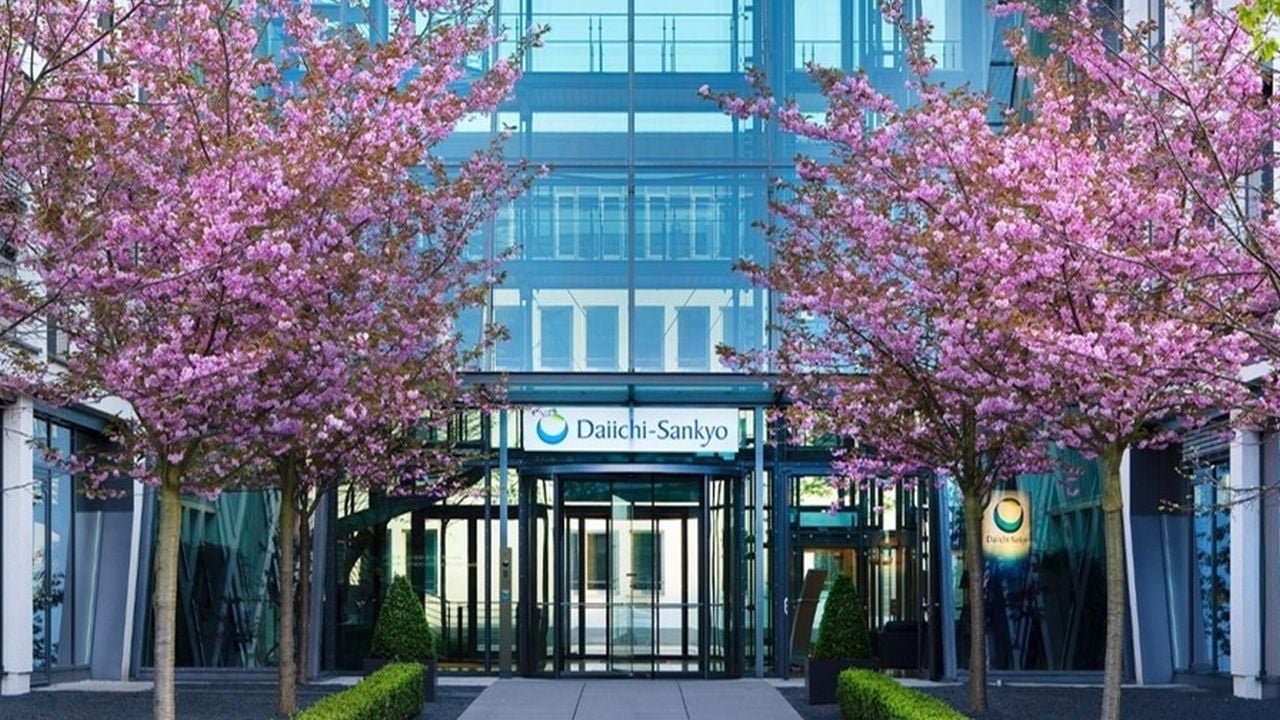
As Daiichi Sankyo’s priorities become increasingly tied to its portfolio of innovative medicines, particularly in oncology, the Tokyo-based drugmaker follows in the footsteps of its peers in striking a deal to separate from its consumer health business.
Daiichi has signed an agreement with Japanese beverage giant Suntory Holdings to transfer all shares in its subsidiary Daiichi Sankyo Healthcare. Daiichi Sankyo Healthcare sells popular over-the-counter medicines such as Lulu, a comprehensive cold medicine that has been around for decades, and Loxonin, an anti-inflammatory analgesic and antipyretic (PDF).
Under the current transaction framework, the transfer would be worth 246.5 billion yen (approximately $1.55 billion), Daiichi Sankyo said in an April 15 press release (PDF). Currently, Daiichi plans to carry out the transfer in stages, starting with the transfer of 30% of the shares in its consumer health subsidiary in June of this year. The entire process is expected to be completed by June 2029, the company said.
Daiichi Sankyo currently holds 100% of the shares in the healthcare division, which will be sold to Suntory.
In a statement, Daiichi characterized the deal as a way to ensure the growth of its over-the-counter drug business, which has expanded into areas such as skin care, oral care and food.
On the other hand, Daiichi stated that it will further delve into its innovative pharmaceutical business, particularly its “cancer business.”
Daiichi Sankyo has established itself as a force to be reckoned with among antibody-drug conjugate (ADC) developers in recent years, thanks to the success of its two products, Enhertu and Datroway, in partnership with AstraZeneca. Enhertu is approved for breast cancer, gastric cancer, and non-small cell lung cancer (NSCLC), as well as HER2-positive solid tumors, while Datroway, first approved early last year, is indicated for certain patients with breast cancer and NSCLC.
At the JPMorgan Healthcare Conference earlier this year, Daiichi CEO Hiroyuki Okusawa laid out ambitions for the company’s ADCs to cover 700,000 eligible patients by fiscal year 2030, a big jump from the 120,000 patients the company tallied in fiscal year 2025, which ended in March.
Apart from Daiichi Pharmaceutical, an increasing number of pharmaceutical manufacturers have chosen to withdraw from the over-the-counter sales business in recent years. Most recently, Sanofi raised 10 billion euros last spring by selling a controlling stake in consumer health business Opera to U.S. private equity firm Clayton Dubilier & Rice.
Prior to this, high-profile consumer health spin-outs from Johnson & Johnson’s Kenvue business and GSK’s Haleon have made the chart, among other recent examples.
