


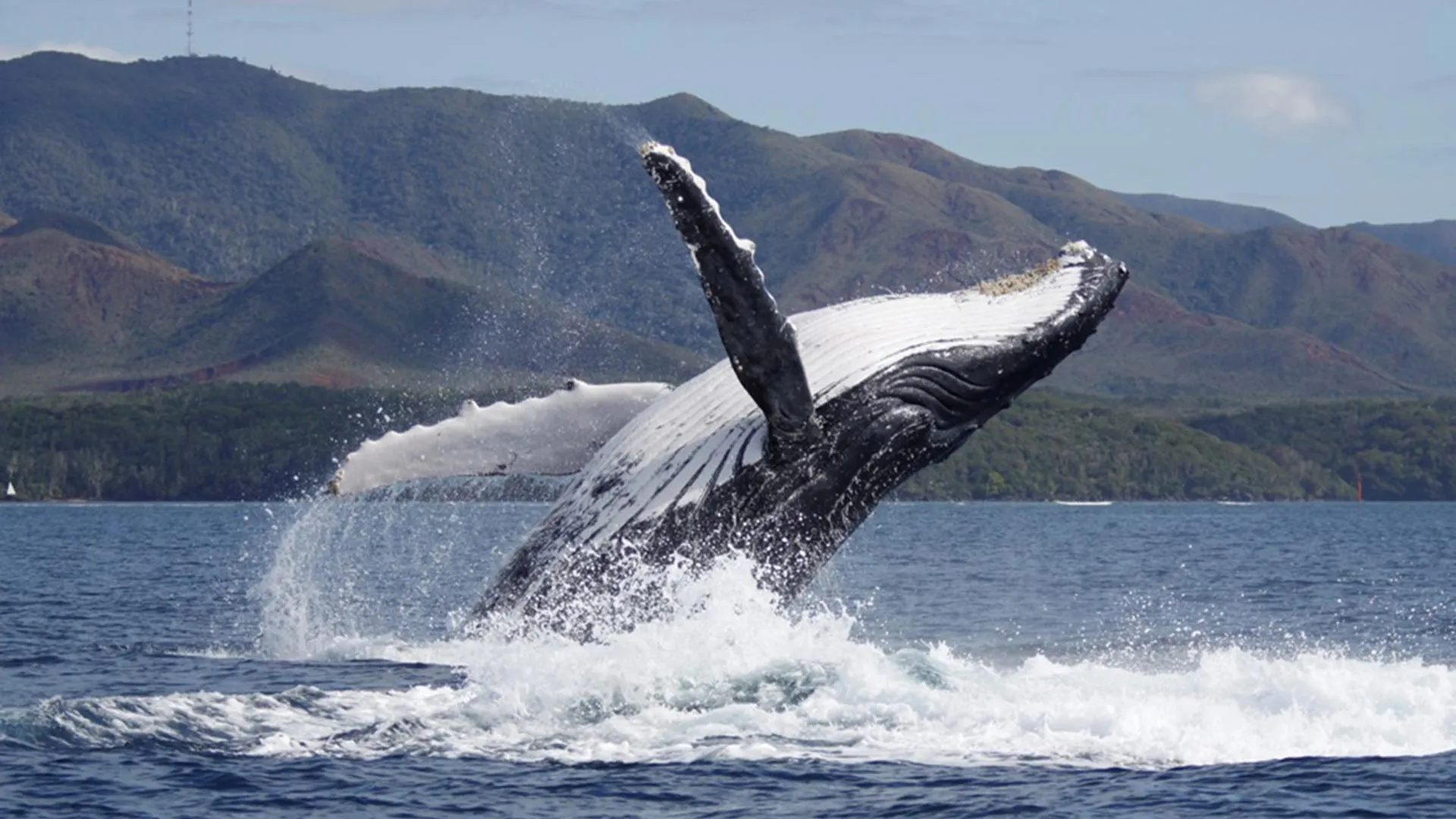
A new study from the University of St. Andrews was published on February 27th. current biologyshow that the effect of age on male humpback whale reproduction is changing as whale populations recover after centuries of commercial whaling.
Whaling once brought many large whale species to the brink of extinction. Hunting has long since ceased, but the impact has not been limited to a decline in population. Decades later, the legacy of whaling continues to shape whale populations, influencing not only the number of whales that exist today, but also which males father calves.
20 years of data on whales in the South Pacific
Researchers analyzed nearly 20 years of data on humpback whales breeding in the waters around New Caledonia in the South Pacific. The study is based on long-term monitoring carried out by the NGO “Operation Cétaces”. Scientists used this extensive dataset to investigate how the population’s age structure, male behavior, and paternity patterns have changed over time.
Early in population recovery, breeding groups consisted primarily of young males. As the number of whales increased, the population gradually formed a more balanced mix of young and old individuals. As older whales became more common, they were also more successful at fathering calves than younger whales.
Genetic tools reveal hidden fathers
Humpback whales have never been directly observed mating in the wild, meaning that the identity of the father of the calf has historically been unknown.
To solve this mystery, an international research team led by the Marine Mammal Research Unit at the University of St. Andrews used genetic testing to determine parentage. They also used a technique known as an “epigenetic molecular clock” to estimate the age of individual whales. Both pieces of information were obtained from small skin samples taken from the animals.
Whale song and mate competition
Male humpback whales are famous for singing some of the most elaborate songs in the animal kingdom. These powerful calls are transmitted over a wide range of breeding areas and are thought to play an important role in attracting females. Males may closely accompany females or even directly compete with rival males in intense physical encounters.
Dr Ellen Garland, senior author from the Marine Mammal Research Unit, explained: “As the age structure changed, so too did mating behavior and successful mating. As populations recovered, we found that older males were more likely than expected to sing, escort females, and successfully give birth to calves compared to younger animals.”
This result suggests that it likely takes many years for male humpback whales to develop and perfect both their song and competitive strategies. This experience may give older whales a distinct advantage when competing for mates. As populations continue to increase, females may also become more selective, resulting in greater preference for males with stronger expressiveness or other desirable traits.
The long shadow of whaling left on whale behavior
The findings highlight the importance of continued research to recover whale populations. Longitudinal studies help scientists understand how past exploitation continues to impact population structure, competition, and reproduction.
The study also points to broader issues in whale science. Much of what scientists know about whale behavior comes from studying populations that were already heavily affected by whaling. In other words, researchers are working with a shifting baseline rather than looking at a completely undisturbed population.
Dr Franka Eichenberger, lead author of the study from the University of St Andrews’ Marine Mammal Research Unit, said: “Only now, with whale populations recovering and new analytical tools available, are we beginning to understand how far-reaching the impacts of whaling really are. Impacts extend beyond population size and shape behavior, competition and reproduction.”
Dr. Eichenberger continued, “Virtually all whale populations have been altered by whaling, and our study shows that this continues to change as whales recover. This may lead to sustained changes in previously exploited whale populations over time. “That’s why monitoring is so important. Humpback whales have made a remarkable comeback in recent years, and now is the time to learn more about their behavior and life history. We just need to keep watching.”
