


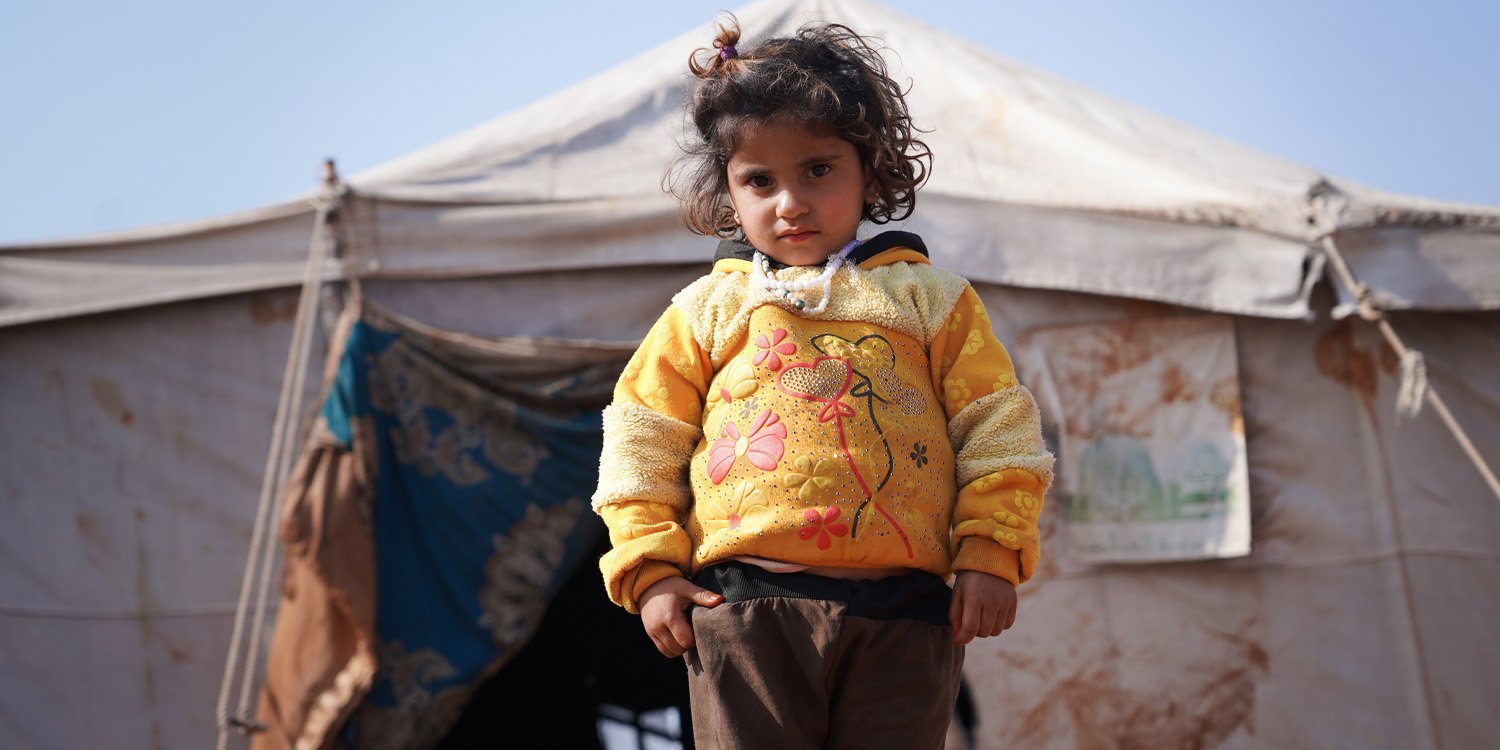
Global refugee crises often evoke varying levels of public sympathy, with some displaced groups receiving a warmer welcome than others. A recent psychological study found that while a general sense of empathy strongly drives public support for all refugees, the race of the displaced person can sway the opinions of white Americans who have low levels of empathy. This research Journal of Race, Ethnicity, and Politics.
People fleeing conflict or persecution rely on host countries to provide safe harbor. Refugees differ from voluntary economic migrants in that they are forced from their homes to escape violence. Because their work is humanitarian, host populations usually view them with less economic suspicion than illegal immigrants. Still, public warmth toward displaced communities remains uneven.
Political scientists Hannah L. Paul of the University of Missouri and Courtney J. Nava of Grinnell College wanted to understand the psychological roots of these disparities. They wondered if racial dynamics were shaping Americans’ feelings toward immigrants. Although existing research has shown that reading about immigrant hardship increases inclusive attitudes, little is known about how individuals’ everyday empathy intersects with displaced people’s racial perceptions.
Paul and Nava proposed a concept called racialized empathy. Empathy is simply the ability to understand and share the emotions of another person. Because empathy requires mental and emotional energy, humans subconsciously control how much of that energy they extend to outside groups. Empathizing with others is an arduous cognitive task, and people often find it psychologically easier to relate to people from the same social or racial background as themselves.
The researchers theorized that this common identity may increase willingness to accept certain refugee groups. To test this idea, they designed a web-based experiment. They attracted more than 2,600 participants from across the United States. Half of these respondents identify themselves as Black, and the other half identify as White.
This study focused specifically on black and white populations to explore deeply entrenched American political categories. To clearly isolate certain long-standing historical dynamics, participants with mixed racial backgrounds or Hispanic heritage were excluded. After registration, respondents read the standard diplomatic definition of the word refugee.
Along with this text, each participant viewed a photo of a young woman with a blurred background. By chance, half of the respondents saw a photo of a white woman from Ukraine. The remaining participants saw a photo of a black woman from the Democratic Republic of Congo. This image was chosen because the women seemed similar in age and expression.
After viewing the profile, respondents responded to a series of statements designed to measure their basic empathy for displaced people. Empathy generally includes two functional parts. The first aspect involves perspective taking. This means mentally stepping into the other person’s shoes. The second dimension involves emotional concern, which translates into feeling protective or kind toward vulnerable groups.
Participants then answered questions to clarify their actual policy stances on refugee resettlement. They were asked whether they considered these groups to be an economic threat to American society. They also evaluated their willingness to take direct action, such as donating money or calling on their elected representatives, to support immigration policy.
The researchers converted the responses into standardized scores. They found that modest increases in general empathy significantly boosted public support at a given scale. This internal psychological characteristic completely overwhelmed traditional demographic indicators such as age and education level.
The strongest predictor of refugee recognition was found to be the respondent’s underlying capacity for empathy. For both black and white subjects, those who scored high on the general empathy scale were more strongly supportive of refugee resettlement. To these highly empathetic people, the race of the woman in the photo didn’t matter.
However, race influenced the attitudes of certain subgroups of the population. For white respondents with low baseline empathy, racial cues changed policy preferences. White participants with low levels of empathy reported significantly lower support for refugees after seeing a photo of a Black woman compared to participants who saw a White woman.
For Black respondents, the race shown in the photo had no effect on their final answer. Black participants generally showed high support for all refugees, regardless of whether the woman in the photo was Black or White. Although a small preference for Black refugees was observed among Black participants, this increase in support was not statistically significant.
The researchers note that this particular finding is consistent with different cultural and political frameworks. For white Americans, public opinion toward immigration is heavily influenced by racial perspectives. For black Americans, these particular attitudes are often guided by a broader sense of solidarity with marginalized groups. Historically, fear of marginalization has led many black voters to view humanitarian issues through an egalitarian lens.
Paul and Nava also measured the concept of connectedness of fate between participants. Linked destiny refers to the belief that an individual’s success is directly tied to the success of broader racial groups within the country. For white respondents, a strong sense of connected fate actually suppressed their support for refugees.
The relationship was reversed for black participants. Black respondents who felt strongly that their fate was tied to other Black Americans were also more supportive of refugee groups. The researchers suggested that this means that public opinion about displaced persons is highly influenced by the individual’s placement within the social hierarchy.
This study also investigated the role of political party affiliation. The researchers wanted to know whether identifying as a Republican or a Democrat predicted a person’s underlying empathy. They found that Republicans generally have far less empathy for refugees and support for resettlement than Democrats.
Political divisions directly shaped policy attitudes entirely independently. Although identifying as a Republican was associated with a measurable decrease in empathy, that decrease was only a small portion of the total partisan gap. There was a strong direct link between being a Republican and opposing refugee resettlement.
The authors acknowledge some limitations regarding the experimental design. This study only examined black and white racial identities, excluding many other global ethnic backgrounds. The survey also captures public opinion at a single moment in time, meaning the results represent a specific snapshot of the current political climate.
Additionally, the researchers only used photos of female refugees. In general, photos of women are less threatening to the general public than photos of men. Using images of men may have lowered respondents’ baseline empathy levels and altered the final data.
Future research could investigate how these boundaries of empathy shift during large-scale international conflicts. The social categories that define who belongs to acceptable groups are constantly evolving. As various immigration crises dominate the global news cycle, the psychological energy required to empathize with foreigners can continue to fluctuate.
The study, “Racialized Empathy and Attitudes toward Refugees in the United States,” was authored by Hannah L. Paul and Courtney J. Nava.
