


Taking pills containing cannabis compounds can change the sleep patterns of people with mild to moderate insomnia, primarily by reducing the amount of time spent in certain sleep phases associated with dreams. A single dose of a combination of tetrahydrocannabinol and cannabidiol reduced total sleep time in a small number of adults, but left them mostly alert the next day. These findings were published in the Journal of Sleep Research.
Insomnia disorder is a widespread condition that affects a large portion of the adult population. Continued difficulty initiating or maintaining sleep over several months, resulting in daytime sleepiness and fatigue. Standard treatments such as cognitive behavioral therapy can take several weeks to become effective and require time and effort from the patient. In search of faster symptom relief, many people turn to pharmaceutical sleep aids or prescribed sedatives.
These traditional sleeping pills often cause unwanted side effects, ranging from dizziness to feeling light-headed the next morning. Because of these drawbacks, more patients are turning to medical cannabis as a potential alternative. People frequently use cannabis products to self-medicate sleep, hoping to replace prescription medications with plant-based options. Despite this popularity, actual clinical trials testing cannabis compounds based on objective sleep metrics are still lacking.
Anastasia Sulaev, a researcher at the University of Sydney and the Woolcock Institute of Medical Research, led a team investigating how compounds in cannabis affect the brain during sleep. The researchers wanted to measure the exact effects of oral cannabis consumption on the biological stages of sleep. They also aimed to see if the effects of the drug left users impaired the next day. To do this, the team focused on two main compounds found in the cannabis plant: tetrahydrocannabinol and cannabidiol.
Tetrahydrocannabinol (THC) is the primary intoxicating compound responsible for the behavioral effects associated with marijuana. Cannabidiol (CBD) does not cause this intoxication, but is often sold for relaxation and pain relief. The research team formulated an oil containing 10 milligrams of THC and 200 milligrams of CBD. They chose this particular formulation because early clinical data suggested that higher amounts of CBD may help alleviate some of THC’s less desirable effects.
The study involved 20 adults diagnosed with clinical insomnia. None of these individuals had used cannabis in the 3 months prior to the study. This allowed the research team to assess the biological effects on people who had not developed a tolerance to the drug. The study utilized a crossover design, with each participant receiving either active cannabis oil or an identical-looking placebo on two separate nights.
Such a design allows researchers to compare how exactly the same people respond to both a cannabis preparation and an inert placebo. The trial was mutually blinded, so both patients and researchers could not know which treatment was administered on a particular night. Giving each person both interventions at least a week apart helps eliminate alternative explanations for the results. On the night of the experiment, participants ingested their assigned dose of the oil one hour before going to bed.
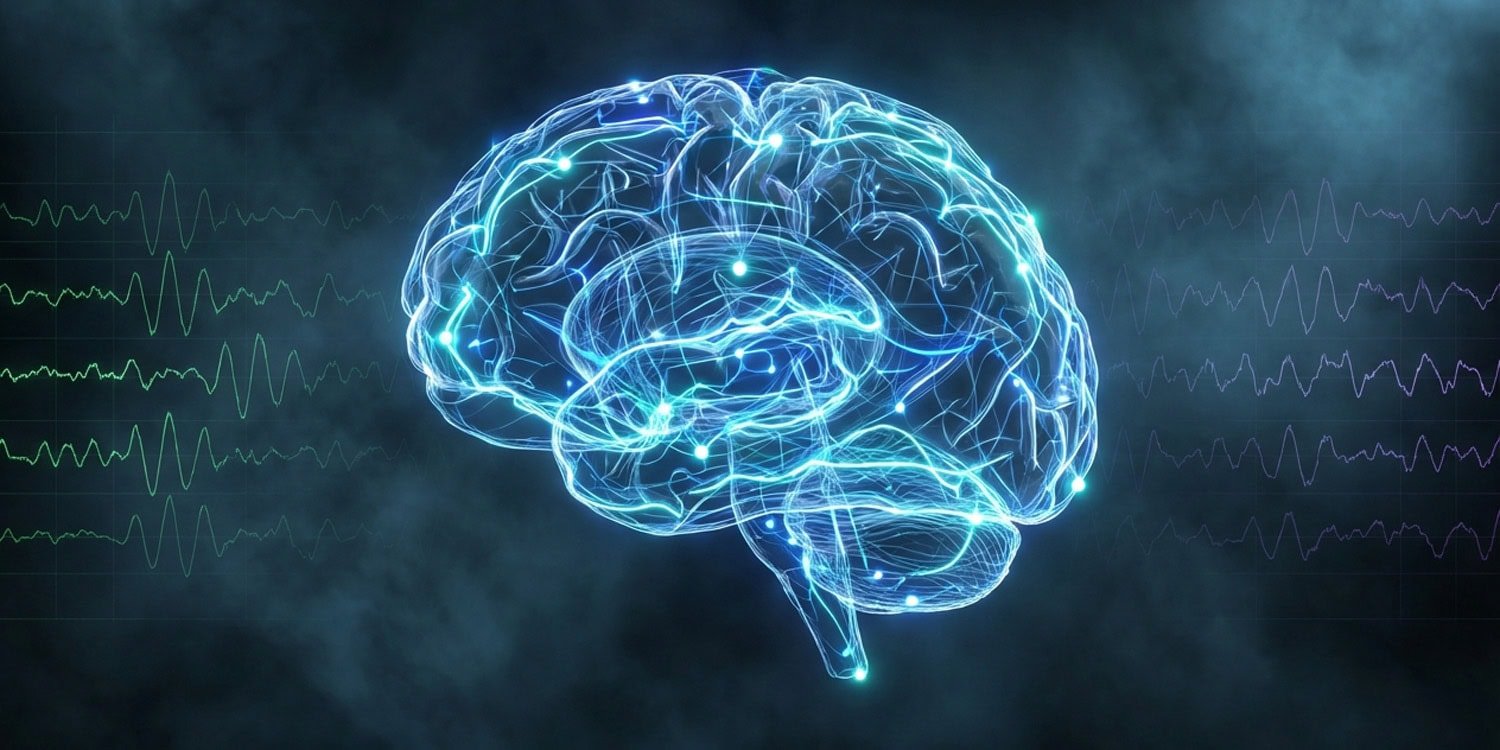
Researchers used electroencephalography (EEG) to record the participants’ brain activity while they slept in a clinical laboratory. The research team used a special sensor cap with 256 individual electrodes. These electrodes detect small electrical signals produced by groups of neurons communicating in the brain. By mapping these radio waves across the scalp, sleep technicians can track when a person passes through different stages of sleep.
Sleep typically cycles through light stages, deeper restorative stages, and rapid eye movement sleep. The deep phase is often characterized by slowly rotating brain waves, and this time is thought to be essential for the body to rest. Rapid eye movement sleep is the stage where you have the most vivid dreams. This paradoxical stage is similar to a state of alertness in which the brain is highly active and the body is completely still.
Electrical recordings revealed that the cannabis combination reduced total sleep time by an average of 25 minutes compared to a night of placebo. The total time spent in the rapid eye movement phase was also reduced by approximately 34 minutes. The drug delayed the timing of this dreaming phase, extending the onset time of rapid eye movement sleep by more than an hour. There were no noticeable changes in the amount of time participants spent awake in the middle of the night.
A closer look at high-density brain mapping revealed further changes in sleep quality. During the light stages of restful sleep, cannabis oil reduced high-frequency brain waves. This is a change that suggests that cortical excitement is calming down. However, during the deepest sleep stages, the drug reduced the intensity of slow wave activity. This attenuation of slow waves indicates a decrease in sleep depth, which can limit the quality of physically restorative rest.
During the rapid eye movement phase, cannabis treatment promoted an increase in fast-paced brain rhythms in posterior brain regions. This electrical signature indicates increased alertness while the patient is still asleep. These findings are consistent with previous research in recreational cannabis users, indicating that THC acts as a potent suppressant of the dreaming stage. Hypnotic drugs, such as benzodiazepines, typically cause similar disruptions to the normal electrical structure of nighttime sleep.
After studying nighttime patterns, the researchers wanted to know how patients performed the next day. A common problem with traditional sleep aids is that the drug’s effects persist after the patient wakes up, which can make driving or work unsafe. Starting the morning after treatment, participants completed multiple rounds of cognitive and behavioral tasks. These tasks measured the ability to maintain attention and respond quickly to visual cues on a computer screen.
Participants performed just as well on attention tasks after taking cannabis oil as they did after taking a placebo. The researchers also conducted a recognized clinical assessment designed to test an individual’s ability to resist falling asleep in a dark, quiet room. During this trial, the time it took participants to drift off did not differ between the two conditions. The experimental team observed no statistically significant differences in objective daytime cognitive performance.
Patients completed a subjective survey regarding their mood and energy levels during the day. People reported feeling a slight increase in overall sleepiness the day after taking cannabis oil. This resulted in mild drowsiness but did not interfere with their physical reaction time or ability to remain awake under observation. Mild side effects such as dry mouth were common, but no serious adverse events occurred during the observation period.
The researchers outline several caveats to consider regarding study design. Because this study involved a small group of volunteers, the results may not be perfectly replicable across a large population. Participants also slept on a fixed 8-hour schedule to accommodate the strict timing of morning response testing. Hidden in this structured timeline may be natural restorative sleep that can be achieved at home without an alarm clock.
This particular study only looked at the biological effects of a single dose during a solitary night. People seeking relief from chronic insomnia usually take medication every night for an extended period of time. Without consecutive nights of testing, studies cannot predict whether patients will develop a tolerance to the drug or whether they will experience withdrawal symptoms when they quit smoking. When heavy users of cannabis suddenly stop taking it, rebound insomnia and intense dreams are known withdrawal symptoms.
The specific ratio of active ingredients introduces another variable for future investigation. There are countless marijuana products on the market that contain unpredictable blends of active compounds. Products containing high concentrations of tetrahydrocannabinol and low doses of cannabidiol can cause completely different physiological responses and unwanted side effects. Future clinical studies will need to follow people who use medical cannabis consistently over several weeks to understand its long-term safety profile.
The study, “Acute Effects of Oral Cannabinoids on Sleep and High-Density EEG Waves in Insomnia: A Pilot Randomized Controlled Trial,” was authored by Anastasia Sulayev, Ian S. McGregor, Daniel McCartney, Nathaniel S. Marshall, Cheng-Hui Kao, Rick Wasing, Angela L. Dorozario, Keith K. H. Wong, and Brendon. J. Yee, Sheila Shivam, Richard C. Kevin, Ryan Vandree, Christopher Irwin, Christopher J. Gordon, Delwyn Bartlett, Jonathon C. Arnold, Ronald R. Grunstein, Camila M. Hoyos. Research work was primarily completed at the Woolcock Medical Research Institute in Sydney, Australia.
