


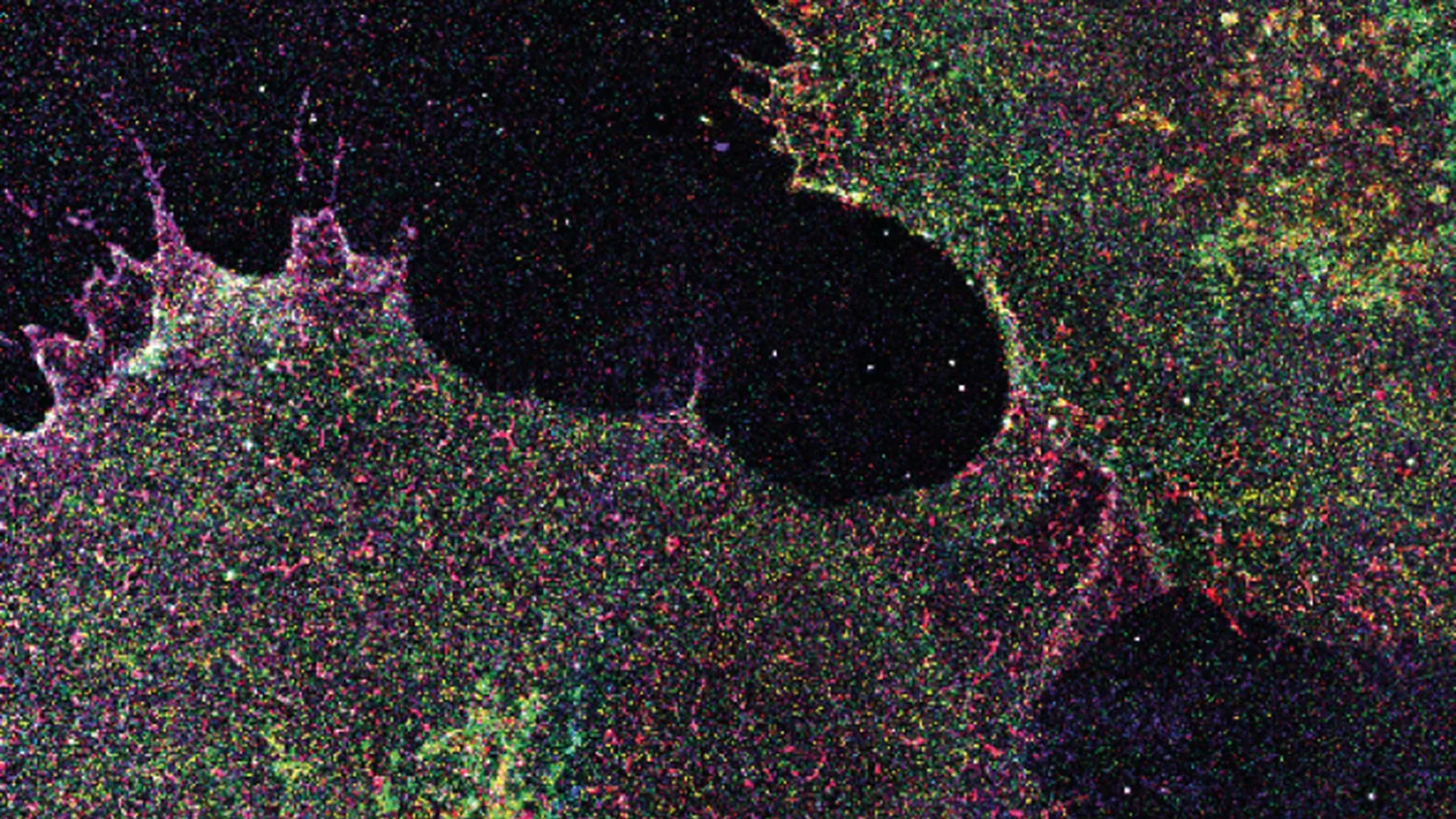
All human cells are covered with a thin layer of sugar called the glycocalyx. This outer coating helps cells interact with their surroundings and may also provide important clues about what’s going on inside the cell itself. Researchers at the Max Planck Institute for Light Science (MPL) used advanced high-resolution microscopy to create detailed maps of these sugar structures. Their findings are: natural nanotechnologysuggests that changes in the arrangement of these sugars could one day help doctors detect diseases such as cancer.
The glycocalyx surrounds all human cells like a protective outer shell. Rather than being fixed in place, these complex sugar molecules are constantly moving and rearranging. Scientists from MPL’s Physical Glycoscience research group, led by Professor Leonhard Meckl, are studying how this glycocalyx behaves and what it reveals about cell biology.
To investigate these structures, the research team developed a technique called “Glycan Atlasing.” They used state-of-the-art super-resolution microscopy to map the glycocalyx at the level of individual sugar molecules across many different cell types. Their study included cell culture lines, primary human blood cells, and tissue samples.
The resulting maps showed that the glycocalyx changes its molecular arrangement depending on the state of the cell. For example, immune cells showed different sugar patterns after being stimulated, similar to what happens during an immune response. The researchers say this provides the first direct evidence that the glycocalyx acts like a display screen, displaying information about a cell’s internal state on its outer surface.
Sugar patterns may help detect cancer
The researchers found that these nanoscale sugar patterns can reliably distinguish between different cellular states. Their measurements allowed them to identify distinct stages of cancer development, distinguish between activated and inactive immune cells, and distinguish between cancerous and healthy areas of human breast tissue.
This finding suggests that the cell surface contains structured biological information that can be read using standardized approaches. “Glycan Atlasing provides reliable results even in complex samples, so these results provide a promising basis for the development of future diagnostics,” explains study leader and corresponding author Möckl.
Future medical applications
The researchers now plan to extend the method by analyzing additional target structures and automating more processes. They also hope to study more samples so that the technology can eventually be adapted for routine medical use.
“In our larger studies, we hope to investigate which surface patterns are associated with specific disease processes and treatment responses, and how we can detect cell status early and objectively from the surface,” Meckle explains, outlining the team’s future plans.
