


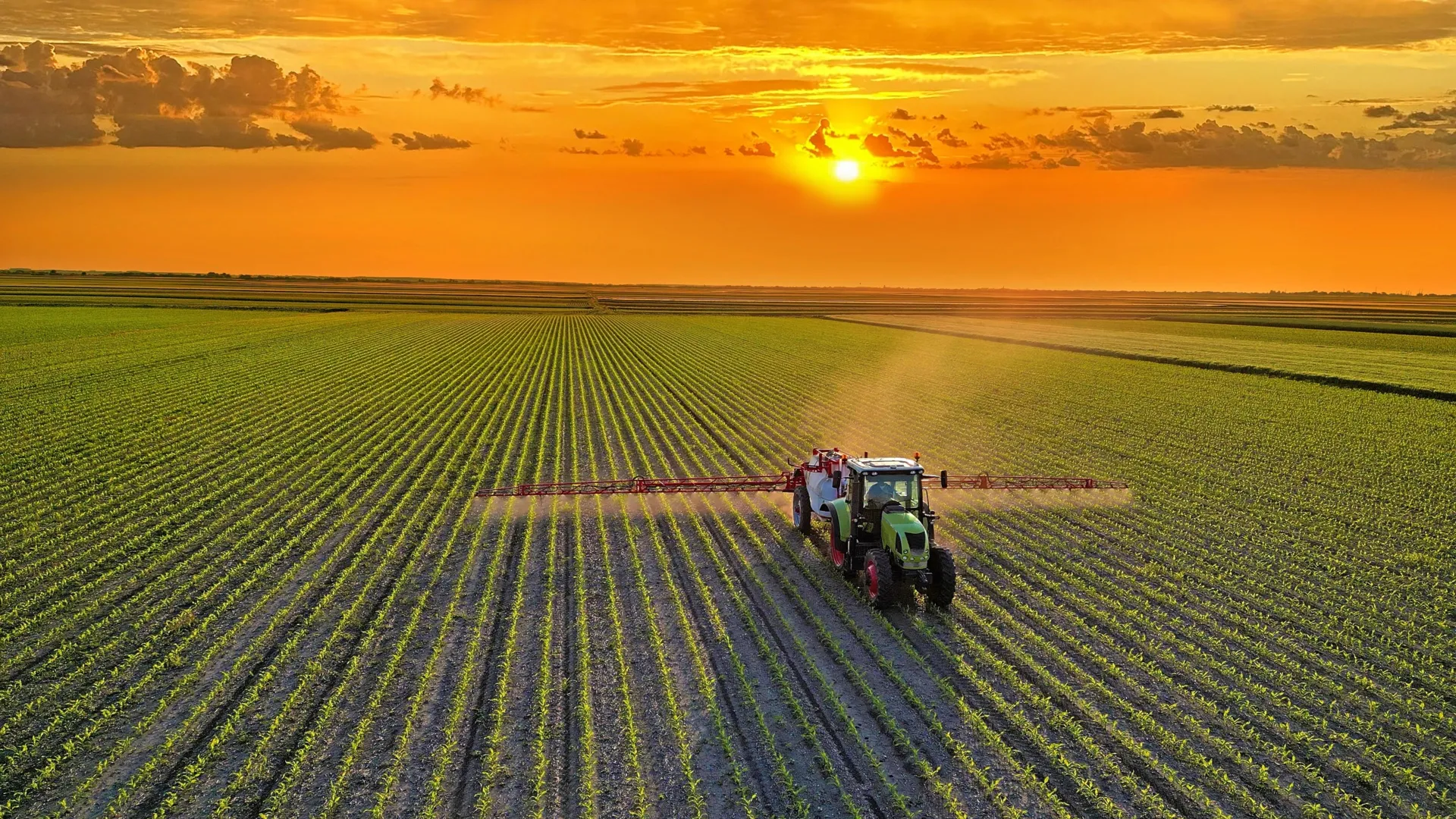
A global shift towards healthier diets, more efficient agriculture, and significant reductions in food waste could fundamentally change what farmers produce and how their land is used by 2050.
New models suggest that following these recommendations could reduce global agricultural land use by up to 6% compared to current trends. At the same time, total livestock production could decline by 42% ($630 billion) compared to 2020.
Reduce herds and increase plant foods
The biggest changes will occur in ruminant production (beef cattle, sheep, goats). By 2050, the global value of the sector could decline by an estimated 70% ($274 billion), and there could be around 400 million fewer ruminants worldwide than in 2020.
Plant-based food production will move in the opposite direction. The global value of vegetables, fruits, nuts and pulses could increase by 57% ($890 billion).
Legumes include foods such as beans, peas, lentils, and chickpeas. These crops are important sources of protein and fiber and generally require fewer resources to produce than many animal foods.
The findings come from an analysis published in Nature by researchers from the London School of Hygiene and Tropical Medicine (LSHTM), Cornell University, and 10 modeling teams. The researchers considered what could happen if the world pursued food system transformations similar to those proposed by the EAT-Lancet Commission in 2025.
Potential health and climate benefits
The 2025 EAT-Lancet Commission report concludes that 15 million premature deaths could be prevented each year by shifting to healthier diets around the world.
Previous research has estimated that the global food system generates $10 to $20 trillion in hidden costs annually. These costs include medical costs, environmental damage, lost productivity, and other impacts that are not reflected in the prices consumers pay for their food. Most of the estimated burden is related to unhealthy diets.
New modeling shows that the recommended transformations could also significantly reduce agriculture-related net CO2 emissions from land-use changes. By 2050, these emissions could be 85% lower than in 2020.
Land use changes include activities such as clearing forests, converting grasslands, and draining wetlands to create agricultural land. These changes could release large amounts of stored carbon into the atmosphere. Net emissions include both carbon released and absorbed through land use change.
big disruption for farmers
Lead author Dr Matt Gibson, who began his research at Cornell University before joining the London School of Hygiene and Tropical Medicine (LSHTM), said: “Transforming food systems will have huge potential benefits for our health and the environment, but as our results make clear, they will also bring about fundamental changes to global agriculture, impacting the livelihoods of millions of farmers and food producers.”
“Rather than use these results as an excuse for inaction, it is important that governments rise to the challenge and make tough decisions for our health and our planet. This means standing up to the powerful groups who profit from the status quo and the global food system that is currently failing both the people who produce our food and those who should be fed by it.”
The findings suggest that this transition is not simply an environmental or public health initiative. It will also bring about major changes to the economy as a whole, with some agricultural industries shrinking while others expand.
“These scenarios should not be viewed as predictions of what will happen, but as a useful initial guide to where challenges and opportunities may arise,” said study co-author Daniel Mason-Doclos of Cornell University. “Transformation on this scale will not begin until 2050. Visionary modeling like the one highlighted in this study is a valuable tool to inform action today towards a more sustainable, healthy and fair food system.”
Predictive modeling is used to explore possible futures rather than predicting one exact outcome. By testing different assumptions, researchers can identify where economic disruptions, policy challenges, and new opportunities may emerge.
uneven impact around the world
The economic effects will vary widely by country and region.
In the United States, total agricultural production could decline by 21% ($76 billion) by 2050 compared to 2020. However, while the value of U.S. crop production could increase by 20% ($40 billion), the value of livestock production could decrease by 73% ($116 billion).
India could experience a very different outcome. Total agricultural production could increase by 46% ($198 billion). Crop production value could increase by 65% ($208 billion), while livestock production value could decrease by 8% ($10 billion).
In Europe, overall agricultural production could fall by 35% ($190 billion). Europe’s crop production value could fall by 8% ($22 billion) and livestock production by 66% ($168 billion).
These regional differences reflect differences in agricultural systems, current diets, production costs, land availability, trade, and the types of food that each region produces.
Changing your eating habits isn’t easy
The researchers hypothesized that low-cost consumer preferences are shifting toward healthy eating (i.e., people change their behavior to seek healthier foods). In other words, the model assumed that consumers would be willing to change what they eat without considering any economic, cultural, or practical barriers that might make such a change difficult.
In reality, healthy foods are not equally affordable everywhere. Dietary choices are also shaped by local traditions, personal preferences, income, food availability, and broader cultural attitudes.
The researchers emphasized that these scenarios are just a selection of many possible futures. Additional research will be needed to explore other pathways, such as changes based on different policy choices, economic conditions, and consumer behavior patterns.
The authors argue that bold policy decisions made now could help protect vulnerable food producers and consumers as agriculture moves towards healthier and more sustainable diets. Without careful planning, the benefits of transition could be accompanied by severe economic disruption for communities that rely heavily on livestock and other sectors that are expected to decline.
