


DURHAM, N.C.—Mid-South’s Brenntag continues to rack up serious environmental violations related to its chemical repackaging plant in East Durham, where state inspectors in November accused the company of failing to clean up barrels that leaked on the premises.
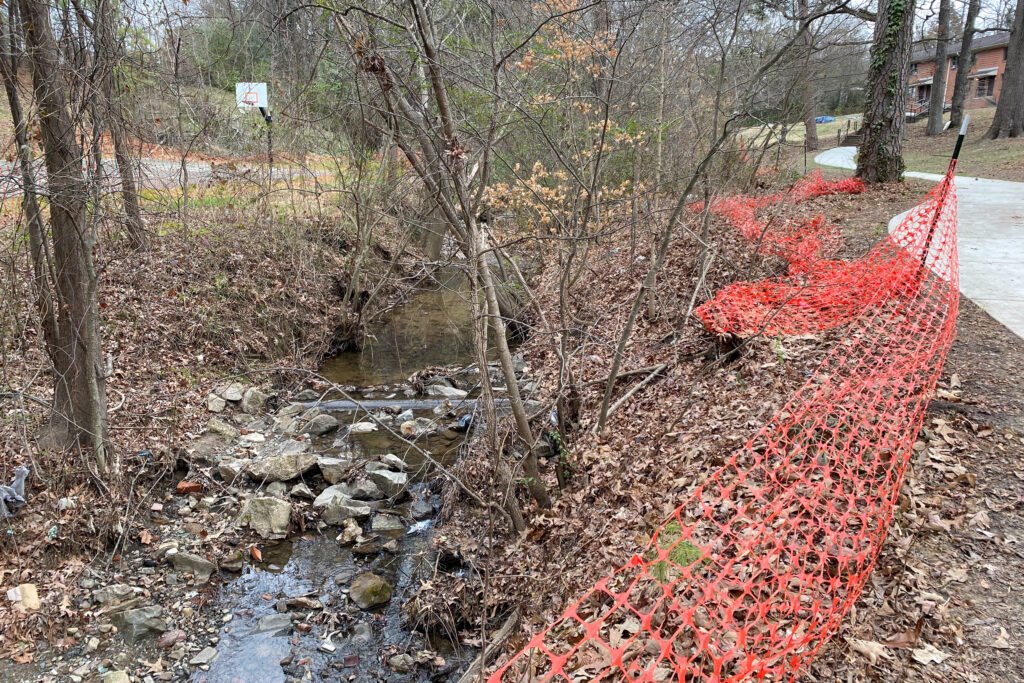
Recent testing also found that the chemical cocktail continued to flow into a nearby stream that runs behind the elementary school, through a public park and into Third Fork Creek and Jordan Lake, a drinking water source for more than 1 million people, according to the North Carolina Department of Environmental Quality.
City and state authorities have committed numerous violations against the multibillion-dollar company but have yet to impose financial penalties, despite more than two years of investigation.
A spokesperson for the North Carolina Department of Environmental Quality told Inside Climate News that the agency “cannot comment on future enforcement actions, but continues to work with Brenntag to receive data and ensure the actions required in last fall’s violation notices are completed, including some items with deadlines set for this month and May.”
The Durham Environmental Affairs Committee is scheduled to discuss the issue at its March 4 meeting. Brenntag Mid-South is a global chemical distribution company that stores liquid and granular chemicals in a bulk warehouse in Durham and repacks them for shipment by truck or rail.
Brenntag spokeswoman Raquel Shepherd did not respond to direct questions about conditions at the plant or the company’s efforts to keep chemicals out of the river. Instead, Shepherd submitted a written statement.
“The issues affecting Third Fork Creek are complex and may be due to multiple causes that are not yet known with certainty. Although Brenntag MidSouth’s operations are not the cause of the historic contamination at this site, Brenntag has consistently worked closely with the City of Durham to take a number of steps to address these issues, as described in our quarterly reports to the City of Durham and communications with the City.”
“Brentag Mid-South is committed to cooperating in this investigative process and continues to commit internal and external resources and expertise to work with local authorities.”
Aidil Ortiz, a community organizer who lives across the street from the factory, expressed continued concerns. “I feel like there’s some creepy danger lurking in my backyard,” she said. “There’s money in Brenntag, and we hope they do the right thing by our side. We know there are industrial applications around the corner. Besides, none of us have ever made a fuss about them just existing, but when you know better, we’ll make a fuss about you intentionally harming us.”
Last September, DEQ inspectors found a steel drum outside with “liquid running down the sides and liquid pooling on top,” according to state records. “Drums with spilled chemicals were discovered on pallets, raising questions about how contaminated other pallets stored on site were.”
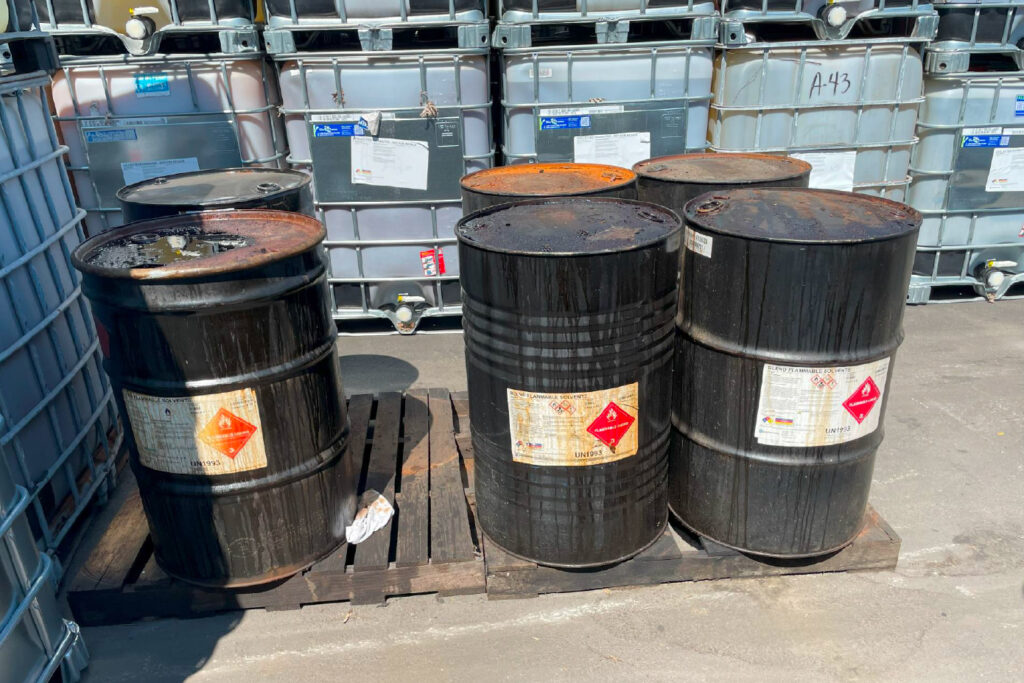 Last September, state inspectors discovered a leak in a chemical drum at the Brenntag plant in Durham. This is the third time inspectors have found chemicals improperly stored. Credit: North Carolina Department of Environmental Quality
This is the third time state regulators have found inadequate cleaning practices at the plant. In April 2025, inspectors found a rusted, dented, and leaking drum, but by the time of the fall site visit, the drum had been removed.
In March 2022, the state inspected the facility and found barrels storing chemicals lying on its side. Others were dented and “appeared to be leaking an unknown liquid into the containment area.”
Even more worrying, supporters say, are the chemicals, some of which are carcinogenic, that continue to flow into the river from the Brenntag site.
Sampling conducted by Brenntag Contractors in December detected more than a dozen chemicals from an outlet on the southern boundary of the site. Three of them were detected above nationally regulated or recommended levels: ethanol and possible carcinogens acetone and 1,4-dioxane (both solvents).
A month later, in January, the Hoh River Assembly, a nonprofit organization that monitors water quality in central North Carolina, sampled a stream behind Barton Elementary School, about 400 feet from Brenntag.
Tests revealed acetone levels of 3,820 parts per billion (ppb), nearly twice the maximum level found in the state’s surface waters. Methylene chloride, another carcinogen, was detected at 124 ppb at the rally. This compound has multiple uses as a degreaser, paint and adhesive remover, and cleaning agent.
The U.S. Environmental Protection Agency has a drinking water standard of 5 ppb for both acetone and methylene chloride.
North Carolina does not have a surface water standard for methylene chloride, while New Jersey has a maximum of 2 ppb. The compound has been detected in surface waters at some hazardous waste sites at an average concentration of 68 parts per billion, according to the Agency for Toxic Substances and Disease Registry.
This story is funded by readers like you.
Our nonprofit newsroom provides free advertising for our award-winning climate coverage. We rely on donations from readers like you to continue our work. Donate now to support our work.
donate now
The EPA determined that methylene chloride, a chemical used in consumer and commercial applications such as adhesives and sealants, automotive products, and paints, poses an “unreasonable risk to human health” because it is a neurotoxin that can also damage the liver. Breathing at very high levels can be fatal. According to the EPA, regular inhalation or exposure to this compound may increase your risk of developing cancer.
Brenntag’s state air permit allows the company to emit up to 1,600 pounds of methylene chloride annually.
When Brenntag contractors sampled upstream of the school in December, no methylene chloride was detected. Differences between these results and those of the Hoh River Assembly may reflect different laboratory detection methods.
Although it is unlikely that people would drink river water directly, children may accidentally ingest it while playing. The river runs behind the playground of Barton Elementary School and flows through McDougald Terrace, Durham’s largest and oldest public housing community.
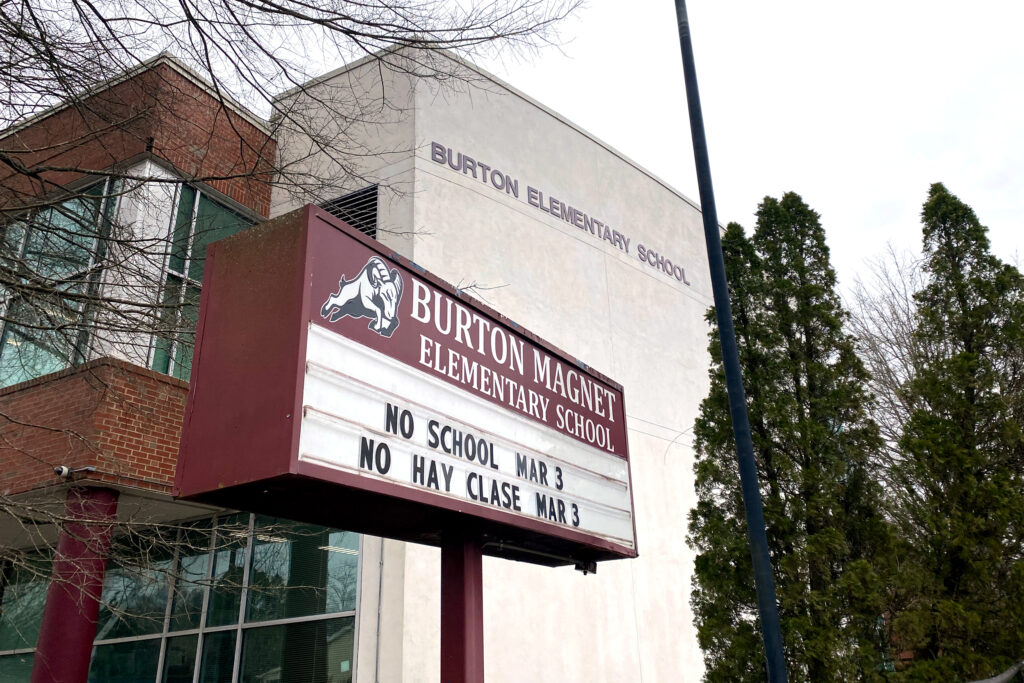 Barton Elementary School in east Durham is just one-third of a mile from the Brenntag factory. A polluted river flows behind the school. Credit: Lisa Sorg/Inside Climate News
The river flows into Third Fork Creek, a tributary of Jordan Lake, which provides drinking water for more than 1 million people.
Last year’s violations included “blackened water flowing from the plant into the stream,” according to state records. In addition to these conditions, the presence of chemicals escaping from the site “represents a potential risk to human health through contact with water and harm to aquatic life.”
Haw River Manager Emily Sutton said Haw River Council would continue testing the stream with the help of community groups. “We will build evidence that enforcement is necessary, but we must rely on state authorities to hold people accountable through permits and violations,” she said.
Brenntag’s contractors only recently began testing for 1,4-dioxane, which was detected for the first time in December. 1,4-dioxane, a possible carcinogen, has contaminated several waterways and drinking water supplies in North Carolina, including the Haw, Deep, and Cape Fear rivers.
This compound is found in solvents, degreasers, and even some consumer products.
Levels of 1,4-dioxane ranged from 3.6 ppb at the Brenntag property line to 1.49 ppb at the Durham Highway stream. The EPA has set health advisory targets of 0.35 ppb for surface waters serving as drinking water supplies and 80 ppb for non-potable water supplies.
“These are very clear water quality violations, very clear ground water violations, and those are ongoing,” Sutton said. “These are bad actors and they need to be held accountable.”
More than two years ago, in August 2023, the city of Brenntag fenced off a stream after detecting high levels of acetone, toluene, and ethanol in the water at the edge of the property. The discovery prompted the city to prohibit Brenntag from discharging runoff or other water from the property.
Brenntag collects the runoff in a basin and pays a contractor to carry it away. As contaminants continue to flow into the river, the company’s contractors believe contaminated groundwater is bypassing treatment systems and flowing into waterways.
State records show the company shut down its treatment system with DEQ permission two years ago to isolate the source of the contamination. As recently as November, the company’s contractor, Arcadis, told DEQ in an email that it had repaired a recovery well on the plant site, but that Brenntag had not given it permission to restart the system.
For more than a century, county and city zoning ordinances have allowed polluting industries to be built near and on residential streets in East Durham. “My expectation was that these companies would behave with respect and dignity toward their neighbors,” said Ortiz, a longtime resident. “It’s really disturbing to know that that’s not the case, and that schools, homes, churches and community organizations are having to endure contamination. It feels like East Durham isn’t catching its breath.”
About this story
As you may have noticed, this article, like all news we publish, is free to read. That’s because Inside Climate News is a 501c3 nonprofit organization. We don’t charge subscription fees, keep our news behind paywalls, or fill our website with ads. We provide climate and environmental news free to you and anyone who wants it.
That’s not all. We also share our news for free with dozens of other news organizations across the country. Many of them cannot afford to do their own environmental journalism. We’ve established bureaus across the country to report on local news, partner with local newsrooms and co-publish stories to ensure this important work is shared as widely as possible.
The two of us started ICN in 2007. Six years later, we won the Pulitzer Prize for national reporting and now run the nation’s oldest and largest dedicated climate newsroom. We tell the story in its entirety. We hold polluters accountable. We expose environmental injustice. We debunk misinformation. We explore solutions and inspire action.
Donations from readers like you fund all aspects of our work. If you haven’t already, will you support our ongoing work, our coverage of the biggest crises facing our planet, and help us reach more readers in more places?
Please make a tax-deductible donation. Each one makes a difference.
thank you,

Lisa Sorg
north carolina reporter
Lisa Sorg is a North Carolina reporter for Inside Climate News. A journalist for 30 years, Sorg covers energy, climate and agriculture, as well as the social justice impacts of pollution and corporate misconduct.
She has received numerous awards for news, public service, and investigative reporting. In 2022, she won the Stokes Award from the National Press Foundation for a two-part story about the environmental damage caused by a former missile factory in a black and Latino neighborhood in Burlington. Mr. Sorg previously served as an environmental investigative reporter at NC Newsline, a Raleigh-based nonprofit media outlet. She has also worked for alternative weeklies, dailies, and magazines. Originally from rural Indiana, I now live in Durham, North Carolina.
