


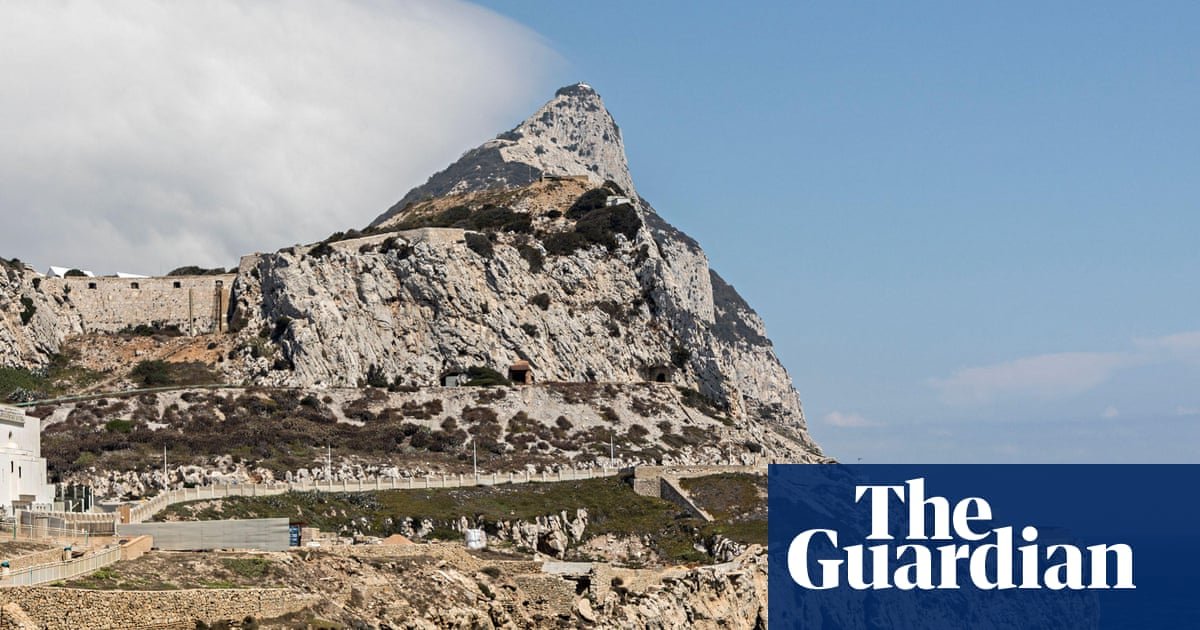
Gibraltar, a British overseas territory, has no sewage treatment facility, and because there has never been one, raw sewage from around 40,000 people and businesses is pumped directly into the sea.
For decades, untreated sewage has flowed into the Mediterranean Sea from Europa Point at the southern tip of the peninsula, where the Gibraltar government says there is a “high level of natural dispersion”.
The area is supposed to be protected for wildlife, but there is often “wet wipes and plastic pollution entangled throughout the algae and rocks,” said Louis Stagnett of local environmental charity The Nautilus Project.
Contamination of untreated sewage can cause toxic algae blooms that rob the water of oxygen and suffocate aquatic life. Fish and mammals are exposed to a mix of chemicals and plastics that can inhibit reproduction and compromise health, and put people at risk by spreading pathogens and antibiotic resistance genes.
Unlike the UK, Gibraltar’s sewage system uses seawater and drinking water is obtained through desalination. The Gibraltar government says salinity has “historically posed challenges not seen in other wastewater treatment plants around the world”. It also claims that “the wet wipes that occasionally appear on our beaches… come from nearby Spanish retailers.”
In 2017, the European Court of Justice ruled that Britain had breached wastewater laws by failing to treat Gibraltar’s sewage, but the European Commission no longer has the power to take action after leaving the EU.
Many attempts to resolve the issue have failed. In 2018, the Government of Gibraltar awarded a joint venture between NWG Commercial Services (Northumbrian Water) and Modern Water a contract to design, build and operate a treatment plant, but the deal fell apart when Modern Water’s subsidiary went into liquidation.
“This has had a significant impact on the delivery of this important project,” a Gibraltar government spokesperson said. Preliminary negotiations with the European Investment Bank also “failed as a direct result of Brexit,” he added.
In June 2025, the Government of Gibraltar signed a 25-year contract with Eco Waters to build a wastewater treatment plant at Europa Point. Advanced work has begun on the design and geotechnical aspects of the plant, with a planning application submitted in March 2026.
Northumbrian Water, which partnered with the government from 2003 to 2024 through a joint venture called AquaGive, was keen to distance itself from sewage failures. He said his work “mainly revolves around providing drinking water” and that he is not responsible for day-to-day operations.
“Northumbrian Water had no responsibility for Gibraltar’s sewage works,” a spokesperson said. “The company’s involvement was as a shareholder and strategic partner, rather than as an operator or regulator. All decisions regarding wastewater management were taken by the Gibraltar government.”
Aquagive said operates a number of pumping stations that pump sewage from low-lying areas into Gibraltar’s main sewer system, but “has no responsibility for the main sewer system or wastewater treatment”.
The sewer system itself seems to be in poor condition. Last year, the opposition Gibraltar Social Democratic Party (GSD) said that “popular tourist attraction areas…are embarrassingly exposed to the stench of raw sewage” and that waste is “seeking directly through the city walls…damaging the marine ecosystem”. The government blamed the problem on decades of underinvestment, including during the years when the GSD was in power.
The Government said there was “an ongoing major project to install new sewer mains in stages – a £15m investment in Gibraltar’s sewerage infrastructure” and “a range of relining projects which have resulted in the strengthening and improvement of main sewers within the city walls”.
Regarding beaches, the government said: “Bacteriological water quality is regularly measured on all beaches in Gibraltar…and the latest results show that all beaches in Gibraltar have achieved excellent bathing water quality.”
Last year, UK water companies released untreated sewage into rivers, lakes and the sea around 300,000 times, despite having sewage treatment facilities in place.
Hugo Tagholm, director of charity Oceana UK, said: “The public is outraged that our rivers and oceans are being treated as rubbish dumps. This is an environmental and economic injustice, with the footprints of big business everywhere.”
“Governments must act in concert both nationally and internationally. Our oceans need to be properly protected from sewage and plastic pollution. It’s time to end this outrage and stop the injection of untreated sewage into the Mediterranean Sea.”
